


This article highlights the best crypto exchanges concerning their risk management practices, especially ones focused on crypto exchanges that protect customers’ funds, abide by regulations, and have risk management controls.
As the volatility in the crypto markets increases, all users, beginners, and advanced traders alike, will need to choose exchanges that have strong protection, risk management, and operational transparency.
Key Points & Best Crypto Exchanges With Advanced Risk Management
- Binance — Multi-tier security with SAFU insurance fund
- Kraken — Institutional-grade security and proof-of-reserves audits
- Coinbase — FDIC insurance for USD balances and strong regulatory compliance
- Gemini — SOC 2 compliance and digital asset insurance coverage
- eToro — Risk-control tools like stop-loss and copy trading safeguards
- Crypto.com — Cold storage custody and insurance against theft
- Bitstamp — Regulated in EU with strong KYC/AML enforcement
- KuCoin — Advanced trading risk alerts and multi-factor authentication
- OKX — Proof-of-reserves transparency and liquidation risk controls
- Bybit — Insurance fund for leveraged trading and real-time monitoring
10 Best Crypto Exchanges with Advanced Risk Management
1. Binance
Being the largest cryptocurrency exchange by volume and users, with more than 600 coins and 1500+ trading pairs, Binance, founded in 2017, has quick trading and occassionally lower trading fees than the competetion.
Binance has a great reputation and is known for strong risk measures such as: Keeping a portion of users funds in an emergency fund called SAFU, and holding users funds in an insured reserve with a legitimate Proof of Reserves audit by a 3rd party.
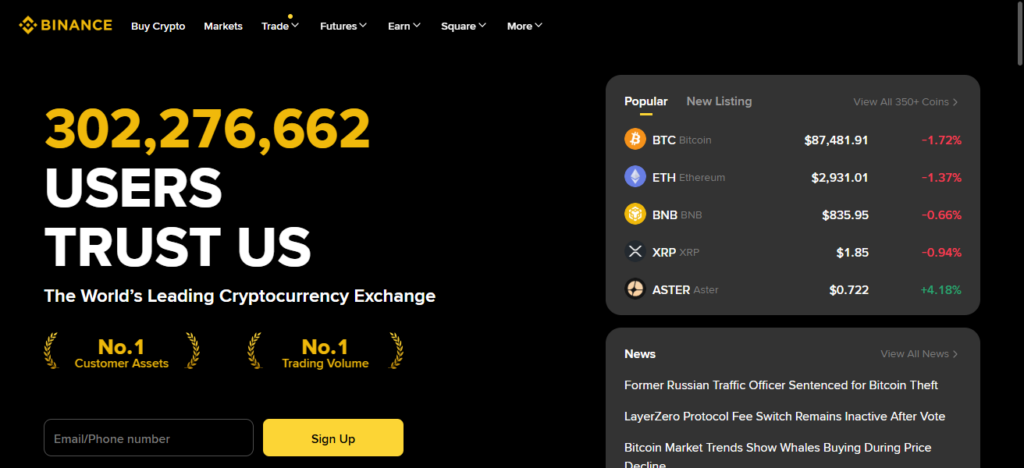
Binance also has advanced security systems and monitoring, which include: Keeping an eye suspicious accounts and doing KYC and AML checks
To prevent money laundering as well as finding and fixing market and security risks. These factors help make Binance one of the better options for advanced traders.
Features Binance
- SAFU Insurance Fund: Reimburses users for some of the losses in case of severe losses of users or hacks.
- Multi-tier Security: Insurance, cold storage, 2FA, and anti-phishing codes.
- Risk Controls for Trading: Marginal and future trading is backed with safeguards for trade liquidation.
- Engagement with Regulators: Open dialogues with regulators in each region to improve compliance
| Pros | Cons |
|---|---|
| Massive crypto support with 600+ tokens and deep liquidity. | Regulatory issues in multiple countries have led to operational restrictions. |
| Advanced risk tools: derivatives, futures, margin, and SAFU insurance fund. | Interface can be complex for beginners. |
| Proof-of-Reserves transparency and extensive security layers. | Fee structure can be confusing with tiers and discounts. |
| Robust global ecosystem: staking, savings, NFTs, and P2P markets. | Customer support response times sometimes slow under high demand. |
2. Kraken
Launched in 2013, Kraken has built a reputation by maintaining a focus on compliance, reliability, and security by starting where other digital exchanges have failed.
Publicly accessible and supported by over 200 digital currencies, Kraken allows users to trade on the spot, futures, and margin exchange.
Kraken offers other services, including over-the-counter and institutional digital asset trading, with a focus on compliance and security.
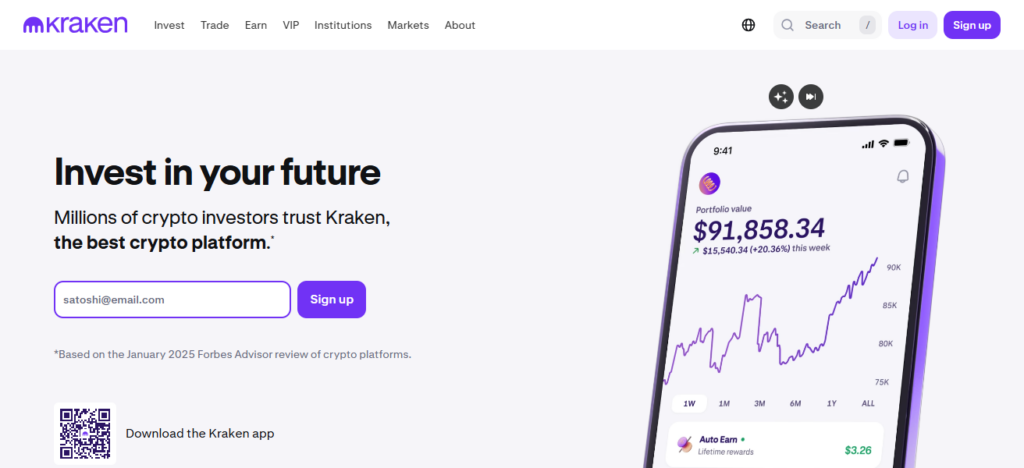
Kraken holds and manages assets in cold storage. Kraken conducts regular audits on their assets and provides surveillance on market risks.
Kraken is one of the oldest exchanges and possesses considerable experience in digital asset management. Kraken manages their assets in a way to mitigate risks in the event of a loss.
Features Kraken
- Proof-of-Reserves Audits: Customer funds are independently verified to prove reserves.
- Institutional-Grade Security: Offline cold storage, data is encrypted.
- Advanced Trading Risk Tools: Stop-loss safeguards, oversight for margin and control liquidation.
- Regulatory Compliance: Holds licenses in many countries for transparency and compliance.
| Pros | Cons |
|---|---|
| Long-standing exchange (since 2011) with strong security reputation. | Fewer trading pairs compared to top exchanges. |
| Proof-of-Reserves audits and cold storage protections. | User interface can feel outdated. |
| Strong regulatory compliance, especially in the U.S. and EU. | Margin and futures markets aren’t as extensive. |
| Clear fee structure and reliable fiat on-ramps. | Slower listing of new tokens. |
3. Coinbase
Beginning in 2012, Coinbase is the biggest crypto exchange in the US and has hundreds of assets and Coinbase markets across the globe.
Coinbase is one of the most compliant crypto companies and has implemented several sophisticated systems to tackle risk, such as 2FA, mobile biometrics, hardware keys, allowlist, and deep cold storage.
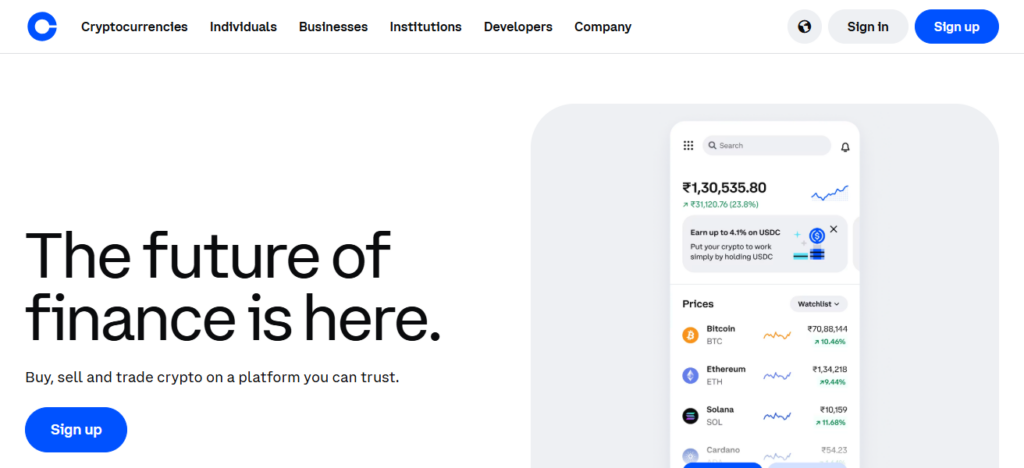
Coinbase has a fully compliant system in place and offers an elite suite of products, including Advanced Trade with real-time order books, professional-grade charting and control of liquidity, which allow traders to risk manage effectively.
Coinbase has also integrated 1:1 asset holdings to guarantee transparent custody and segregated the user funds.
Thanks to the exchange’s regulatory framework, both institutional and retail traders can feel protected.
Features Coinbase
- FDIC Insurance: Losses of USD balance are covered to a cap.
- Cold Storage: Very large amounts of crypto are stored offline.
- Compliance: The compliance policies are extremely thorough with KYC/AML enforced strongly.
- Risk Alerts: Suspicious actions are detected and reported in real-time.
| Pros | Cons |
|---|---|
| Highly regulated, especially in the U.S., with strong legal compliance. | Trading fees are higher than many competitors. |
| Excellent security: cold storage, insurance, and advanced account protections. | Limited advanced trading features compared to pro platforms. |
| Easy onboarding for beginners. | Fewer supported assets compared to top global exchanges. |
| Transparent operations and clear compliance reporting. | Slow customer support during peak times. |
4. Gemini
Gemini started in 2014 and was founded by Winklevoss twins, where they support over 150 cryptos and have a focus on regulatory compliancy, especially with the US.
The managed risks with security by offering a hot wallet with insurance and most funds in cold wallet storage. S.O.C 2 type 2 standards are met and regularly mes audits with predetermined operational control structures.
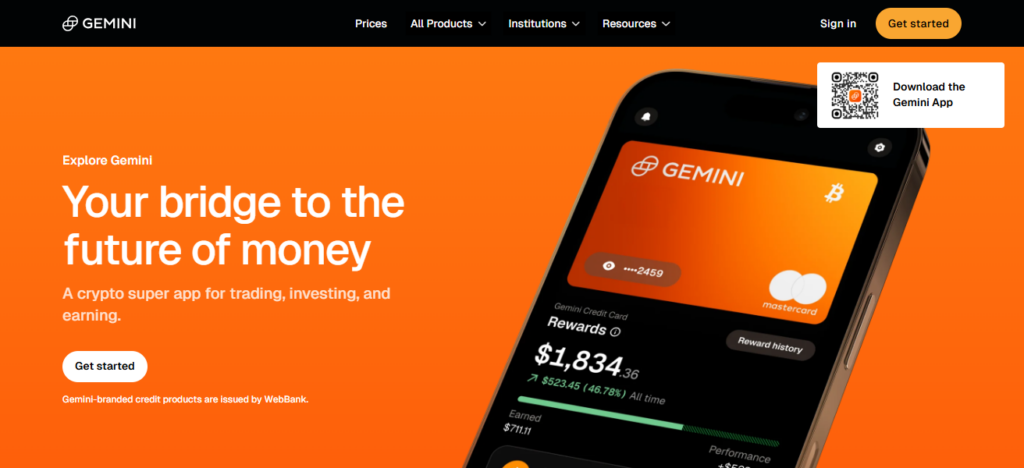
The exchange does KYC/AML and manages the licenses and risks to enhance the protection of investors. This built a sophisticated platform for the traders who are more cautious with their investments.
Features Gemini
- SOC 2 Certification: Security and compliance posture are independently verified through audits.
- Digital Asset Insurance: Losses through hacking and theft are covered.
- Cold Storage Custody: Open storage of crypto is a very small ratio of the total crypto assets.
- Regulatory Oversight: Holds a trust license to operate as a trust company in New York.
| Pros | Cons |
|---|---|
| Very high compliance standards (NYDFS regulation). | Smaller crypto catalog compared to global exchanges. |
| Strong security with SOC 2 audits & insured custodial provisions. | Trading fees are relatively high. |
| Intuitive user experience. | Limited advanced derivatives and margin features. |
| Built-in price alerts and risk notifications. | Some geographic restrictions on services. |
5. eToro
Social trading and later crypto trading with 100+ coins and tokens by eToro started in 2007. Integration of eToro’s social trading and copy-trading tools are diversified exposure risk since users are able to follow various risk level portfolios of seasoned traders.
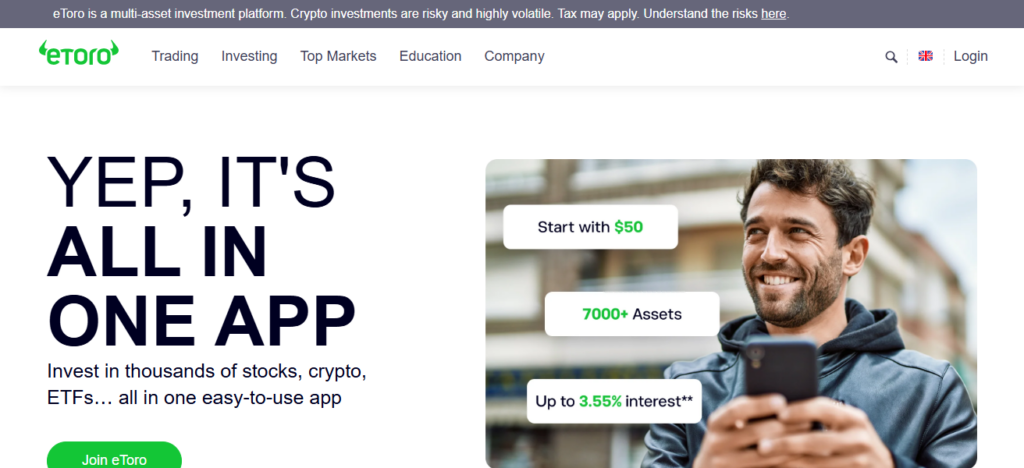
eToro’s risk management and social trading copy tools follows users market accessibility. Market risk kenya, eToro risk management settings by users in market crypto are trade stop loss and take profit adjustable.
Other asset classes risk portfolio eToro crypto holdings for traders balance. eToro assets crypto risk lower relative. eToro completing regulated crypto offers. in 2007 started.
Features eToro
- Risk-Control Tools: Portfolio diversification, take-profit, stop-loss.
- Copy Trading Safeguards: Limit exposure when copying other traders.
- Regulated Broker: Has license(s) from multiple financial authorities.
- Insurance Coverage: Some protection on clients’ funds.
| Pros | Cons |
|---|---|
| Social and copy trading allows learning from experienced traders. | Crypto spreads/fees can be higher. |
| Multi-asset platform (crypto + stocks + forex). | Not a dedicated crypto exchange — limited deep order book liquidity. |
| Regulatory oversight in multiple countries. | Fewer advanced risk-management tools for professional trading. |
| Good for beginners and diversified portfolios. | Limited crypto staking options. |
6. Crypto.com
Crypto.com is a fully-fledged crypto ecosystem consisting of an exchange, wallet, payment solutions, and an NFT marketplace.
The platform provides services for numerous digital assets and possesses risk management mechanisms such as cold storage, 2FA, and regional regulatory compliance.
Crypto.com also possesses customizable order types and streaming market data for balances exposure.
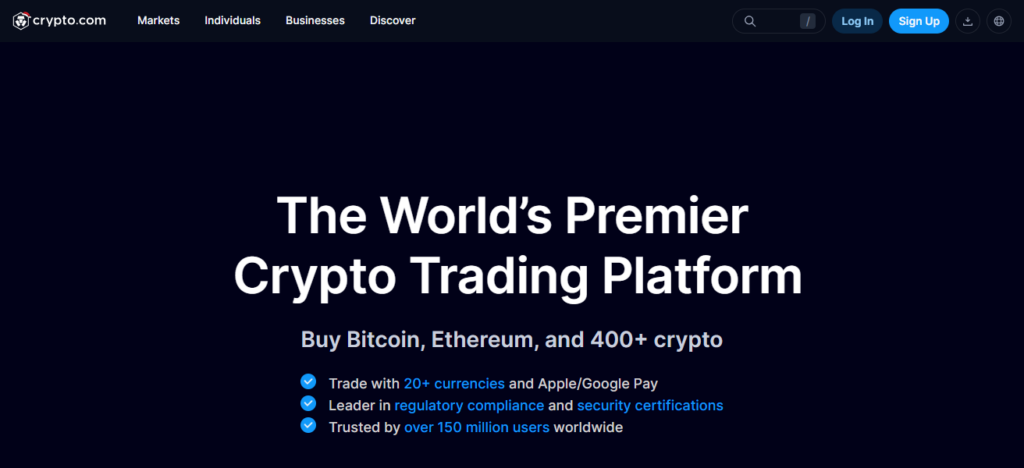
With a fast-growing user base and a strong marketing presence, Crypto.com is balancing advanced trade capabilities with supporting elements such as staking and yield products,
Allowing users to implement complex risk strategies. Crypto.com has marketing assets and risk management to capture complex flexible trader.
Features Crypto.com
- Cold Storage Custody: Assets kept offline with multiple signatures.
- Insurance Against Theft: Coverage for losses on digital assets.
- Risk Alerts: Supervision of suspicious transactions in real-time.
- Compliance Standards: KYC/AML measures in place.
| Pros | Cons |
|---|---|
| Wide range of supported assets and financial products. | Past security concerns (though improved). |
| Integrated ecosystem: exchange, wallet app, debit card, & earn features. | Complex fee and reward structures. |
| Strong risk configurations: cold storage + risk tools. | Customer service sometimes inconsistent. |
| Regional compliance across many jurisdictions. | App and exchange experiences can differ in quality. |
7. Bitstamp
Starting from Luxembourg, Bitstamp has been operating from the year 2011 and is one of the oldest crypto exchanges running to date. Also, it offers crypto like Bitcoin, Ethereum, Litecoin, Ripple, and USD-denominated stablecoins.
Compliance to regulation and risk mitigation procedures are practiced by the firm, such implementation of cold storage to the vast majority of the crypto currencies, and other processes like KYC and AML.
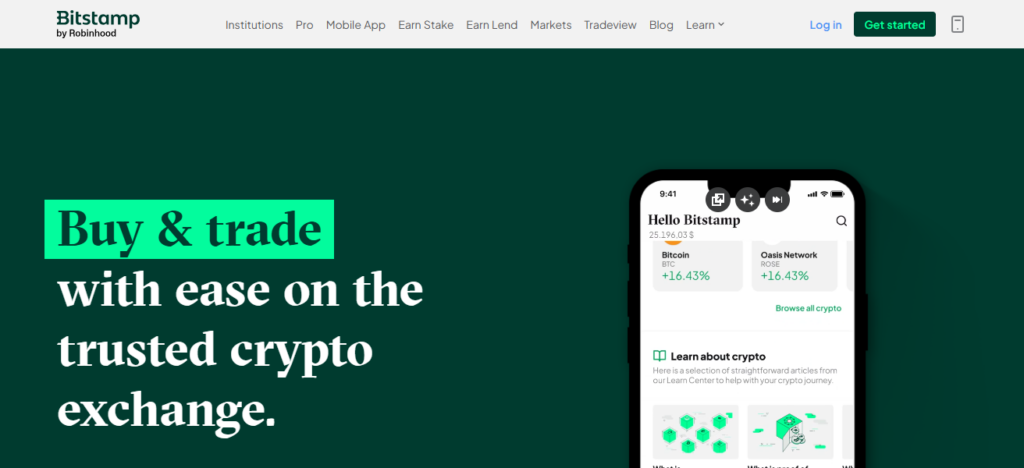
Although on the selection of crypto which is far less compared to the other exchanges, and is focused on stable selection, it is placed ideally for the traders because of the simplistic processes along with integrated risk measures.
Features Bitstamp
- EU Regulation: Licensed and compliant with European authorities.
- KYC/AML Enforcement: Highly regulated identity validation.
- Cold Storage Security: Most assets kept offline.
- Risk Monitoring: Tracking of the trading activity.
| Pros | Cons |
|---|---|
| Very long track record and conservative risk profile. | Smaller selection of cryptocurrencies. |
| Transparent fees and regulatory compliance. | Not ideal for advanced derivatives traders. |
| High security with cold storage and audits. | Fewer features like staking or earn. |
| Simple, reliable platform. | Not as competitive on pricing compared to newer exchanges. |
8. KuCoin
Established in 2017, KuCoin has gained popularity among crypto traders due to the 700+ crypto assets that they have on their platform. It features risk-management tools including cold storage, margin limits, and futures risk controls.
Year Over KuCoin has dealt with multiple regulations and challenges, largely due to the fact that they have built internal systems to protect the funds that they have on their platform.
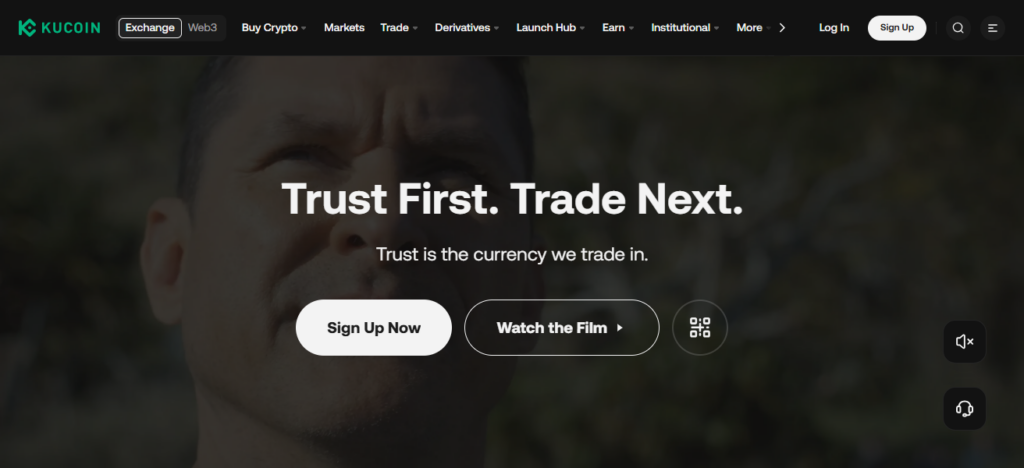
This platform also provides users with advanced trading options including trading bots which allow users to select the amount of risk they want to be exposed to.
Though KuCoin does not have licenses in a a large portion of the world, the wide range of tools that they provide along with the diverse range of assets available on the platform makes it a great option for advanced traders looking to optimize their portfolio.
Features KuCoin
- Multi-Factor Authentication: Additional security when logging in and withdrawing.
- Risk Alerts: Alerts on abnormal trading activity.
- Cold Storage Custody: Significant amount of assets kept offline.
- Insurance Fund: Coverage for losses due to hacks.
| Pros | Cons |
|---|---|
| Very extensive altcoin selection (700+ tokens). | Less regulatory oversight compared to other major exchanges. |
| Advanced tools: futures, margin, bots, and staking. | Not fully compliant in some major regions (e.g., U.S.). |
| Competitive fee structure. | Customer support quality varies by issue. |
| Flexible order types for risk-adjusted strategies. | Higher risk of delisted or low-liquidity tokens. |
9. OKX
OKX was established in 2013 and initially branded as OKEx until their rebranding later on. OKX is one of the largest exchanges globally and provides over 350+ currencies, extensive derivative markets, and integration into decentralized finance.
Their risk management approaches are multi-regional compliance, passive reserve management, and established liquidity discipline.
OKX is one of the few exchanges that provides advanced risk management tools that allow their users to trade on margin and futures.
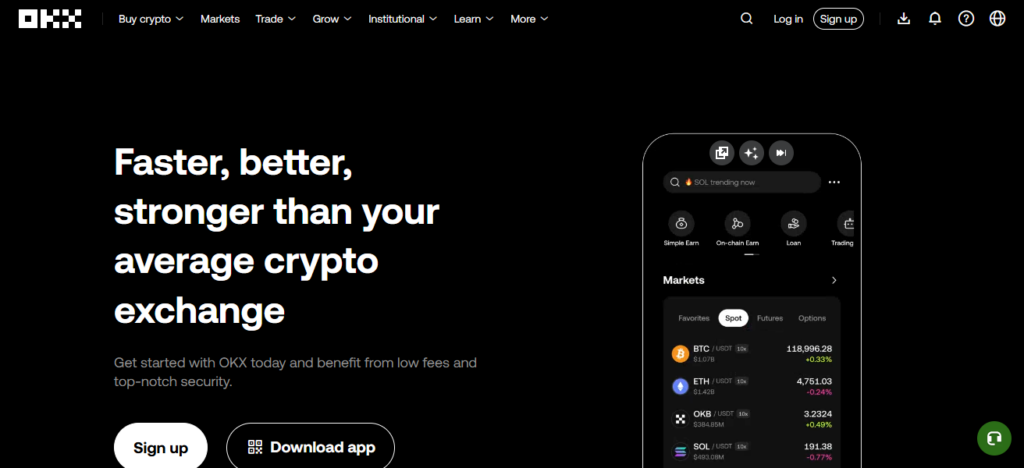
Their risk management tools are automatic risk limits on their positions, active monitoring of the open positions in the market, portfolio of assets that are managed through a custodian.
When these are combined with educational tools and wallets, they allow professional traders to adjust their risk, and balance their portfolios.
Features OKX
- Proof-of-Reserves Transparency: Audits of customer funds are available.
- Liquidation Risk Controls: Protection is in place for risky leveraged trades.
- Cold Storage Custody: Most assets kept offline.
- Insurance Fund: Coverage and protection for volatile markets.
| Pros | Cons |
|---|---|
| Large asset support and deep derivatives markets. | Regulatory presence is weaker in some jurisdictions. |
| Proof-of-Reserves and strong security models. | Complex interface for beginners. |
| Wide selection of advanced trading tools. | Liquidity varies for lesser-known tokens. |
| Strong institutional integrations. | Support response times vary globally. |
10. Bybit
Bybit is a cryptocurrency derivatives exchanges that started operating in 2018 in Dubai and caters to more than 150 cryptocurrencies. Margin trading and sophisticated trading tools are also available on the platform.
The company employs a sophisticated risk management strategy that relies on automated risk control, real-time position monitoring, and other automated measures
Such as liquidation to shield their clients from extreme loss in the event of a sudden drop in the cryptocurrency market.
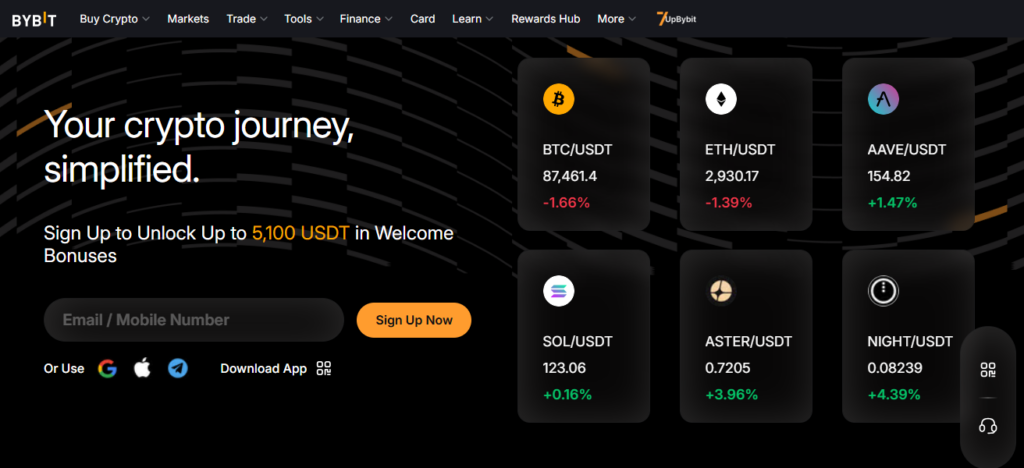
Bybit uses insurance funds to protect from price slippage and to mitigate the loss in case a trader loses in trading.
Bybit is not present in the United States, but the company targets professional day traders with inrstructured high-frequency trading features, giving traders the ability to trade quickly in a market with adequate liquidity.
The company employs systems to mitigate market risk from high volatility present in the cryptocurrency market.
Features Bybit
- Insurance Fund: Coverage for losses on leveraged trades.
- Real-Time Monitoring: Tracking of trading activity to mitigate risks.
- Cold Storage Custody: Safe storage of assets kept offline.
- Risk Management Mechanisms: Margin and stop-loss limits.
| Pros | Cons |
|---|---|
| Excellent derivatives and perpetual markets with deep liquidity. | Limited fiat on-ramps vs. bigger global exchanges. |
| Automated risk systems and portfolio margin features. | Not regulated in many major countries (e.g., U.S.). |
| Strong leverage and advanced order types. | Risks associated with high leverage for inexperienced traders. |
| Insurance funds and liquidation protections. | Fewer supported crypto assets than some competitors. |
Conclusion
In closing, some of the best advanced risk management crypto exchanges have security, operational transparency, and protective instruments traders need in volatile markets.
Binance, Kraken, and Coinbase have strong compliance and excellent protection of assets and risk management in place.
Working with a reputable exchange offers traders the ability to better control exposure, protect funds, and trade with more confidence.
FAQ
Risk management includes security measures, trading limits, insurance funds, and tools that protect users from losses and fraud.
Exchanges like Binance, Kraken, and Coinbase are known for advanced security and transparent risk controls.
Yes, some exchanges such as Binance and Bybit use insurance or protection funds to cover extreme market losses.
Yes, proof-of-reserves ensures exchanges hold enough assets to cover user balances.
Generally, regulated exchanges follow strict compliance rules, reducing legal and operational risks.

