



In this article, I will address the Best Crypto Exchanges for Instant Bridging Between Chains, detailing some the most effective platforms for cross blockchain transfers in the crypto world.
Most Crypto Ecosystems are becoming multichain therefore allowing for the movement of tokens between networks such as Ethereum, Solana, and BNB. The fast and secure movement of these tokens is most cases is low cost.
Key Points & Best Crypto Exchanges for Instant Bridging Between Chains
Defiway – Premier cross-chain solution with low fees, fast swaps, and broad blockchain support
Portal Bridge – Built on Bitcoin, offering secure and decentralized bridging across major chains
Synapse Protocol – Known for high-speed bridging and EVM compatibility
LayerZero – Offers omnichain interoperability with gas-efficient transfers
Multichain (formerly Anyswap) – Supports over 40 blockchains with instant liquidity routing
Wormhole – Popular for Solana-EVM bridging and NFT transfers
Celer cBridge – Delivers fast, low-cost bridging with layer-2 support
Rango Exchange – Aggregates multiple bridges for optimal routing and speed
Thorchain – Enables native asset swaps across chains like BTC, ETH, and BNB
LI.FI – Smart routing across bridges and DEXs for efficient cross-chain swaps
10 Best Crypto Exchanges for Instant Bridging Between Chains
1. Defiway
Defiway offers a no-frills experience for a cross-chain bridge performing instant asset transfers across main chains like Ethereum, BNB Chain, Polygon, and Avalanche.
Its lightning-fast speeds without compromising on security and minimal fees attracts Defi users and NFT traders.
For wallet-to-wallet swaps, Defiway does not require centralized custody, and the ease of use caters to both novice and advanced users.
With new chains and tokens regularly added, Defiway is an interoperable cross-chain bridge rapidly becoming a staple in the decentralized economy.
| Feature | Description |
|---|---|
| Multi-chain support | Bridges assets across Ethereum, BNB Chain, Polygon, Avalanche, and more |
| Low fees | Competitive transaction costs for cross-chain swaps |
| Fast execution | Near-instant transfers between supported chains |
| Non-custodial | Users retain control of their assets during bridging |
| User-friendly UI | Simple interface for beginners and pros alike |
2. Portal Bridge
Portal Bridge is a decentralized cross-chain protocol built on Bitcoin, offering secure and trustless asset transfers across multiple blockchains.
It leverages atomic swaps and smart contracts to eliminate intermediaries, ensuring users retain full control of their assets.
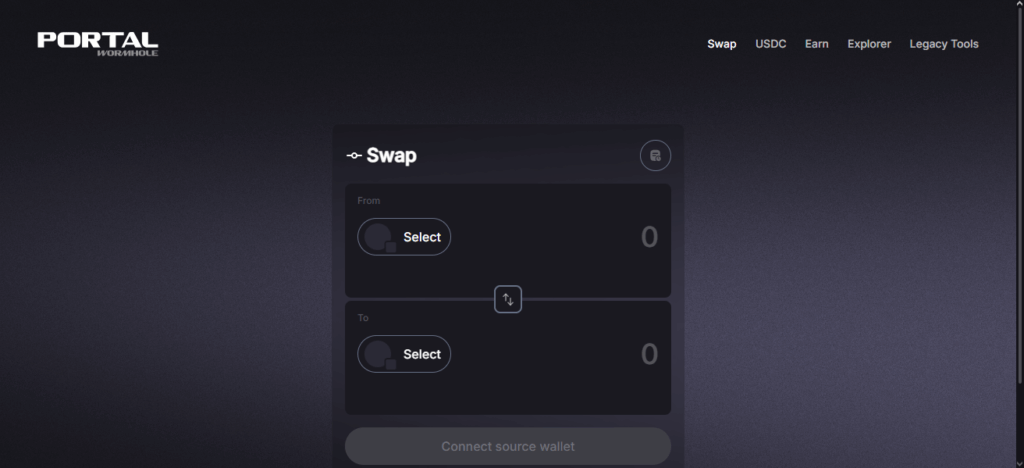
Portal is especially appealing to Bitcoin holders looking to interact with DeFi ecosystems on Ethereum, Solana, and other chains.
Its emphasis on decentralization and security makes it a standout choice for users prioritizing privacy and control in their cross-chain operations.
| Feature | Description |
|---|---|
| Bitcoin-native | Built on Bitcoin for secure cross-chain swaps |
| Atomic swaps | Trustless transfers without intermediaries |
| Decentralized | No central authority or custody involved |
| Multi-chain reach | Connects Bitcoin to Ethereum, Solana, and more |
| Privacy-focused | Emphasizes user control and anonymity |
3. Synapse Protocol
Synapse Protocol is a highly efficient cross-chain bridge with fast and scalable capabilities. It connects over 15 blockchains, including Ethereum, Arbitrum, Optimism, and Avalanche.
Each asset transfer is guaranteed to be secure and efficient, thanks to a hybrid of smart contracts and validators.
Synapse also offers generalized messaging, so dApps can talk to one another seamlessly across chains.
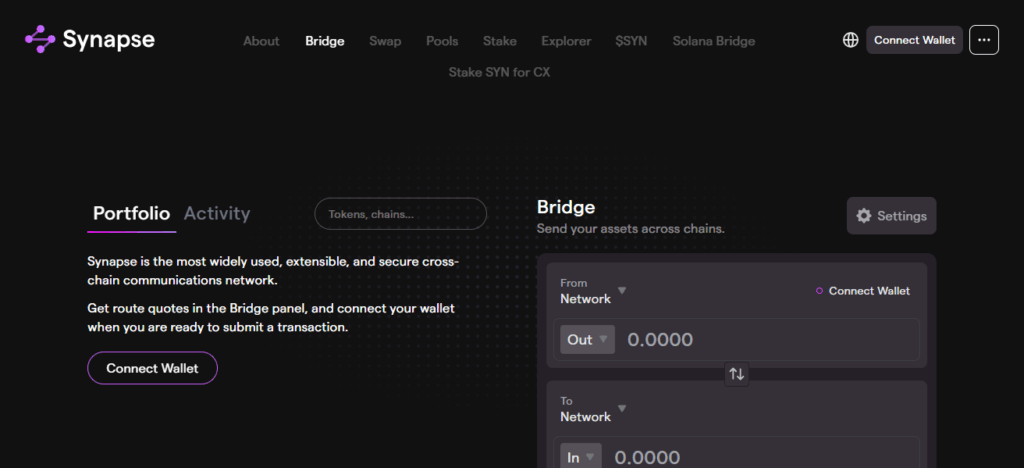
Strongly favored in the DeFi space, Synapse uses its liquidity pools for immediate swaps with little slippage.
Synapse has an active developer community and consistent advancements in technology, which illustrates their commitment to cross-chain interoperability.
| Feature | Description |
|---|---|
| EVM compatibility | Works with Ethereum, Arbitrum, Optimism, and other EVM chains |
| Generalized messaging | Enables dApp communication across chains |
| Liquidity pools | Supports instant swaps with low slippage |
| Secure bridging | Validator-based architecture for safety |
| Developer-friendly | Offers SDKs and integration tools |
4. LayerZero
LayerZero is the world’s first omnichain interoperability and cross-chain communication protocol. It is the first of its kind and goes beyond traditional bridges.
LayerZero does this with ultra-light nodes alongside decentralized oracles, which guarantee the secure and reliable transfer of messages and assets.
LayerZero is a developer favorite for constructing cross-chain dApps, thanks to low-latency and gas-efficient transactions.
LayerZero has supported chains like Ethereum, BNB Chain, and Aptos, in addition to powering many high-profile protocols.
It is evidence of the next generation of advanced multichain applications and the emphasis on security within its modular design sets the groundwork for a foundational layer.
| Feature | Description |
|---|---|
| Omnichain messaging | Enables communication across any blockchain |
| Ultra-light nodes | Efficient and secure message transmission |
| Gas-efficient | Low-cost bridging and messaging |
| Modular architecture | Flexible integration for developers |
| Wide chain support | Compatible with Ethereum, BNB Chain, Aptos, and more |
5. Multichain (formerly Anyswap)
As one of the most established cross-chain bridges, Multichain supports over 40 blockchains and thousands of tokens.
It facilitates swift and reasonably priced cross-chain asset transfers using MPC (multi-party computation) and smart contracts.
Thanks to the router feature, users can swap assets across chains and do not need to hold native tokens on the destination chain.
Multichain is also widely integrated across DeFi services, and users perceive it as reliable and scalable. For users prioritizing extensive chain support and optimized bridging, Multichain fits the bill.
| Feature | Description |
|---|---|
| Supports 40+ chains | Extensive blockchain coverage |
| MPC technology | Multi-party computation for secure bridging |
| Router feature | Swap assets without needing native tokens on destination chain |
| Low fees | Cost-effective cross-chain transfers |
| High liquidity | Deep pools for efficient swaps |
6. Wormhole
Wormhole is a cross-chain messaging protocol designed to interconnect high-performance blockchains, namely Solana, Ethereum, BNB Chain, and Aptos.
It facilitates transfers of assets and NFTs, as well as the interoperability of dApps across multiple chains.
To confirm and transmit messages over chains, Wormhole employs a decentralized network of guardians.
Its fast transaction times and support of non-EVM chains bolster its attraction to developers and NFT projects.
With expanded adoption by leading protocols, Wormhole is a linchpin of the multichain ecosystem.
| Feature | Description |
|---|---|
| Solana-EVM bridging | Connects Solana with Ethereum and other EVM chains |
| NFT support | Bridges NFTs across chains |
| Guardian network | Decentralized verification of cross-chain messages |
| Fast transfers | Quick asset movement between chains |
| Developer tools | APIs and SDKs for building cross-chain apps |
7. Celer cBridge
Celer cBridge serves as a quick and affordable cross-chain bridge, operating on 30 blockchains, including layer 2s like Arbitrum and Optimism.
state channel technique allows instant asset transfers through cBridge at negligible costs, while provision of liquidity and yield farming on cBridge enhances its value for users in DeFi.
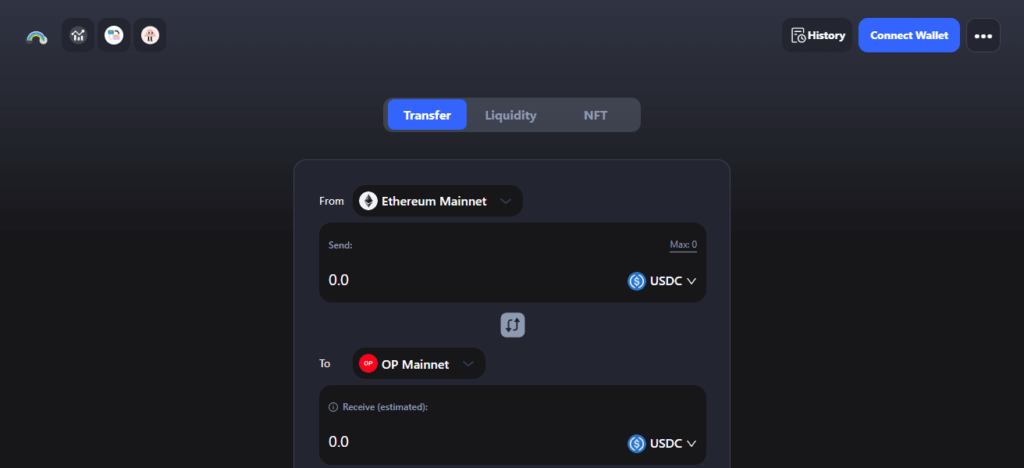
cBridge’s simplicity and strong performance have earned a loyal community. Celer’s emphasis on highly scalable systems and user experience on cBridge is what makes it a highly reliable solution for bridging.
| Feature | Description |
|---|---|
| Layer-2 support | Bridges assets to Arbitrum, Optimism, and other L2s |
| State channel architecture | Enables fast and low-cost transfers |
| Liquidity mining | Incentives for liquidity providers |
| Intuitive UI | Easy-to-use interface for all users |
| Secure and scalable | Designed for high throughput and safety |
8. Rango Exchange
Rango Exchange is a cross-chain DEX aggregator that swaps assets through multiple bridges and DEXs to determine the most efficient route for the user.
It operates on over 50 blockchains and works with Thorchain, Multichain, and Celer. Rango’s smart routing technology improves transaction speed and cost for asset transfers while also ensuring reliability.
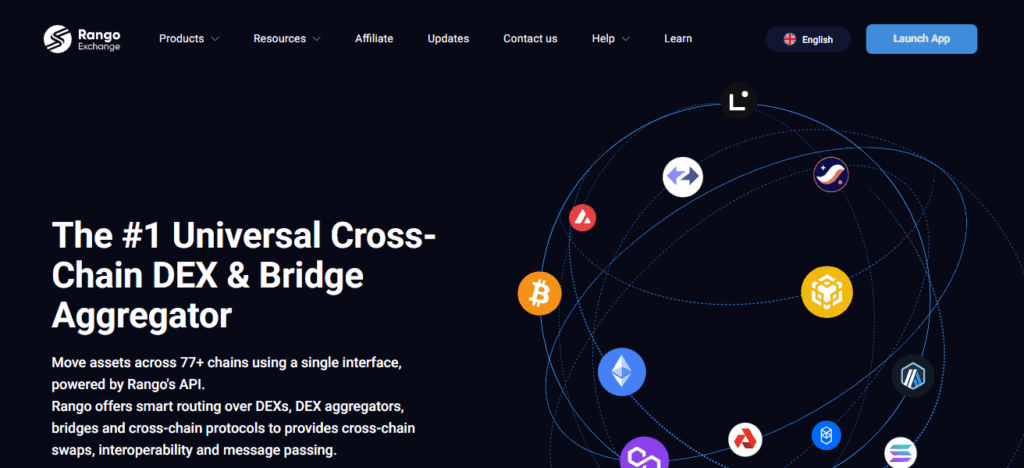
Rango is a wonderful asset for users wanting to bridge and swap rare tokens across chains as it removes the need for manual bridging. The range of functions and the aggregation model of Rango is a great multichain navigation asset.
| Feature | Description |
|---|---|
| DEX aggregator | Routes swaps through multiple bridges and DEXs |
| Smart routing | Finds optimal path for speed and cost |
| Supports 50+ chains | Broad blockchain interoperability |
| Token flexibility | Handles obscure and niche tokens |
| Integrated protocols | Works with Thorchain, Multichain, Celer, and more |
9. Thorchain
Thorchain is a protocol for decentralized liquidity that makes it possible to swap native coins on chains like Bitcoin, Ethereum, BNB Chain, and Litecoin.
As compared to wrapped tokens, users on Thorchain are able to swap real assets and do so without intermediaries.
Thorchain makes use of a unique liquidity pool and the RUNE token to help seamless cross-chain transactions be possible.
This is for users who wish to move assets without crossed exchanges, and even without wrapped synthetic tokens. This is what makes Thorchain stand unique bridging over decentralization.
| Feature | Description |
|---|---|
| Native asset swaps | No wrapped tokens—real asset bridging |
| Decentralized liquidity | Uses RUNE to facilitate cross-chain swaps |
| Supports BTC, ETH, LTC | Bridges major non-EVM chains |
| No intermediaries | Fully decentralized protocol |
| Security-first | Strong focus on safeguarding user funds |
10. LI.FI
LI.FI is a smart routing protocol cross-chain swapping by bridging and integrating DEXs for automated seamless transitions.
LI.FI connects to and supports dozens of chains and major wallets and dApps and is even integrated to LI.FI APIs allowing users to build cross-chain functions in their software.
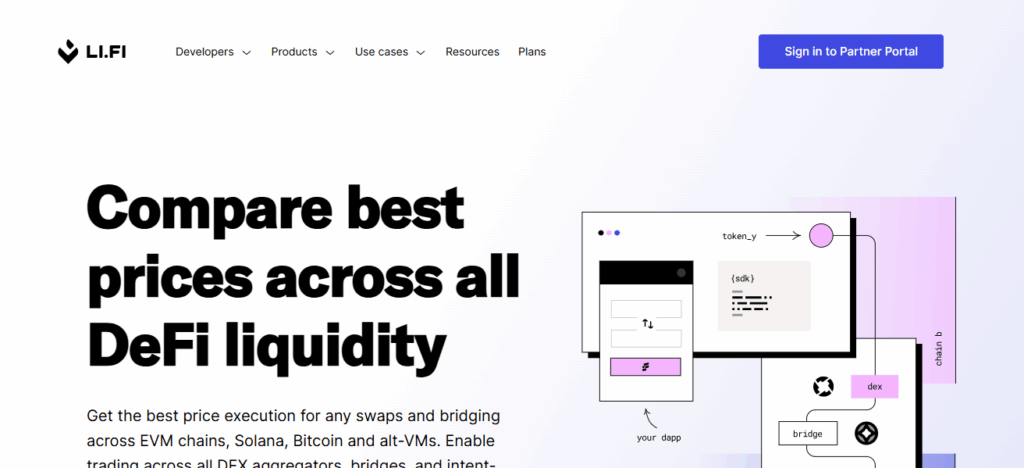
LI.FI smart routing automatically determines the strongest paths to optimize for lowest latency, expense, and over value on guaranteed cash flows to seamless facilitate cross-chain transitions.
LI.FI prioritization on developer functionalities and customer satisfaction is a core pillar that bolsters its reputation on seamless multichain unifications.
| Feature | Description |
|---|---|
| Bridge aggregator | Combines multiple bridges for best results |
| DEX integration | Includes decentralized exchanges in routing logic |
| Developer APIs | Easy integration for cross-chain functionality |
| Wallet compatibility | Works with major crypto wallets |
| Smart routing engine | Optimizes for speed, cost, and reliability |
Conclusion
In conclusion, the best crypto bridging platforms provide swift, safe, and affordable cross-chain transfers, giving customers the ability to transfer assets across different blockchains without any challenges.
From DeFi traders, NFT fans, and developers to Synapse and LayerZero, it offers seamless interoperability. In a multichain ecosystem, such bridges unlock liquidity and broaden the decentralized possibility.
FAQ
Cross-chain bridging allows users to transfer crypto assets between different blockchains seamlessly.
They offer faster transactions, lower fees, and eliminate the need for centralized exchanges
Multichain, Rango Exchange, and LI.FI support 40+ blockchains each.
Yes, if using trusted platforms like Synapse, LayerZero, or Thorchain with strong security protocols.
Yes, platforms like Wormhole support NFT transfers across chains.

