



This article will showcase the top Crypto KYC Verification Providers assisting cryptocurrency exchanges and blockchain platforms in meeting compliance obligations worldwide.
These providers equip businesses with identity verification, AML screening, and fraud prevention tools, streamlining the user onboarding process.
In the fast-changing crypto landscape, effective KYC in crypto fosters trust, and maintaining compliance, alongside managing risk, underscores the importance of selecting the right crypto KYC provider.
Key Points & Best Crypto KYC Verification Providers
- Sumsub – Global KYC/AML compliance, supports crypto exchanges with fast onboarding.
- Trulioo – Extensive identity database, strong coverage across 195+ countries.
- Jumio – AI-powered ID verification, biometric checks for fraud prevention.
- Shufti Pro – Flexible KYC solutions, video KYC and multilingual support.
- Ondato – End-to-end compliance suite, strong video verification tools.
- IDnow – Trusted in Europe, secure identity verification with e-signature integration.
- Signzy – Indian market leader, e-KYC and video KYC with government database integration.
- Veriff – High-speed verification, strong fraud detection with AI.
- Authenteq – Blockchain-based identity verification, privacy-focused approach.
- Passbase – Developer-friendly APIs, customizable KYC workflows for startups
10 Best Crypto KYC Verification Providers
1. Sumsub
Sumsub is utilized by crypto exchanges, fintechs, and digital services for identity verification and compliance. It is an all-in-one, end-to-end compliance and identity verification platform.
With automated document verification, biometric selfie matching, device risk scoring, and AML/sanction’s screening, along with ongoing monitoring, businesses can meet regulatory obligations across jurisdictions.
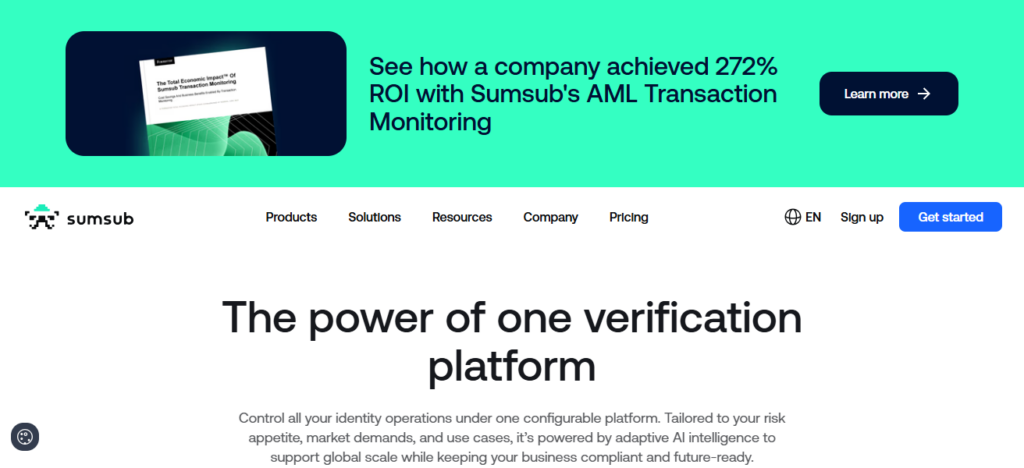
Rapid verification and customizable rules means further onboarding is often completed in under a minute, decreasing fraud risk while improving conversion.
With global coverage and hundreds of supported ID types, it is perfect for international crypto platforms needing scalable KYC processes.
Sumsub – Key Features
- Automated Document Verification: Uses AI to verify passports, IDs, and driver’s licenses in real-time.
- Biometric & Liveness Checks: Prevents identity fraud by deep fake through selfie-document matching.
- AML & Sanctions Screening: All users are screened with the global watchlist, PEP, and sanctions.
- Ongoing Monitoring: Tracks user risk to remain compliant with regulatory requirements post onboarding.
| Pros | Cons |
|---|---|
| All-in-one KYC, AML, and fraud prevention platform | Pricing can be high for startups |
| Fast verification with high approval rates | Advanced features require configuration |
| Strong global document coverage | UI may feel complex for beginners |
| Customizable compliance rules | Human review costs extra |
2. Trulioo
Trulioo has positioned itself as a global leader in identity verification thanks to its extensive network of data resources and compliance abilities.
For KYC and KYB services, Trulioo connects to thousands of trusted data providers to verify consumers and businesses across multiple countries.

GlobalGateway by Trulioo offers full-service checks, including document verification, watchlist checks, and address verification, rendering it ideal for enterprises requiring expansive geographic reach and regulatory compliance at scale.
GlobalGateway’s sophisticated API and support for documents from across the globe assist crypto businesses in onboarding users successfully.
Trulioo – Key Features
- Global Data Network: Access to countless commercial and governmental data sources from every country.
- KYC & KYB Support: Verification of individuals and businesses for crypto and fintech platforms.
- Address & Identity Validation: Validates user identity through name, address, and date of birth.
- Enterprise-Grade API: Scalable architecture intended for large-volume verifications.
| Pros | Cons |
|---|---|
| Extensive global data sources | Limited biometric-first verification |
| Strong KYB and enterprise compliance | Higher costs for multi-country checks |
| Excellent coverage for developed markets | Not ideal for small crypto startups |
| Reliable API performance | Setup can be time-consuming |
3. Jumio
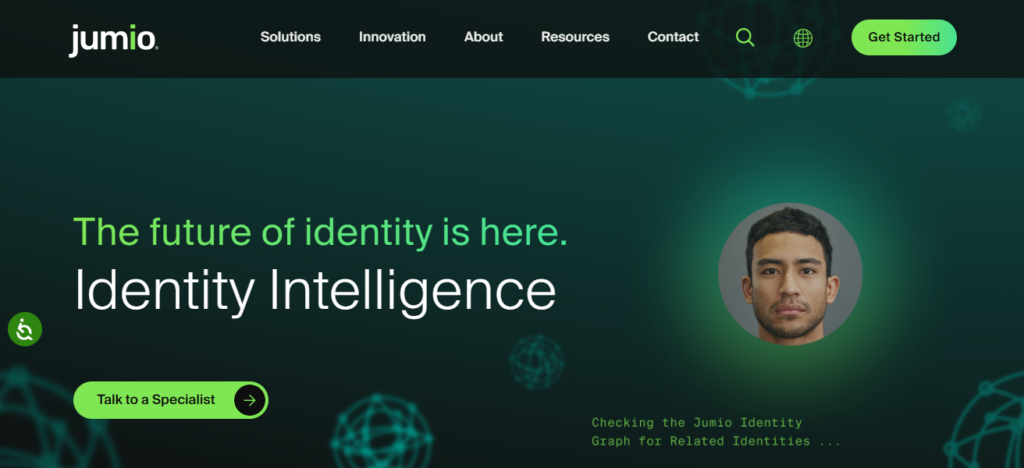
Jumio has developed an AI-powered identity verification service that is trusted by financial institutions and crypto companies for safe customer onboarding.
Jumio has patented a mix of document verification, optical character recognition (OCR), and real-time user verification through biometric and live detection.
Jumio also offers real-time verification in multiple countries. Jumio has integrated anti-money laundering (AML) screening and ongoing monitoring of risks, which helps customers address regulatory requirements and minimize losses due to fraud.
These complex regulatory requirements, high user verification and compliance fraud scores, along with a high level of international ID coverage, make fraud regulatory requirements complex.
These factors, along with high demand for user verification and compliance, make Jumio an expensive solution to integrate.
Jumio – Key Features
- AI-Powered ID Verification: Identifies and analyzes all forms of ID using machine learning in real-time.
- Advanced OCR Technology: High accuracy of extraction and validation with ID data.
- Biometric Face Matching: Through facial recognition, identity is confirmed with liveness detection.
| Pros | Cons |
|---|---|
| High-accuracy AI and biometric verification | Premium pricing |
| Advanced liveness detection | Slower onboarding for low-bandwidth regions |
| Trusted by banks and enterprises | Less flexible pricing models |
| Strong AML and risk monitoring | Complex integration for small teams |
4. Shufti Pro
Shufti Pro provides scalable, AI-driven KYC, KYB, and AML verifications via a single API and supports numerous documents and languages worldwide. It integrates automated and optional human verification, allowing crypto, banking, and iGaming use cases.

Shufti Pro offers real-time verification of documents, biometrics, and sanctions screening to prevent fraud and maintain compliance.
Its rapid onboarding and flexible pricing enable clients to minimize operational friction, quickly reduce regulatory risk, and easily adapt to a range of global markets.
Shufti Pro – Key Features
- Unified API Integration: Consolidates KYC, KYB, and AML functions into a single API.
- Verification in Multiple Languages: Provides verification services across different languages and countries.
- Hybrid Model of Verification: Offers a unique mix of AI and optional human involvement.
- Global Sanctions & Watchlist Verification: Uses global AML databases to identify potential threats.
| Pros | Cons |
|---|---|
| Supports thousands of document types | Dashboard UI could be improved |
| Real-time verification results | Manual reviews increase cost |
| Flexible pricing options | Accuracy varies by region |
| Multi-language and multi-country support | Reporting features are limited |
5. Ondato
Ondato is an all in one identity verification service provider, KYC, KYB, AML screening and risk scoring integrated into one platform.
They provide document, biometric and video KYC with customizable workflows to meet regulation requirements, making them a good fit for regulated fintechs and crypto companies.
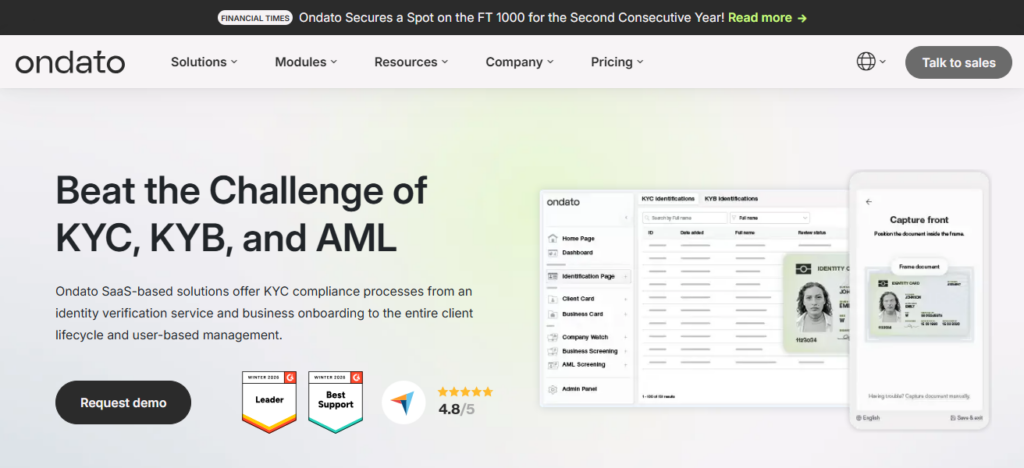
Ondato automates case management and compliance reporting, in turn, lessening manual work while keeping an audit trail.
Most of their attention is on seamless onboarding and strong controls to help clients remain compliant with their cross-border business.
Ondato – Key Features
- KYC Via Video: Video identity verification for users categorized as high risk.
- Workflows are Adaptable: Businesses are able to modify KYC to different regulatory requirements.
- Case Management as a Service: Compliance and reporting overview via a single hub for dashboards.
- Identity Risk Scoring: Risk levels based on identity and AML data are assigned.
| Pros | Cons |
|---|---|
| Video KYC and biometric options | Smaller global coverage than competitors |
| Strong compliance reporting tools | Less known outside Europe |
| Custom workflows for regulation-heavy markets | Limited SDK customization |
| Integrated AML screening | Pricing not transparent |
6. IDnow
IDnow offers fully automated and hybrid KYC solutions, adjusting to specific regulations as they come. Their automated solutions utilize AI, and their high-assurance checks include human oversight.
IDnow also uses biometric face matching, document scanning, and video verification to help clients in the financial and crypto industries comply with Europe’s stringent AML and KYC regulations.
Additional products that IDnow offers include e-signature, NFC ID, and hybrid remote identity verification solutions, which increase the speed and security of compliant digital onboarding.
IDnow – Key Features
- Hybrid KYC Solutions: Uses a combination of automated and manual verification.
- NFC-Integrated ID Checks: Securely scans and reads micro-chips in passports and national ID cards.
- Facial Recognition Biometric Matching: Checks if the person is who they claim to be using facial recognition.
- e-Signature Integration: Compliance stays intact and documents can be signed digitally.
| Pros | Cons |
|---|---|
| Strong compliance with EU regulations | Limited coverage outside Europe |
| NFC and video-based verification | Higher cost for video KYC |
| High assurance identity checks | Slower verification with human agents |
| Trusted by regulated institutions | Not ideal for fast-scaling crypto apps |
7. Signzy
Signzy is a digital identity verification and compliance platform that allows for fast and safe user onboarding.
It’s One-Touch KYC feature combines document OCR, biometric verification, and liveness checks into a single API workflow.
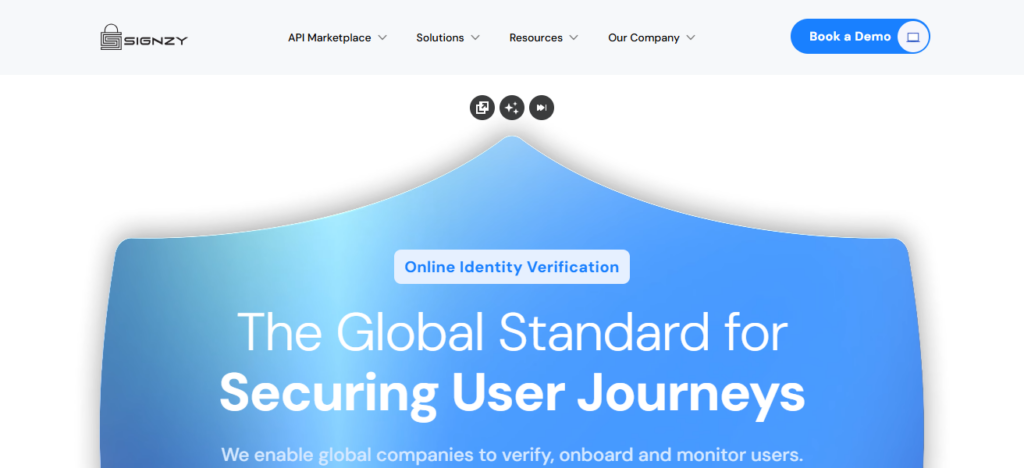
Signzy also provides AML screening, risk assessment, and transaction monitoring. The flexible global compliance of Signzy’s platform helps crypto and fintech companies minimize user drop offs and decrease operational costs.
The seamless end-to-end verification and API give developers efficient onboarding across multiple industries.
Signzy – Key Features
- KYC in One Touch: Onboarding is made easy with the combination of Optical Character Recognition (OCR), biometrics, and liveness verification.
- Anti-Money Laundering & Transaction Monitoring: Identifies potential high-risk activities and financial threats.
- Developer-Friendly APIs: Seamlessly integrate with your web and mobile solutions.
- Compliance Tools: Adapts to your needs by meeting global and local compliance requirements.
| Pros | Cons |
|---|---|
| Excellent for Indian and emerging markets | Global coverage still expanding |
| One-Touch KYC improves conversions | Limited advanced analytics |
| Developer-friendly APIs | UI feels basic |
| Cost-effective pricing | Fewer enterprise integrations |
8. Veriff
Veriff has built an identity verification process that makes use of AI and biometric fraud detection technologies to identify fraud and synthetic identities.
Automated identity verification can be used when a user submits documents from various governments. To increase fraud detection, passive liveness detection makes the process quicker and easier for the user.
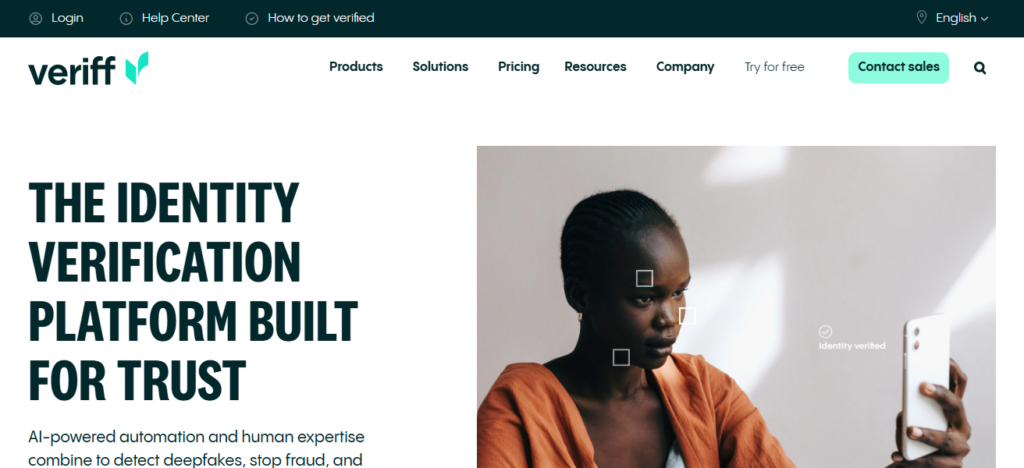
Veriff helps crypto platforms, fintech companies, and online services to securely onboard users to global KYC regulations.
Companies can integrate trust-building, high-accuracy verification that reduces abandonment during the onboarding process with a robust API and SDK.
Veriff – Key Features
- AI Fraud Detection: Detects fraudulent IDs, impersonation, and synthetic fraud.
- Passive Liveness Detection: Confirms real users without requiring complicated actions.
- Worldwide Document Coverage: Thousands of identity document types supported.
- Speed of Verification: Onboarding results are delivered in seconds to minutes.
| Pros | Cons |
|---|---|
| Advanced AI fraud detection | Pricing can scale quickly |
| Passive liveness improves UX | Limited KYB functionality |
| High approval accuracy | Custom rules need support |
| Fast onboarding experience | Reporting tools are basic |
9. Authenteq
Authenteq offers an automated multi-channel identity verification service that integrates biometric face matching and ID document verification. Users’ identities can be verified in less than 2 minutes in most cases.
It is also privacy-preserving and allows users to manage their own digital identities, which is coupled with the feature that allows users to share verified identities with other services swiftly.
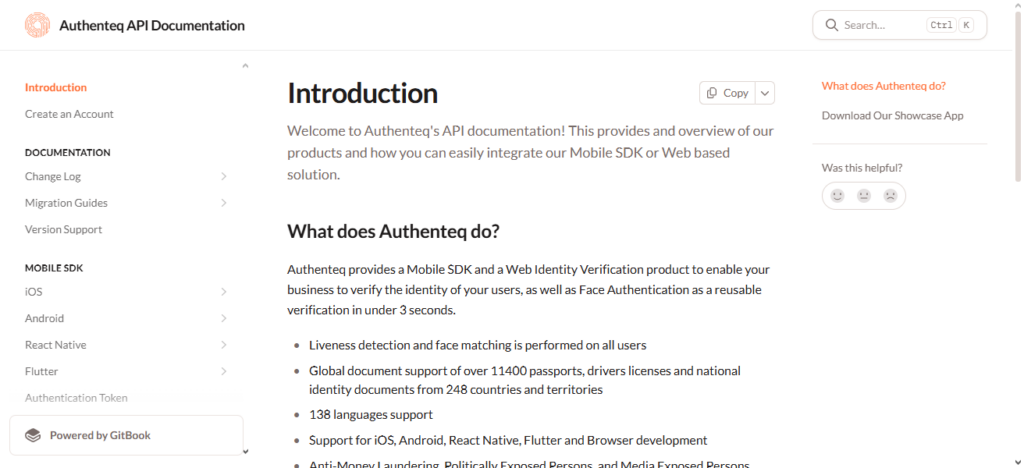
Its digital identity verification service is globally compliant and includes ID document verification, liveness checks, and AML screening, making it suited for most crypto projects that want frictionless onboarding and good fraud prevention. Authenteq’s services minimize user drop-offs.
Authenteq – Key Features
- Privacy-First Verification: Control your identity data.
- Reusable Digital Identities: Verified identities can be used across multiple platforms.
- Biometric Authentication: Face recognition technology to unlock secure identity confirmation.
- Quick Onboarding Flow: Verification is completed in minutes to enhance the user experience.
| Pros | Cons |
|---|---|
| Privacy-focused identity verification | Smaller ecosystem |
| Fast verification time | Limited enterprise adoption |
| Reusable digital identities | Fewer compliance customization options |
| Strong biometric accuracy | Not ideal for high-risk jurisdictions |
10. Passbase
Passbase provides an identity verification and KYC solution that focuses on the needs of the customer. Companies can ensure compliance while doing document and biometric checks to onboard customers quickly.
It integrates via API and SDKs for the web and mobile which lessens the development workload. Passbase makes sure to streamline user experience while handling data securely to comply with features like AML screening and watchlist checks.
This is great for identity verification for crypto platforms and for startups that want to onboard customers quickly while maintaining security and versatility.
Passbase – Key Features
- User-Centric Design: Smooth and frictionless onboarding is the primary focus.
- API & SDK Integration: Simple to implement across web and mobile applications.
- Document & Selfie Checks: Biometric verification is paired with ID verification.
- AML & Watchlist Screening: Global compliance is guaranteed.
| Pros | Cons |
|---|---|
| Smooth user experience | Fewer advanced AML tools |
| Easy API and SDK integration | Limited customization |
| Ideal for startups and Web3 projects | Not designed for heavy enterprise use |
| Transparent compliance workflows | Smaller document coverage |
Conclusion
To summarize, the Best Crypto KYC Verification Providers are instrumental in enabling crypto businesses to comply with the law, avoid fraudulent activities, and onboard users securely.
With identity verification, biometric verification, and AML screening, they assist businesses with meeting international compliance standards.
Selecting the most appropriate KYC solution fosters trust, mitigates risks, and helps crypto businesses operate with confidence in a digitally regulated environemnt.
FAQ
Crypto KYC providers help exchanges verify user identities to meet regulatory requirements and prevent fraud.
KYC ensures compliance with AML laws, reduces scams, and builds trust with users and regulators.
Crypto exchanges, wallets, DeFi platforms, fintech companies, and NFT marketplaces use KYC services.
Key features include ID verification, biometric checks, AML screening, and global compliance support.
Yes, most countries require KYC to comply with anti-money laundering and counter-terrorism laws.

