


This article discusses the Best Cross-Border Payment Exchanges for Instant Corporate Stablecoin Settlements. I will describe some of the major platforms that facilitate quick, safe, and low-cost international transactions.
Additionally, I will describe how these exchanges utilize stablecoins in order to enhance liquidity and shorten settlement times in addition to offering near real-time cross-border solutions for corporate clients in the ever-changing digital economy.
Key Poinst & Best Cross-Border Payment Exchanges Optimized for Instant Corporate Stablecoin Settling
| Platform | Explanation |
|---|---|
| RippleNet (Ripple) | Enables instant cross-border payments using XRP and liquidity solutions globally |
| Circle Payments | Facilitates global settlements with USDC stablecoin for enterprises efficiently instantly |
| Coinbase International | Provides institutional crypto trading and stablecoin settlement infrastructure globally, securely |
| Binance Pay | Enables merchant cross-border crypto payments and stablecoin transfers instantly worldwide |
| Fireblocks | Secure digital asset infrastructure enabling stablecoin transfers for enterprises globally |
| Stellar Network | Blockchain network designed for a fast low-cost cross-border payment settlement system |
| Bitso | Latin American exchange supporting stablecoin remittances and cross-border liquidity flows |
| Kraken | Global exchange offering institutional stablecoin trading and settlement services securely |
| BitPay | Payment processor enabling crypto and stablecoin merchant settlements globally, fast |
| Anchorage Digital | Regulated custody platform supporting stablecoin payments and settlements, institutional grade |
10 Best Cross-Border Payment Exchanges Optimized for Instant Corporate Stablecoin Settling
1. RippleNet (Ripple)
RippleNet has established itself as an enterprise blockchain payment network for real-time cross-border settlements. Utilizing Ripple’s On-Demand Liquidity (ODL), which employs XRP, RippleNet does away with the need for pre-funded nostro accounts, thereby decreasing capital lockup for banks and corporates.
By 2026, Ripple will have also developed payment rails for the ISO 20022 standard, thereby enhancing RippleNet’s interoperability with the majority of global banking frameworks. RippleNet’s relationships with banks and financial institutions allow for near real-time settlement for a variety of fiat currencies, which makes RippleNet scalable and low-cost for international corporate payment solutions.
| Pros | Cons |
|---|---|
| Near-instant cross-border settlement using ODL | Regulatory uncertainty in some regions |
| Eliminates the need for pre-funded nostro accounts | XRP dependency may concern some institutions |
| Strong banking partnerships worldwide | Adoption still uneven across smaller markets |
| ISO 20022 compatibility improves integration | Limited transparency in some corridor pricing |
2. Circle Payments
Employed USDC stablecoin settlement infrastructure which allows for fast and fully reserved digital dollar settlements across border transactions. Circle Payments is favored by enterprises as it provides transparent and regulated stablecoin liquidity.
With the Cross-Chain Transfer Protocol (CCTP) upgrade, Circle Payments has reduced the need for wrapped tokens to allow USDC to be transferred across blockchains. This lessens the friction and counterparty risk during settlement. With Circle Payments, corporates can implement payments that can be executed any time of the day, thereby reinforcing Circle Payments’ reputation as a compliant stablecoin liquidity provider.
| Pros | Cons |
|---|---|
| Fully reserved USDC ensures high transparency | Heavy reliance on the USDC ecosystem |
| CCTP enables cross-chain transfers without wrapping | Network fees vary across blockchains |
| 24/7 programmable payments for enterprises | Regulatory scrutiny of stablecoins persists |
| Strong compliance and audit standards | Limited support outside USDC ecosystem |
3. Coinbase International
Coinbase International is a cross-border corporate payment solution that offers highly regulated cross-border payment solutions. With advanced custody provided by Coinbase Prime, secure settlement solutions have been enhanced.
Coinbase International offers deep settlement liquidity for USDC and other stablecoins. With a global reach, corporate clients can take advantage of connected payment solutions and derivatives across the digital asset and traditional finance ecosystems.
| Pros | Cons |
|---|---|
| High liquidity in USDC and major stablecoins | Higher fees compared to some competitors |
| Strong regulatory compliance framework | Limited availability in restricted jurisdictions |
| Institutional-grade custody via Coinbase Prime | Complex onboarding for small enterprises |
| Real-time settlement infrastructure | Dependence on market liquidity conditions |
4. Binance Pay
For businesses, Binance Pay offers a way to make easy cross-border payments using crypto or stablecoins. Because payments can automatically be sent throughout Binance at no cost, businesses can make their own global payments.
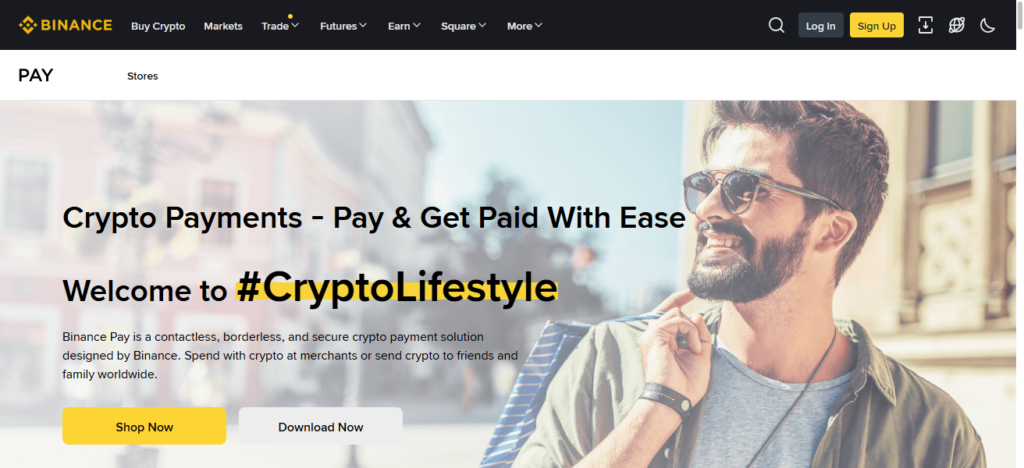
In 2026 year, Binance Pay created tools for merchants to make payments using a QR code. Businesses can make their payments in USDT, BUSD, and other stablecoins, meaning businesses can continue making payments without waiting for a bank to process their payment or without the extra cost of currency conversion.
| Pros | Cons |
|---|---|
| Instant internal transfers with zero fees | Regulatory restrictions in several countries |
| Wide merchant adoption globally | Centralization concerns due to the Binance ecosystem |
| Supports multiple stablecoins | Limited interoperability outside Binance network |
| Easy QR-based payment integration | Compliance uncertainty in some regions |
5. Fireblocks
Fireblocks is a digital asset trading and custody platform with a focus on stablecoins and crypto custody for the institutional client. Fireblocks uses the MPC (multi-party computation) technology for a secure way of holding private keys that enables rapid settlement.
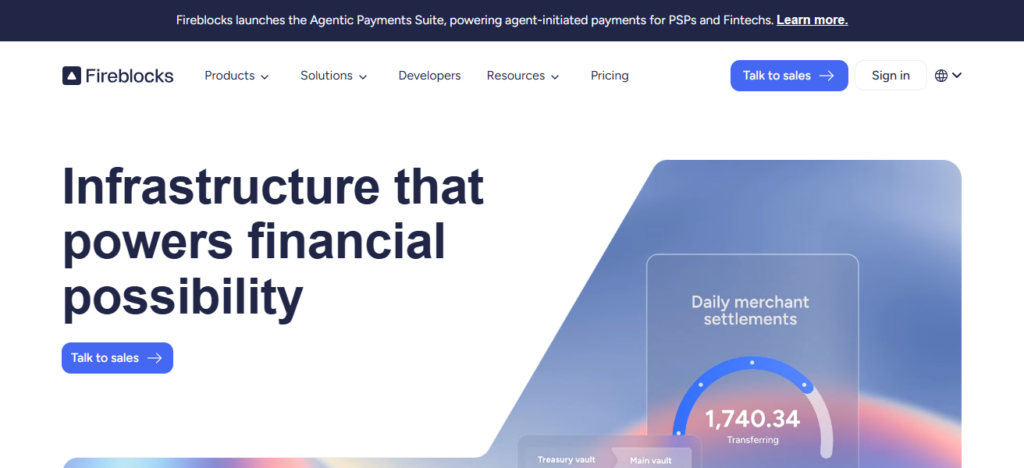
Fireblocks is a platform that many businesses use to execute their treasury functions and manage their cross-border payments and liquidity on multiple exchanges and across multiple blockchains. Having recently added tokenization to their platform, Fireblocks is rapidly changing their infrastructure to support more of the global economy.
| Pros | Cons |
|---|---|
| Advanced MPC security for asset protection | High enterprise implementation cost |
| Supports multi-exchange liquidity management | Requires technical integration expertise |
| Fast institutional settlement workflows | Not a consumer-facing platform |
| Strong tokenization and treasury tools | Dependency on third-party exchanges |
6. Stellar Network
Stellar Network is a decentralized network designed to be used for issuing stablecoins and performing cross-border payments, and for making those payments easy and fast. For financial institutions, Stellar Network is a way to help settle digital currency cross-border payments in a matter of seconds.
The newest update to the Stellar Network, the Soroban smart contracts, has made stablecoin settlement networks even better for businesses. Stellar Network has many partnerships with businesses of all types, including banks, and is even better for businesses that work with emerging markets. Stellar Network has earned a great reputation for being one of the best networks to use for cross-border payments.
| Pros | Cons |
|---|---|
| Extremely low transaction costs | Lower liquidity than major exchanges |
| Fast settlement for cross-border payments | Less institutional adoption compared to Ripple |
| Strong presence in emerging markets | Limited advanced trading infrastructure |
| Smart contract support via Soroban | Ecosystem still developing |
7. Bitso
Bitso has developed into one of the largest exchanges in Latin America that uses crypto to process cross-border payments. Bitso stands out for using USDC and other stablecoins to develop quick and affordable solutions for crypto transit for both natural and legal persons.
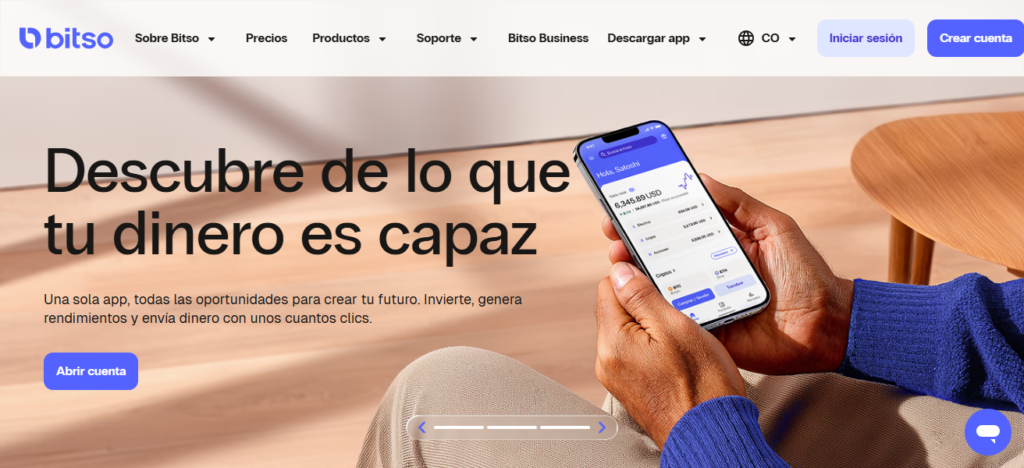
Due to the considerable expansion of its offer for institutions, which now includes payment lanes guided by application programming interfaces and flexible constructions of legal frameworks, Bitso has the largest market share in Latin America and is becoming a relevant actor for cross-border payment solutions for enterprises.
| Pros | Cons |
|---|---|
| Strong US–Latin America remittance corridor | Limited global reach beyond LATAM |
| Efficient USDC-based settlements | Regional regulatory dependency |
| API-driven institutional solutions | Smaller liquidity pools globally |
| Fast cross-border transfers | Limited product diversity |
8. Kraken
Kraken is a crypto exchange that operates in all jurisdictions and provides institutional clients with access to trade and settle crypto via stablecoins. Kraken provides excellent liquidity and operates an advanced OTC desk for corporate clients. Kraken’s infrastructure is designed with large clients in mind, with a focus on compliance, safety, and transparency.
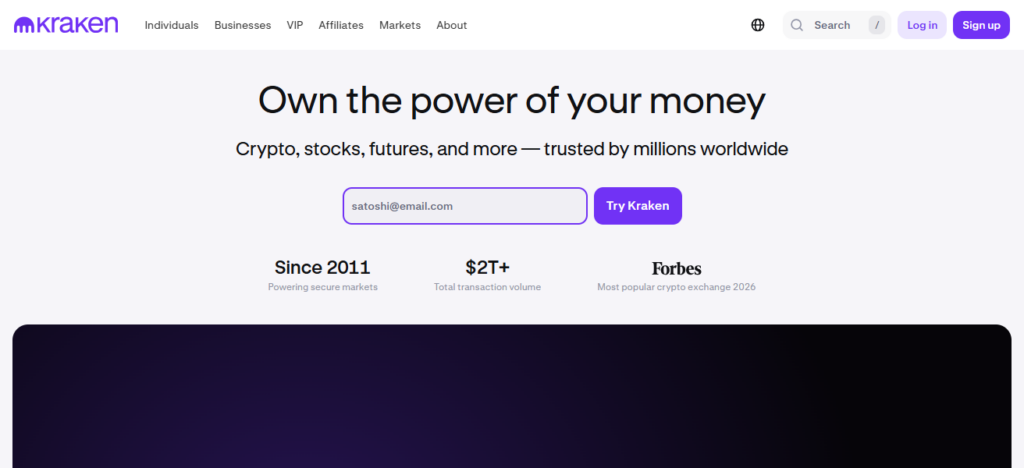
Recent improvements to Kraken’s settlement systems ensure that Kraken is a solid partner for large corporates in bridging the gap between the legacy banking system and the world of crypto.
| Pros | Cons |
|---|---|
| Strong regulatory compliance globally | Slower feature expansion vs competitors |
| Deep liquidity in stablecoins | Limited payment-specific tools |
| Secure custody and OTC services | Complex institutional onboarding |
| Transparent fee structure | Not optimized purely for payments |
9. BitPay
BitPay is an international crypto payment processing solution for merchants wishing to accept payments in stablecoins and crypto. BitPay reduces the risk of volatility in digital assets by instantly converting crypto to fiat or a stable asset.
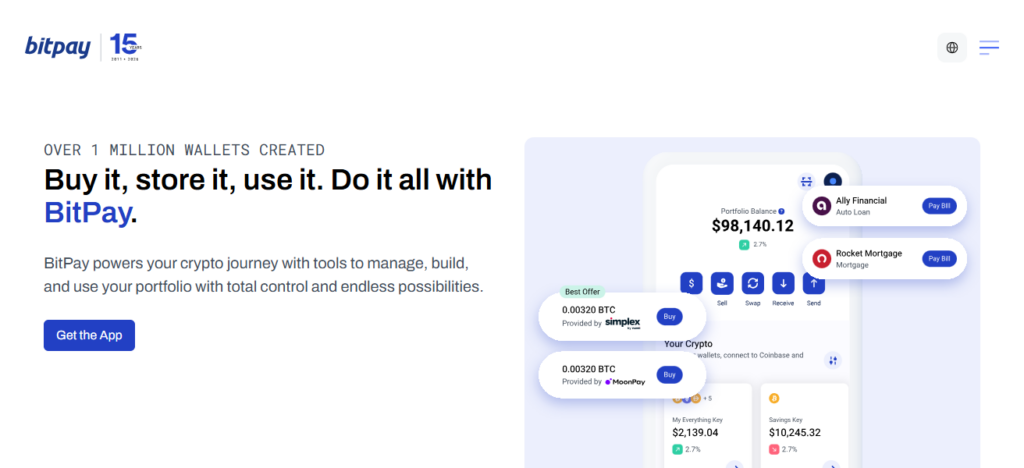
BitPay provides advanced enterprise solutions such as invoicing and payment tracking that are integrated on many major e-commerce systems. It is quickly becoming the preferred payment processing solution for enterprises that desire secure and affordable cross-border payments.
| Pros | Cons |
|---|---|
| Easy merchant integration globally | Limited advanced treasury features |
| Instant conversion to fiat or stablecoins | Transaction fees can add up |
| Reduces volatility risk for businesses | Less suitable for large institutional flows |
| Strong e-commerce compatibility | Dependence on payment gateway infrastructure |
10. Anchorage Digital
Anchorage Digital is a federally chartered digital asset bank. It offers institutional custody and the infrastructure for stablecoin settlement. Anchorage Digital supports the secure issuance, transfer, and settlement of digital assets for enterprises and financial institutions.
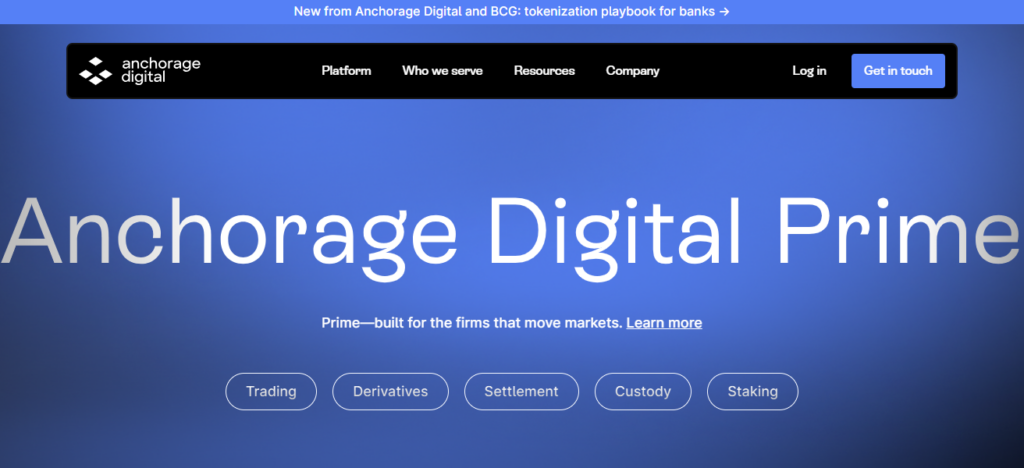
As a regulated firm in the U.S., Anchorage Digital is able to offer custody solutions and other services to corporate clients. Its automated settlement, integrated staking, and programmable treasury services are a key part of Anchorage Digital’s infrastructure for secure and compliant institutional cross-border stablecoin financial services.
| Pros | Cons |
|---|---|
| Federally regulated digital asset bank | Limited geographic availability |
| High institutional trust and compliance | High onboarding requirements |
| Secure custody and settlement tools | Not suitable for retail users |
| Advanced treasury automation features | Expensive for smaller enterprises |
Conclusion
In conclusion, each of the Best Cross-Border Payment Exchanges Optimized for Instant Corporate Stablecoin Settling is improving global finance with faster, cheaper, and more transparent ways to transact internationally.
Exchanges such as RippleNet, Circle, and Fireblocks are boosting enterprise liquidity, security, and compliance. With the continued adoption of stablecoins, these will be the most crucial solutions for the corporate sector to increase the effectiveness, efficiency, and cost-saving benefits of settling real-time cross-border payments in the digital economy.
FAQ
Circle Payments uses USDC infrastructure to enable fully reserved, instant, and compliant global settlements with 24/7 programmable payment capabilities for enterprises.
Yes, Coinbase International offers institutional-grade liquidity, custody via Coinbase Prime, and secure stablecoin settlement infrastructure for hedge funds and corporates.
Binance Pay enables instant, zero-fee internal transfers within its ecosystem and supports multiple stablecoins for fast cross-border merchant payments.
Fireblocks provides secure MPC-based infrastructure for custody, treasury automation, and high-speed stablecoin transfers across exchanges and blockchains.

