


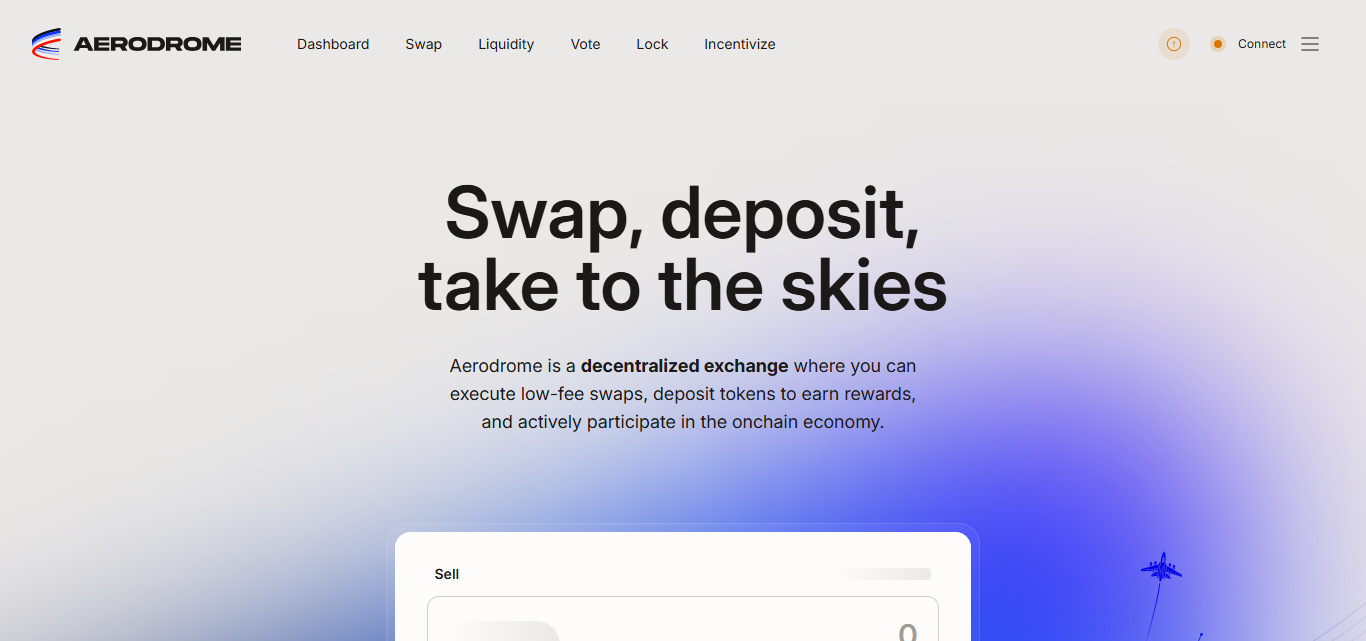
In this article, we will cover the most noteworthy competitors of Base Liquidity Mining and take a look at their liquidity pools, exchange functionalities, fees, and rewards for Liquidity Providing.
Compared will be Velodrome, Uniswap, PancakeSwap, SushiSwap, Balancer, Curve, Maverick, BeethovenX, SwapBased, and AlienBase. For each competitor, we will analyze their liquidity and reward structures, the types of pools they offer, and the primary risks for liquidity providers.
Key Points & Top Aerodrome Rivals for Base Liquidity Mining
| Platform | Explanation |
|---|---|
| Velodrome | Optimism-based DEX offering ve(3,3) liquidity incentives, swaps, gauges, and governance rewards. |
| Uniswap | Leading decentralized exchange providing concentrated liquidity pools across numerous Base-supported trading pairs. |
| PancakeSwap | Multi-chain DEX offering swaps, liquidity pools, farming opportunities, and competitive trading incentives. |
| SushiSwap | Established multichain DEX supporting liquidity provision, token swaps, farming, and decentralized governance. |
| Balancer | Flexible automated market maker enabling customizable pools, portfolio management, and liquidity strategies. |
| Curve Finance | Stablecoin-focused DEX designed for efficient swaps and liquidity provider opportunities. |
| Maverick Protocol | Dynamic liquidity infrastructure helping providers manage concentrated positions with automated capital efficiency. |
| Beethoven X | Balancer-powered DEX offering weighted pools, stable pools, liquidity incentives, and portfolio tools. |
| SwapBased | Base-focused decentralized exchange offering token swaps, liquidity pools, farming, and community incentives. |
| Alien Base | Base-native DEX providing liquidity pools, farming opportunities, token swaps, and reward mechanisms. |
10 Top Aerodrome Rivals for Base Liquidity Mining
1. Velodrome
Velodrome is a major constituent DEX of the Superchain ecosystem. It uses a connected model for swaps, liquidity, gauges and other mechanisms for incentivized voting. Velodrome’s liquidity model encompasses various types of pools including standard and non-standard fee pools.
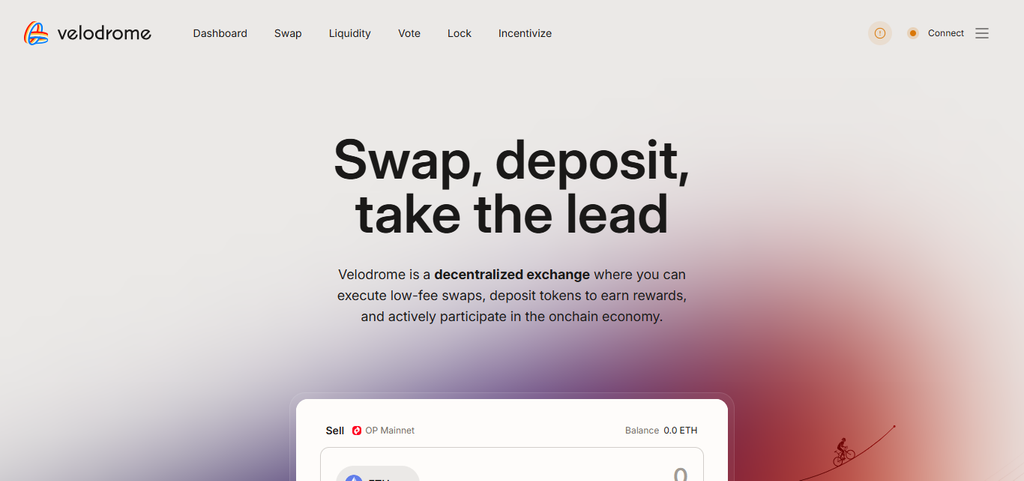
Its primary differentiator is its integration of governance in the voting mechanism to reward liquidity. It also bears some of the standard risks of decentralized finance and smart contract interactions.
Velodrome Pros & Cons
Pros
- Strong liquidity-incentive and governance-based reward structure.
- Supports multiple liquidity strategies and trading pairs.
- Designed around the broader Superchain ecosystem.
- LPs can earn trading fees plus eligible incentives.
Cons
- Rewards can change based on governance voting.
- VELO price volatility can affect overall returns.
- Impermanent loss remains a major LP risk.
- Smart-contract and protocol risks still apply.
2. Uniswap
All versions of Uniswap (Base and Layer 2) use the same general liquidity model. Liquidity pools in Uniswap V3 and V4 use a variant of the liquidity model that allows LPs to define the lower and upper bounds of the price range.
LPs in Uniswap V3 can also adjust the fee charged for trades in a pool and earn fees based on trades within that price range. LPs in all pools of Uniswap V3 and V4 earn fees based on trades. The primary risks remain impermanent loss and strategies’ ineffectiveness (outside of the price ranges selected for a position in Uniswap V3).
Uniswap Pros & Cons
Pros
- Strong Base ecosystem presence and deep liquidity.
- Wide selection of trading pairs and assets.
- Concentrated liquidity can improve capital efficiency.
- Established AMM with significant trading activity.
Cons
- Concentrated liquidity requires active position management.
- Impermanent loss can reduce LP returns.
- Out-of-range positions may stop earning fees.
- Fee income varies significantly between pools.
3. PancakeSwap
PancakeSwap’s Base layer allows users to swap tokens and provide liquidity. With the deployment of PancakeSwap’s V3 and Infinity pools, users were given more choices for liquidity management. PancakeSwap uses a model of concentrated liquidity, meaning liquidity providers set a range for the price of the token they wish to provide liquidity for. Infinity pools allow users to set a range as well, but give users more flexibility by allowing them to set a fee within a range.
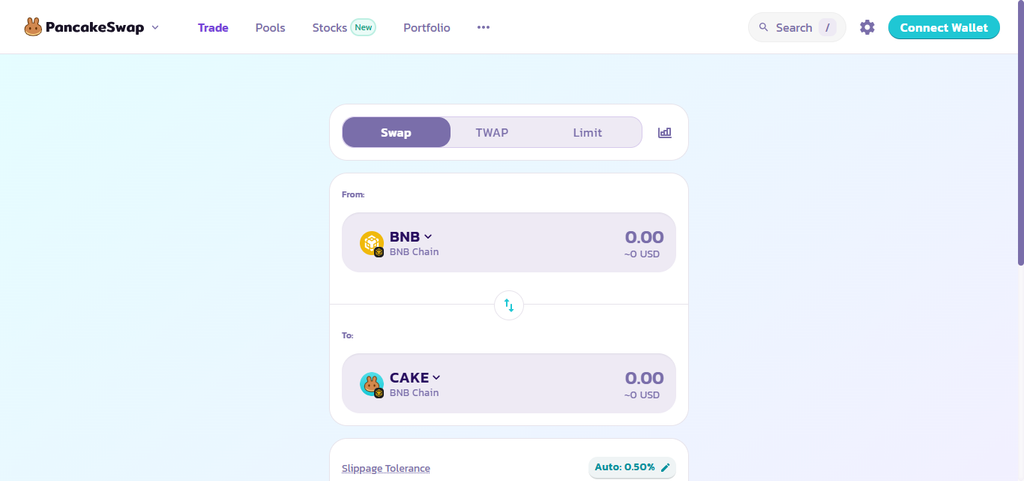
PancakeSwap focuses the majority of its liquidity on select pairs like WETH/cbBTC and WETH/USDC. Additionally, PancakeSwap focuses liquidity on select pairs for which it gives boosted rewards.
Rewards can also be in the form of CAKE or tokens from partnered projects. PancakeSwap focuses liquidity on select pairs and gives boosted rewards for select farming pools. However, users should be aware of risks including, but not limited to, impermanent loss, high volatility of rewards, and smart contract risks.
PancakeSwap Pros & Cons
Pros
- Established multichain DEX with Base support.
- Offers different liquidity and farming opportunities.
- Concentrated liquidity provides greater capital flexibility.
- Additional incentives may increase potential LP returns.
Cons
- Reward programs can change over time.
- Concentrated positions require ongoing management.
- Reward-token volatility can reduce realized returns.
- LPs remain exposed to impermanent loss.
4. SushiSwap
SushiSwap allows users to provide liquidity to a variety of different pools and farm rewards tokens across different blockchains. Like other AMMs, SushiSwap determines pricing based on the supply and demand for a given token.
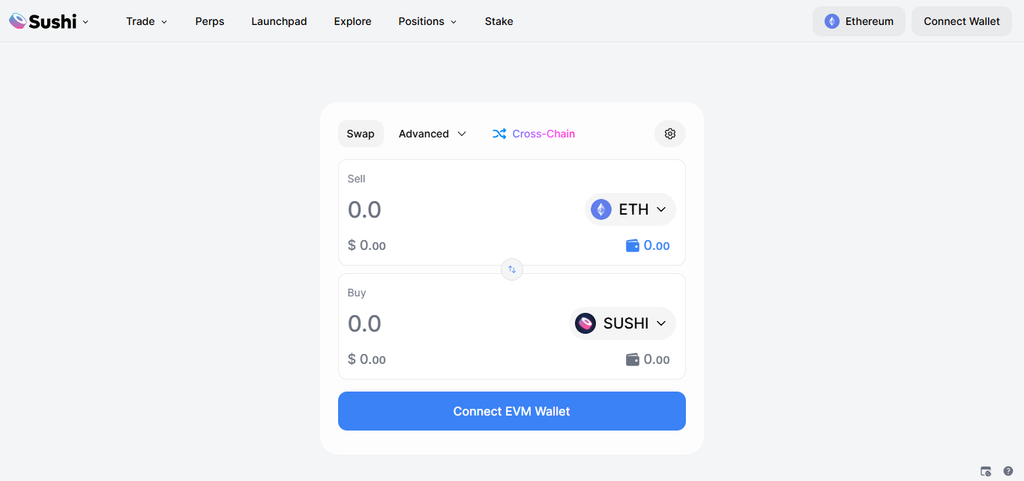
SushiSwap rewards LPs for providing liquidity by charging a swap fee. Users should be aware of varying levels of activity and liquidity across different pools. LPs are also at risk of impermanent loss and should also take into consideration price volatility of reward tokens.
SushiSwap Pros & Cons
Pros
- Multichain ecosystem with Base liquidity support.
- Provides token swaps and liquidity pools.
- Familiar AMM structure for DeFi users.
- Some pools may offer additional incentives.
Cons
- Individual Base pools can vary considerably in liquidity.
- Smaller pools may generate limited trading fees.
- Incentive availability is not consistent across pools.
- Impermanent loss and smart-contract risks remain.
5. Balancer
Balancer offers an advanced version of the automated market maker model that is comprised of flexible liquidity pools as opposed to pools that are restricted to two token pairs. With Balancer’s Base deployment, liquidity providers (LPs) are given the ability to provide liquidity to a variety of pools constructed by the Balancer team with various weights of different assets.
LPs can earn fees from swap transactions, and may earn additional rewards if the pool has liquidity provision rewards. LPs should assess pools based on the pool’s TVL, trading activity, composition and rewards.
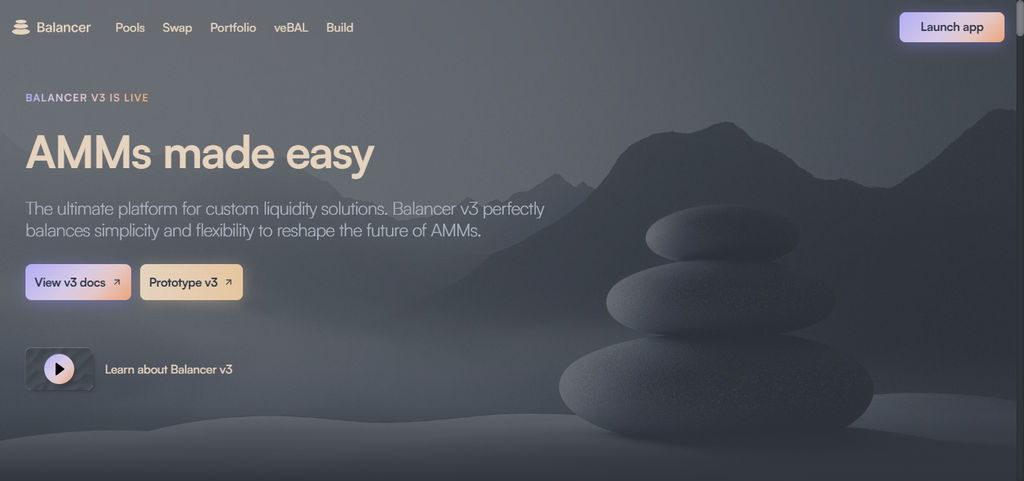
LPs may also consider impermanent loss and other risks when providing liquidity. LPs must assess a variety of risks associated with providing liquidity to a particular pool and should also assess the smart contract risk.
Balancer Pros & Cons
Pros
- Supports flexible and customizable liquidity pools.
- Enables diversified pools beyond traditional pair structures.
- Multiple pool designs support different strategies.
- LPs can earn trading fees and incentives.
Cons
- Pool structures can be complex for beginners.
- Returns vary significantly between individual pools.
- Token-weight changes can affect portfolio exposure.
- Smart-contract and impermanent-loss risks remain.
6. Curve Finance
The Curve Finance platform, especially useful for liquidity providers interested in stablecoin markets, uses its AMM to provide efficient route for trades to to to near-equivalent assets. Users should check available pools and incentives on the Base layer, as deployment and rewards are drawn at the pool level.
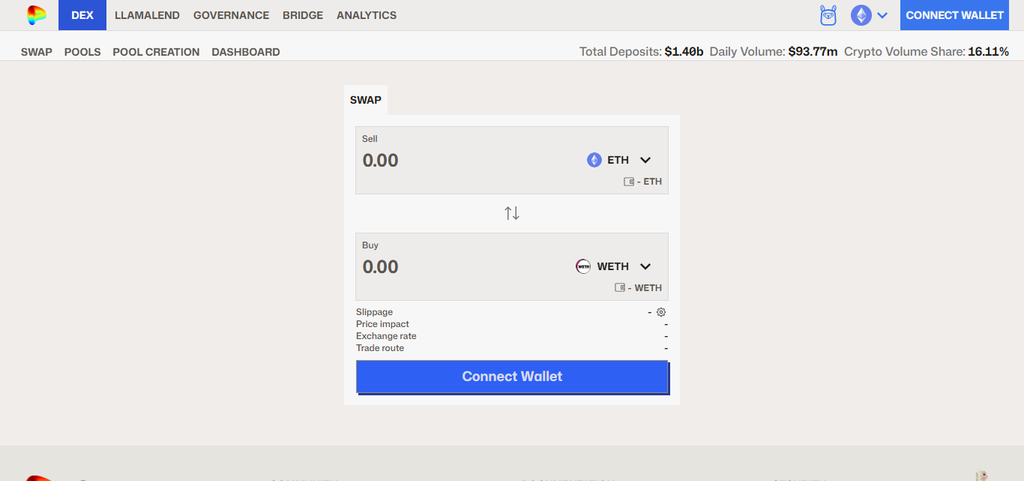
Potential opportunities should be assessed based on composition of stablecoins, TVL, trading volume, and fees. Other factors include the CRV and/or partner rewards. Liquidity providers are exposed to impermanent loss and other risks. Price divergence, in some cases, may be alleviated, but fully addressed, by the structure of Curve’s pools. Other risks include price volatility of rewards, changes in stablecoin peg, and smart contract risks.
Curve Finance Pros & Cons
Pros
- Strong focus on efficient stablecoin trading.
- Specialized AMM design supports correlated assets.
- Liquidity providers can earn trading fees.
- Eligible pools may provide additional incentives.
Cons
- Stablecoin depegging can create significant losses.
- Pool opportunities depend heavily on current incentives.
- Reward-token prices can fluctuate substantially.
- Smart-contract and liquidity risks remain.
7. Maverick Protocol
The Maverick Protocol’s AMM allows liquidity providers to maintain more control over the price specification of the liquidity pools. A more concentrated liquidity pool is achievable, and the position may be adjusted over time. The AMM for Base is not as simple as providing liquidity to a pool, and users should assess other pools based on TVL, trading volume, and fees.
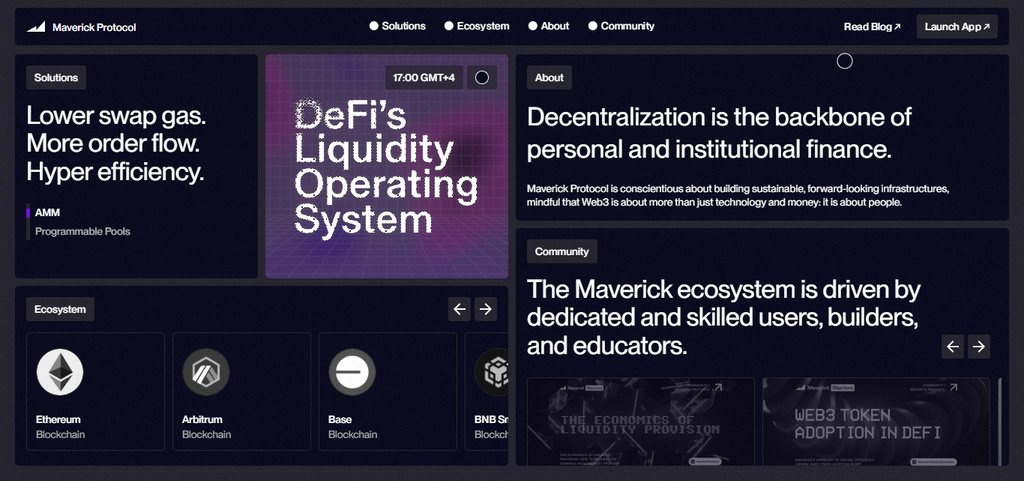
Maverick, like other AMMs, rewards LPs based on trading activity. Concentrated positions expose LPs to risks associated with price activity outside of the position’s range. Other risks associated with LPs are smart contract risk, liquidity migration, and impermanent loss.
Maverick Protocol Pros & Cons
Pros
- Uses dynamic liquidity-management mechanisms.
- Provides greater control over liquidity placement.
- Can improve capital efficiency for selected strategies.
- Supports liquidity provision across different markets.
Cons
- Liquidity management can be more complicated.
- Price movements can affect concentrated positions.
- Impermanent loss remains possible.
- Pool activity and incentives vary over time.
8. Beethoven X
Pools supported by Beethoven X are its primary basis of evaluation, along with trading activity and pool composition. Beethoven X utilizes Balancer v2’s liquidity framework. Its pools provide liquidity mining opportunities. Base’s liquidity pools provide similar features and should be analyzed using the same parameters as Beethoven X.

The conditions of pools determine the strategies that can be employed to realize a positive return. Similar to other liquidity pools, the price volatility of tokens, especially if a user is providing concentrated liquidity, impermanent loss, smart contract risks, and low pools liquidity are primary risks.
Beethoven X Pros & Cons
Pros
- Balancer-based infrastructure supports flexible pools.
- Can accommodate diversified liquidity strategies.
- Pool structures can differ from standard two-token AMMs.
- LPs may earn fees and additional incentives.
Cons
- Pool mechanics may be complex for beginners.
- Available opportunities can vary across deployments.
- Individual pools carry different asset risks.
- Liquidity and trading activity can fluctuate.
9. SwapBased
SwapBased is a Base-native DEX that provides token swapping and liquidity and farming pools. Like Base, SwapBased also allows users to earn rewards for providing liquidity. LP tokens can also be staked on SwapBased for additional rewards. SwapBased employs a 0.25% trading fee on liquidity pools and has a 0.01 ETH minimum trading limit.
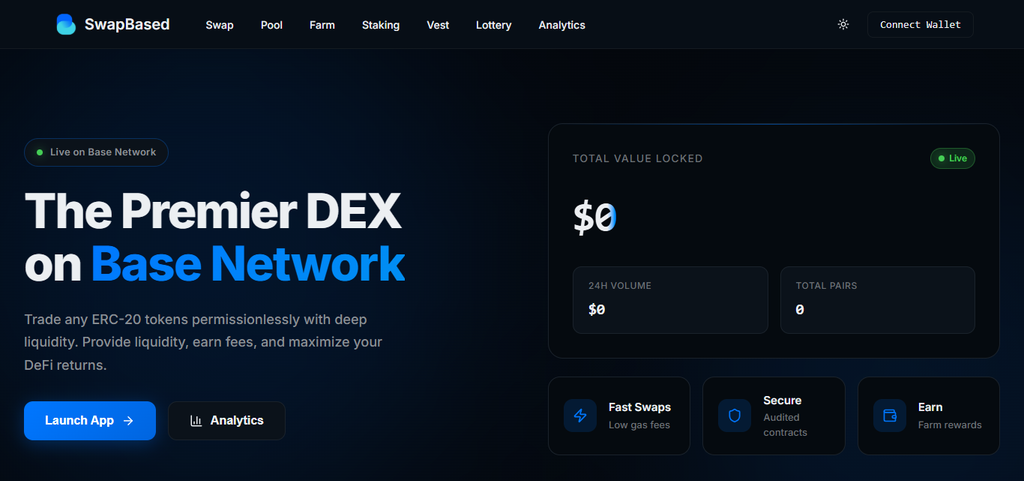
For comparison purposes, TVL, trading volume, and rewards should be considered. Farming opportunities in Base can also be analyzed using the same parameters. However, LPs should also evaluate the risks associated with its pools, which include smart contract risk, impermanent loss, and price volatility of tokens.
SwapBased Pros & Cons
Pros
- Base-native focus targets the Base DeFi ecosystem.
- Provides liquidity pools and farming opportunities.
- Straightforward structure for Base liquidity providers.
- LPs can potentially earn fees and incentives.
Cons
- Smaller pools may have lower liquidity depth.
- Farming rewards can change over time.
- Smaller tokens may experience higher volatility.
- Impermanent loss and smart-contract risks remain.
10. Alien Base
Alien Base is a base-keyed DEX with a swap function and liquidity pools. Their documentation mentions a 0.16% swap fee. They also have farming opportunities for liquidity providers. Alien Base uses their Epsilon tech to create efficient routing and trading by combining liquidity pools across their base.
Liquidity Mining involves evaluating the active pools, the overall TVL and trading volume, reward tokens (ALB), and duration of the reward opportunity. As with any liquidity mining, there are risk factors such as smart contract risk, Emissions Risk, and IL. Additionally, because rewards are in the form of ALB, there is also price and value risk.
Alien Base Pros & Cons
Pros
- Built specifically around the Base ecosystem.
- Provides liquidity pools and farming opportunities.
- Offers additional DeFi tools for Base users.
- LPs can earn fees and eligible rewards.
Cons
- Smaller pools can experience limited trading volume.
- ALB and other reward tokens may be volatile.
- Incentive programs can change over time.
- LPs face impermanent-loss and smart-contract risks.
Conclusion
I’ll conclude with a key consideration. When deciding which of the leading Aerodromes to use for liquidity mining, factors such as the level of liquidity, pool design, trading costs, rewards available, and risk will be important.
There are a number of options available for liquidity provision, including Uniswap, PancakeSwap, Velodrome, Balancer, Curve, the Maverick Protocol, SushiSwap
Beethoven X, SwapBased, and Alien Base. Liquidity providers should always evaluate the available information to identify the best pools in which to provide liquidity, having regard to trading activity, price volatility, impermanent loss, and other risks.
FAQ
They are alternative DEXs offering liquidity pools, swaps, fees, and rewards.
Uniswap, PancakeSwap, SushiSwap, Balancer, and several Base-focused DEXs compete.
Yes, Uniswap supports Base liquidity pools across multiple protocol versions.
quidity mining on Base?
Eligible PancakeSwap pools can provide trading fees and additional liquidity incentives.

