


In this article, I will cover the Top Camelot DEX Rivals for Arbitrum Yield Farming. The platforms that offer liquidity pools, trading opportunities, farming rewards, and capital efficient strategies.
So I will compare their Arbitrum support, yield mechanisms, pool structures, fees, rewards, capital efficiency, and key risks so that readers can understand the differences between leading decentralized finance platforms available for yield farming.
Key Points & Top Camelot DEX Rivals for Arbitrum Yield Farming
- Uniswap — Leading DEX enabling permissionless token swaps and liquidity provision across blockchains.
- PancakeSwap — Multi-chain DEX offering swaps, liquidity pools, farming, staking, and other DeFi services.
- SushiSwap — Decentralized exchange providing token swaps, liquidity pools, farming, and yield opportunities.
- Curve Finance — DEX optimized for efficient stablecoin and similarly priced asset trading.
- Trader Joe (LFJ) — Avalanche-focused DeFi platform offering swaps, liquidity, lending, and trading tools.
- Balancer — Automated market maker supporting customizable pools, swaps, liquidity, and portfolio management.
- Ramses Exchange — Arbitrum-based DEX focused on concentrated liquidity and sustainable token incentives.
- Maverick Protocol — Dynamic AMM optimizing liquidity allocation according to changing market conditions.
- KyberSwap — DEX aggregator providing token swaps and optimized trading routes across decentralized exchanges.
- DODO — Proactive market maker enabling efficient liquidity provision with reduced impermanent loss.
- Pendle Finance — DeFi protocol allowing users to tokenize, trade, and manage future yields.
- Convex Finance — Yield optimization platform enhancing Curve liquidity rewards without requiring direct staking.
- Fluid — DeFi liquidity protocol integrating lending, borrowing, and liquidity management into unified infrastructure.
- Wombat Exchange — Stablecoin-focused DEX designed for efficient swaps and capital-efficient liquidity provision.
14 Top Camelot DEX Rivals for Arbitrum Yield Farming
1. Uniswap
Uniswap v2, v3 and the latest v4 infrastructure are deployed on Arbitrum, and enable liquidity provision. Its yield mechanism is primarily based on the swap fees generated by liquidity providers. V3 and v4 leverage concentrated liquidity, enabling farmers to pick specific price ranges instead of capitalizing the entire curve. LP earnings are determined by trading activity and a position remaining in range.
V3 has several fee tiers, with 0.01%, 0.05%, 0.3% and 1%. Concentrated positions can be more capital efficient but they are not passive investments. The biggest risks are impermanent loss, positions that are out of range, smart-contract risk and changing market conditions. This is for active Arbitrum LPs looking for flexible pool strategies.
Uniswap Pros & Cons
| Pros | Cons |
|---|---|
| Strong liquidity across major trading pairs | Concentrated liquidity requires active management |
| Supports Arbitrum and multiple networks | Impermanent loss can affect LP returns |
| Multiple fee tiers provide strategy flexibility | Positions can become out of range |
| Established AMM infrastructure and ecosystem | Smart-contract and market risks remain |
2. Pancake swap
PancakeSwap operates on Arbitrum and offers liquidity pools, swaps and farming for users seeking to earn DeFi yield. Its reward mechanism combines trading fee earnings with liquidity incentives from supported farms. The pool structure may differ depending on the version of PancakeSwap and the liquidity model, allowing users to invest their capital in different ways.
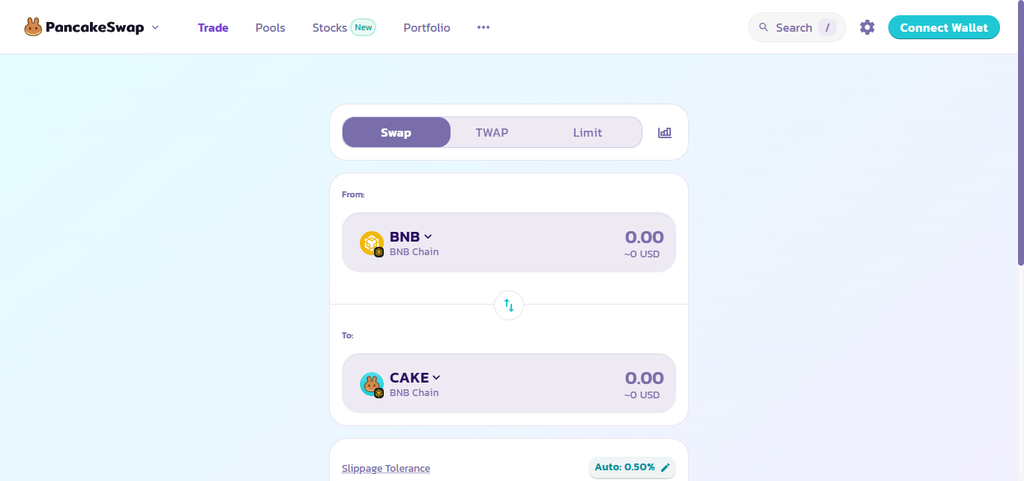
In addition to fees, there may be CAKE incentives as rewards, depending on the respective farm or campaign. Be aware that advertized returns may vary with liquidity, volume and incentives so always consider trading and transaction costs before calculating net yield.
The efficiency of capital depends on the design of the pool and on the ability to concentrate liquidity for the chosen market. The main risks are impermanent loss, token volatility, smart contract exposure and reductions in incentives. It suits Arbitrum farmers who want to diversify DEX farming options.
PancakeSwap Pros & Cons
| Pros | Cons |
|---|---|
| Supports Arbitrum and multiple blockchain networks | Farming rewards can change over time |
| Offers swaps, pools, and farming opportunities | CAKE price volatility can affect rewards |
| Multiple DeFi products provide flexibility | Impermanent loss remains possible |
| Large ecosystem with broad token support | Different products have different risk profiles |
3. SushiSwap
SushiSwap offers Arbitrum-based swapping and liquidity infrastructure, allowing users to provide supported token pairs and engage in available yield opportunities. Its farming model offers the ability to combine swap-fee earnings with other liquidity incentives for active farms. Liquidity pools typically enable users to deposit paired tokens and receive a proportional share of trading activity.
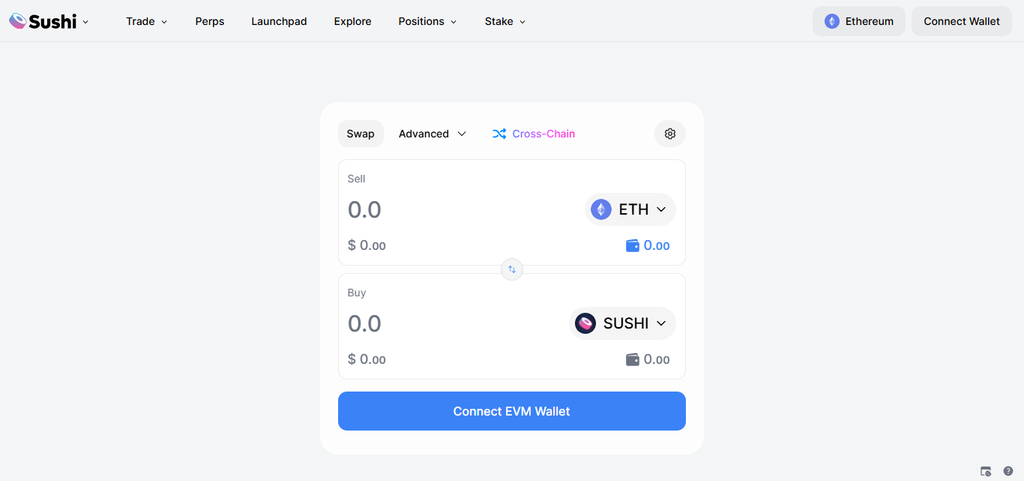
Farmers should check live conditions before depositing capital, as the availability of rewards depends on the pool, the network and the current incentive programs. The fees include any applicable trading fees and Arbitrum transaction fees and impact net returns. Capital efficiency is a function of the liquidity, trading volume and usage of the pool. Risks include impermanent loss, token volatility, smart-contract vulnerabilities and changing incentives. Great for users looking for current multi-chain DEX liquidity opportunities on Arbitrum.
SushiSwap Pros & Cons
| Pros | Cons |
|---|---|
| Provides liquidity pools on Arbitrum | Liquidity varies significantly between pools |
| Offers multiple DeFi and farming opportunities | Farming incentives may fluctuate |
| Supports diverse token pairs | Impermanent loss can reduce returns |
| Established multi-chain DEX infrastructure | Smart-contract risk remains |
4. Curve Finance
Curve Finance is a DeFi protocol for liquidity markets on Arbitrum that is especially relevant for stablecoin and similar priced asset strategies. Its yield mechanism is a mix of trading fees and available liquidity incentives, making pool choice important for farming gains. Curve has special pool designs such as StableSwap and CryptoSwap markets, which allow different asset classes to have different pricing mechanisms. Rewards can include CRV emissions and other incentives based on the pool and current gage structure.
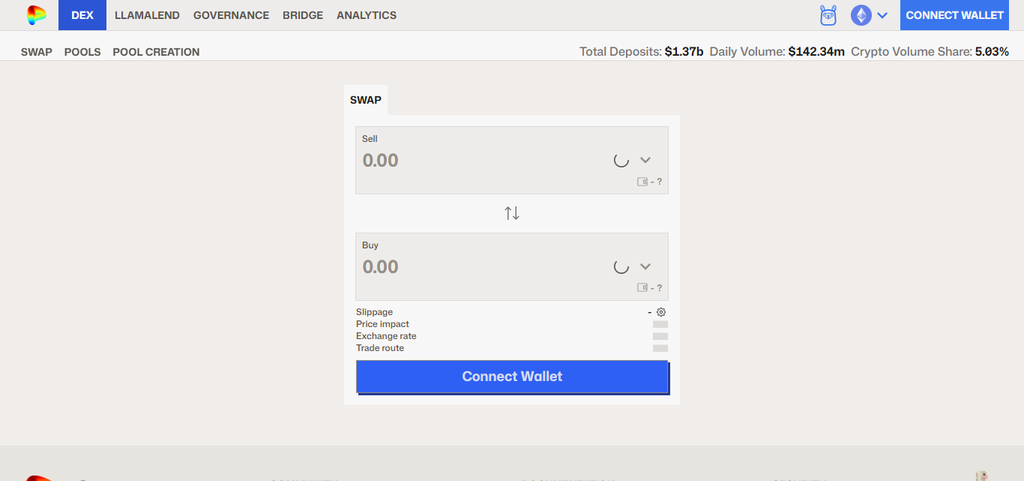
Think about fees and gas costs and the expected yield. The capital efficiency can be attractive for correlated assets as pools are built around their price relationships. Risks: Depegging. Smart contract vulnerabilities. Liquidity changes. Impermanent loss. It works for farmers seeking stablecoin or correlated-asset liquidity strategies on Arbitrum.
Curve Finance Pros & Cons
| Pros | Cons |
|---|---|
| Efficient for stablecoin and correlated assets | Less suitable for highly volatile pairs |
| Designed for low-slippage stablecoin trading | Depegging can create significant losses |
| Supports liquidity incentives and CRV rewards | Reward structures can be complex |
| Strong infrastructure for stable-asset strategies | Smart-contract and governance risks remain |
5. Trader Joe’s (LFJ)
LFJ, previously known as Trader Joe, provides liquidity and trading infrastructure on Arbitrum through its Liquidity Book model. Its yield mechanism allows liquidity providers to earn trading fees and possibly benefit from liquidity incentives for supported pools. Liquidity Book breaks liquidity into discrete price bins, so you can put capital around specific prices you want.
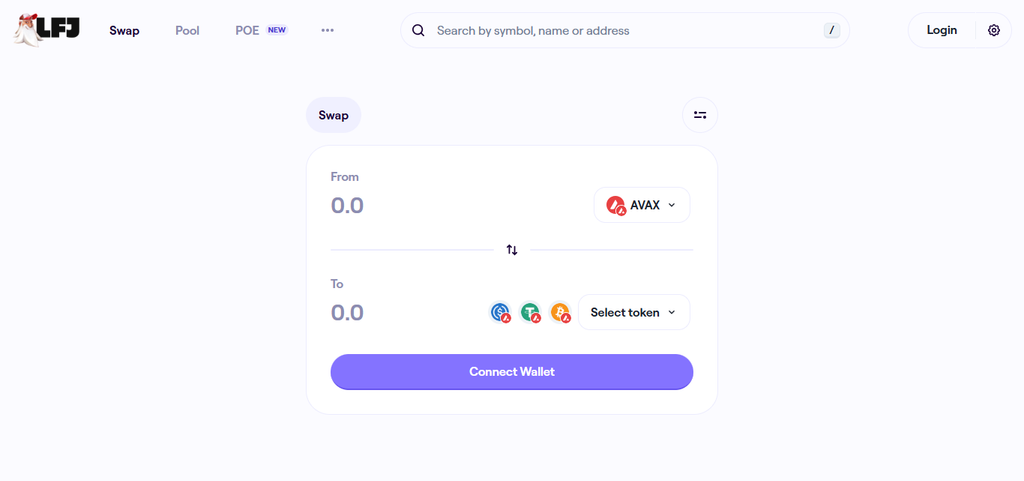
This structure can enhance capital utilization when liquidity is actively concentrated around trading ranges. Rewards are based on incentives specific to each pool and not a single fixed return. Fees depend on which market and pool you choose. Risks: Impermanent loss, price movement between bins, token volatility, smart contract risk, changing incentives. It’s a good fit for active Arbitrum farmers comfortable managing their concentrated liquidity positions and watching the market ranges.
Trader Joe (LFJ) Pros & Cons
| Pros | Cons |
|---|---|
| Liquidity Book supports concentrated liquidity | Active management may be required |
| Provides Arbitrum liquidity opportunities | Price movement can reduce position efficiency |
| Supports trading fees and incentive programs | Impermanent loss remains possible |
| Useful for targeted liquidity strategies | Incentive availability can change |
6. Balancer
Balancer provides liquidity pools on Arbitrum that provide flexible, portfolio-style liquidity strategies. The yield mechanism is a combination of trading fees and liquidity mining incentives available for selected pools. Traditional pools are two tokens and fixed weights . Balancer allows flexible pools and weights , which means LPs can choose their levels of exposure .
Rewards can be in BAL or other pool-specific rewards, depending on governance and active programs. Each pool charges a fee that goes on top of the LP earnings, when trading happens.
Custom weights may improve capital efficiency for some portfolio strategies but very much depend on the activity and the composition of the pool. Risks: impermanent loss, correlation shifts of tokens, exposure to smart-contracts and incentive volatility. It caters to Arbitrum farmers looking for customizable multi-asset liquidity rather than traditional equal-weight pools.
Balancer Pros & Cons
| Pros | Cons |
|---|---|
| Supports customizable multi-asset pools | Pool structures can be complex for beginners |
| Offers flexible portfolio-style liquidity | Impermanent loss varies by pool composition |
| Supports Arbitrum liquidity markets | Rewards depend on individual pools |
| Multiple weighting options enable strategy flexibility | Smart-contract risk remains |
7. Ramses Exchange
Ramses Exchange is an Arbitrum-native DEX with concentrated-liquidity and incentive-based farming opportunities. It’s yield mechanism is a combination of swap fee generation & gage based liquidity incentives. Ramses concentrated liquidity uses separate fee tiers for correlated, standard, volatile and exotic assets. This allows liquidity providers to choose markets based on volatility.

Rewards can be linked to gage emissions, and voting activity . RAM related incentives are an important part of the ecosystem. The fees are distributed based on the pool and gage settings. Concentrated liquidity enhances capital efficiency but requires monitoring as prices move out of the selected ranges. There is a risk of impermanent loss, volatility in RAM incentives, smart-contract exposure and changing emissions. This is for active Arbitrum farmers looking for gauge-based liquidity incentives.
Ramses Exchange Pros & Cons
| Pros | Cons |
|---|---|
| Built specifically around the Arbitrum ecosystem | More specialized than general-purpose DEXs |
| Supports concentrated liquidity strategies | Requires monitoring liquidity ranges |
| Gauge-based incentives create farming opportunities | RAM-related rewards can be volatile |
| Designed for active liquidity management | Smart-contract and incentive risks remain |
8. Maverick Protocols
Maverick Protocol is a liquidity infrastructure on Arbitrum with a dynamic approach to distributing liquidity. Its yield mechanism incentivizes liquidity providers to earn swap fees while providing liquidity according to expected price movement. Maverick’s model allows for more dynamic responses of liquidity as market prices change, rather than static liquidity ranges.
Rewards can also include additional incentives on selected pools and campaigns. Fees are variable, depending on the pool and the trading activity, while net yield varies with the volume and the competition on liquidity.
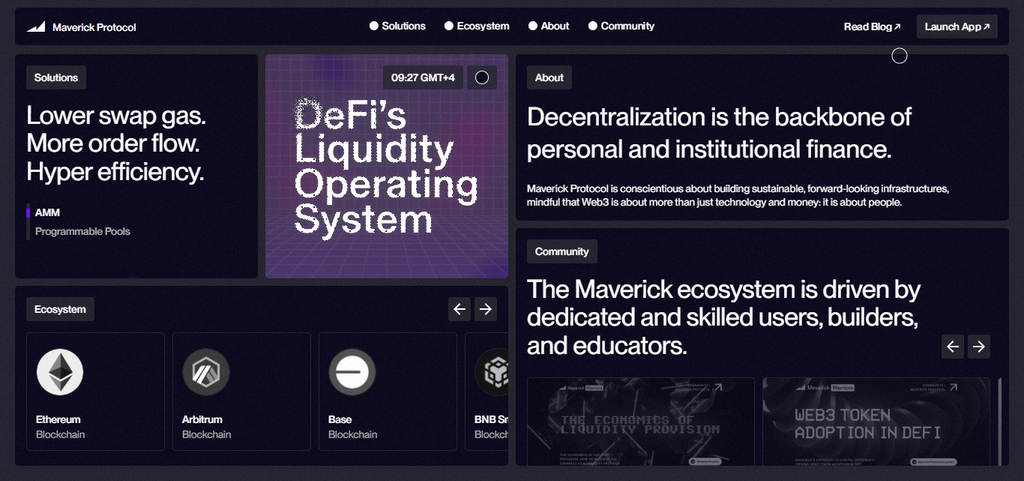
The liquidity architecture is designed to improve capital utilization for active positions but efficient use requires an understanding of the pool’s behavior. There is risk of impermanent loss, smart contract vulnerabilities, token volatility and incentive changes. That’s great for active Arbitrum farmers seeking more dynamic liquidity-management strategies.
Maverick Protocol Pros & Cons
| Pros | Cons |
|---|---|
| Dynamic liquidity approach can improve capital utilization | Liquidity mechanics require understanding |
| Supports Arbitrum liquidity markets | Active strategies may require monitoring |
| Offers fee-based LP opportunities | Impermanent loss remains possible |
| Flexible liquidity positioning | Incentives and yields can fluctuate |
9. KyberSwap
KyberSwap offers trading and liquidity infrastructure on Arbitrum with liquidity-management tools focused on efficient market execution. Its yield mechanism can produce returns via liquidity provider fees and supported incentive programs. Concentrated-liquidity methods are advantageous to liquidity pools for supported markets and enable capital deployment within chosen price ranges.
Rewards are based on trading volume, and any liquidity-mining rewards that may be in place. Fees are dependent on the pool and chosen trading configuration, so farmers should calculate net returns after transaction costs.
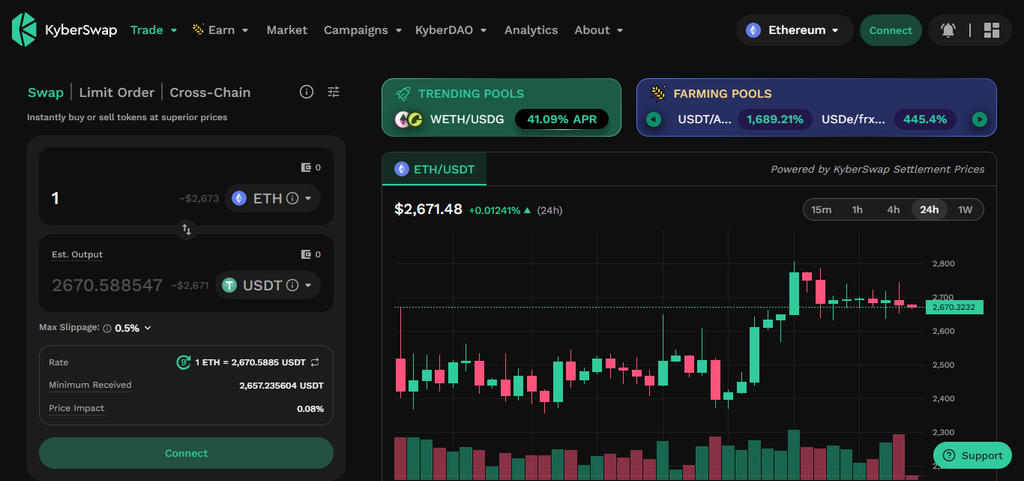
If positions are placed correctly around market prices, concentrated liquidity can improve capital efficiency. However, prices moving outside the ranges can reduce fee generation, while impermanent loss and smart contract risk remain important factors. It’s designed for seasoned Arbitrum LPs looking for active liquidity management and trade-centric yield opportunities.
KyberSwap Pros & Cons
| Pros | Cons |
|---|---|
| Supports Arbitrum trading and liquidity | Liquidity varies across individual pools |
| Concentrated liquidity can improve capital efficiency | Positions can become out of range |
| Provides trading and liquidity-management tools | Active management may be necessary |
| Supports multiple token markets | Smart-contract and market risks remain |
10. DODO
DODO is on Arbitrum and employs a Proactive Market Maker model to enable efficient liquidity around market prices. Its yield mechanism can deliver liquidity providers trading-fee income and additional incentives when certain farming programs are open. The PMM model distinguishes itself from conventional constant-product AMMs by flexibly shifting the distribution of liquidity around reference prices.
As such rewards are based on pool activity, supported incentives and market conditions and not a fixed return. Fees vary depending on the pool and the trading environment. Arbitrum transaction costs also impact net profitability.
For appropriate markets, the model can improve the capital efficiency but it has exposure to the pricing and liquidity condition. Risks include impermanent loss, token volatility, smart contract vulnerabilities, and changes to incentives. It will appeal to Arbitrum farmers seeking alternative AMM designs.
DODO Pros & Cons
| Pros | Cons |
|---|---|
| PMM model provides alternative AMM architecture | Mechanics may be unfamiliar to new users |
| Supports Arbitrum liquidity opportunities | Pool liquidity varies by market |
| Designed for efficient liquidity distribution | Impermanent loss remains possible |
| Can support liquidity-provider incentives | Farming rewards can change over time |
11. Pendle Finance
Pendle Finance offersArbitrum-based yield markets with a unique structure to traditional spot DEX farming. Its mechanism splits yield-bearing assets into Principal Tokens (PTs) and Yield Tokens (YTs), allowing users to target different yield exposures. Liquidity providers can also supply liquidity to Pendle markets and earn trading fees and available incentives. Pool liquidity allows for trading between PT, YT and the underlying yield bearing assets.
Returns are a function of market demand, implied yields, incentives and the maturity profile of each market. The capital efficiency is obtained by dividing the principal and future yield into tradable parts. Risks include smart contract risk, maturity risk, yield risk, liquidity risk and underlying asset risks. This is for Arbitrum users seeking niche-yield strategies that go beyond regular LP farming.
Pendle Finance Pros & Cons
| Pros | Cons |
|---|---|
| Enables trading of future yield separately | Product structure can be complex |
| Supports specialized yield strategies | Maturity dates affect market behavior |
| Provides PT and YT-based opportunities | Yield exposure carries additional risks |
| Useful for managing fixed or variable yield | Liquidity varies between markets |
12. Convex Finance
Convex Finance isn’t a traditional independent DEX, but a yield-optimization layer atop Curve liquidity. Its mechanism on supported Arbitrum markets is about improving returns associated with Curve LP positions and CRV-related incentives. Users can interact with Convex strategies to gain exposure to boosted Curve rewards without having to manage all of the underlying governance mechanics themselves.
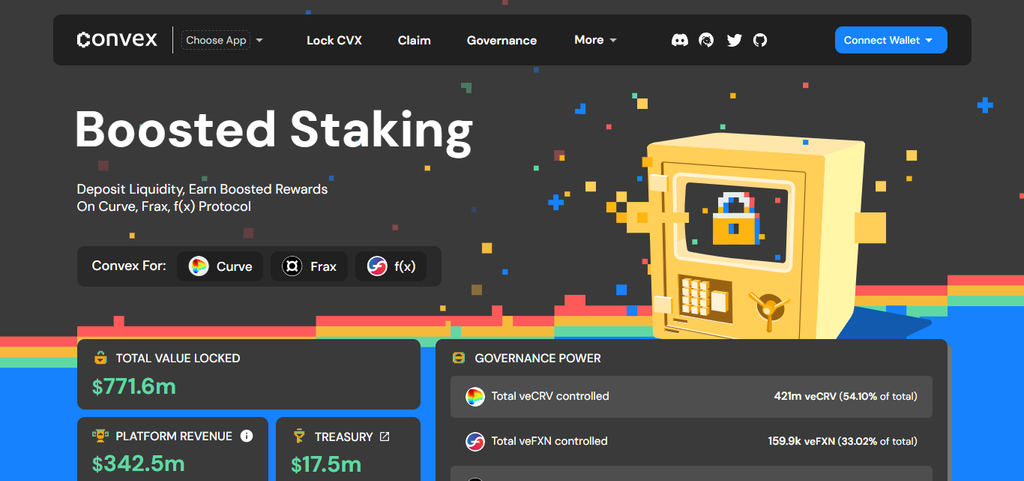
Depending on the pool that is supported and the program in effect, rewards can be CRV, CVX and other incentives. Liquidity exposure is mostly dependent on the underlying Curve pool, and fees and gas costs affect the final returns. “Capital efficiency” is not simply about standalone liquidity but about the optimal distribution of rewards. Risks include exposure to Curve and Convex intelligent contracts, volatility of tokens, changes in liquidity and reductions in incentives. It is for farmers that want to optimize Curve based yield.
Convex Finance Pros & Cons
| Pros | Cons |
|---|---|
| Enhances Curve-related yield strategies | Strong dependence on Curve ecosystem |
| Provides access to boosted reward mechanisms | Reward structures can be complex |
| Offers CRV and CVX-related incentives | Token prices can affect realized returns |
| Reduces some direct Curve-management requirements | Smart-contract and protocol dependency risks |
13. Fluid
Fluid is a decentralized liquidity infrastructure on Arbitrum that provides a new way to access DeFi liquidity rather than a simple spot-swap DEX. Its yield opportunities may consist of liquidity provided through supported lending, borrowing, and liquidity-management products. The underlying model is about using the deposited capital across connected DeFi functions, potentially improving capital efficiency compared with isolated positions. Rewards vary by Fluid market, incentives, utilization and applicable yield sources.

When evaluating leveraged or liquidity-based strategies, fees and borrowing costs should be considered. Capital efficiency is a key feature but further integration can lead to additional protocol dependencies. Risks include smart contract vulnerabilities, asset price changes, utilization changes, liquidation risk where borrowing is involved, and incentive changes. It’s a good match for seasoned Arbitrum users seeking integrated liquidity and yield strategies.
Fluid Pros & Cons
| Pros | Cons |
|---|---|
| Integrates multiple DeFi liquidity functions | Integrated architecture can be complex |
| Focuses strongly on capital efficiency | Greater protocol dependency can increase risk |
| Supports lending and liquidity strategies | Borrowing introduces liquidation exposure |
| Can optimize capital utilization across products | Returns depend on utilization and incentives |
14. Wombat Exchange
Wombat Exchange is a stablecoin-focused liquidity infrastructure with Arbitrum support, built around efficient swaps between correlated assets. Its reward model can combine trading fees and liquidity incentives for the pools it supports. The pool architecture emphasizes stable and similar-priced assets which could mitigate price impact against traditional pools of volatile assets in appropriate market environments.
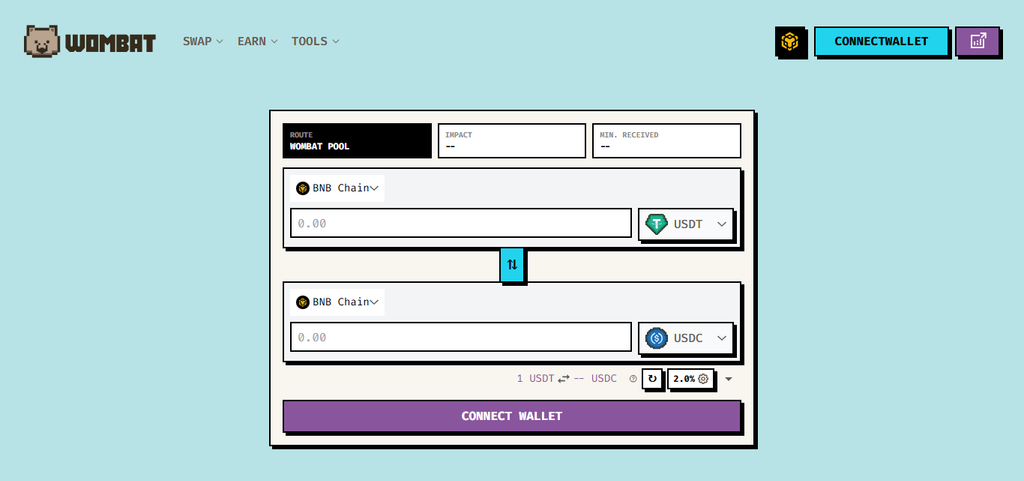
The rewards are variable and depend on the active farms, pool incentives and trading activity. Actual farming returns should subtract fees and Arbitrum tx costs. Capital efficiency is particularly important for stablecoin liquidity given the emphasis on efficient asset utilization for pool design. Risks include stablecoin depegging, smart-contract vulnerabilities, changes in liquidity and incentive reductions. It’s a good fit for Arbitrum farmers, most of whom are looking for stablecoin and correlated-asset yield strategies.
Wombat Exchange Pros & Cons
| Pros | Cons |
|---|---|
| Focuses on efficient stablecoin swapping | Primarily suited to correlated assets |
| Supports Arbitrum liquidity opportunities | Stablecoin depegging remains a major risk |
| Designed for capital-efficient stablecoin liquidity | Rewards can fluctuate with incentives |
| Provides liquidity-provider opportunities | Smart-contract and liquidity risks remain |
Conclusion
Conclusion Top Camelot DEX competitors for Arbitrum yield farming provide various ways to liquidity, rewards, trading, and capital efficiency. Uniswap, Ramses, SushiSwap, Curve, Balancer and other platforms have different pool structures, fee models and incentive mechanisms.
Depending on your farming strategy and risk tolerance you should compare current yields, liquidity, fees, smart-contract risks, impermanent loss and sustainability of rewards before choosing a platform.
FAQ
Leading alternatives include Uniswap, Ramses, SushiSwap, Curve, and Balancer.
Several platforms offer liquidity pools, farming incentives, or yield strategies.
Uniswap provides Arbitrum liquidity pools with concentrated-liquidity strategies.
Ramses emphasizes concentrated liquidity and gauge-based incentives on Arbitrum.

