



This article will look at Paradex’s best competitors for appchain perps. We’ll compare the top decentralized perpetual trading platforms, their architecture, leverage, liquidity, trading fees, execution speed, supported assets, security, and unique features.
This guide looks at how Hyperliquid, Aster, dYdX, Lighter, Aevo, GRVT, edgeX, ApeX Protocol, Drift Protocol and Extended stack up for modern appchain-based perpetual trading.
Key Points & Best Paradex Competitors for Appchain Perps
| Paradex Competitor | 12-Word Explanation |
|---|---|
| Hyperliquid | High-performance decentralized exchange offering deep liquidity and fast perpetual futures trading. |
| Aster | Decentralized trading platform providing perpetual contracts, competitive fees, and multiple collateral options. |
| dYdX | Established decentralized exchange offering perpetual markets, advanced trading tools, and robust infrastructure. |
| Lighter | High-speed decentralized exchange focused on perpetual trading, transparency, and efficient execution. |
| Aevo | Decentralized derivatives platform combining perpetual futures with options and sophisticated trading features. |
| GRVT | Hybrid decentralized exchange delivering institutional-grade perpetual trading with fast execution and security. |
| edgeX | Decentralized perpetual exchange focused on scalable infrastructure, low latency, and efficient trading. |
| ApeX Protocol | Permissionless perpetual trading protocol offering self-custody, leverage, and diverse cryptocurrency markets. |
| Drift Protocol | Solana-based decentralized exchange supporting perpetuals, spot trading, lending, and portfolio strategies. |
| Extended | Decentralized perpetual exchange designed for fast execution, leverage, and capital-efficient crypto trading. |
10 Best Paradex Competitors for Appchain Perps
1. Hyperliquid
Hyperliquid runs on a dedicated Layer-1 blockchain designed for on-chain trading and its own high-performance order-book infrastructure. Its core product is perpetual futures with deep liquidity on all major and emerging crypto markets. Funding rates and margin requirements are different from market to market and risk parameters, but traders can avail themselves of huge leverage.
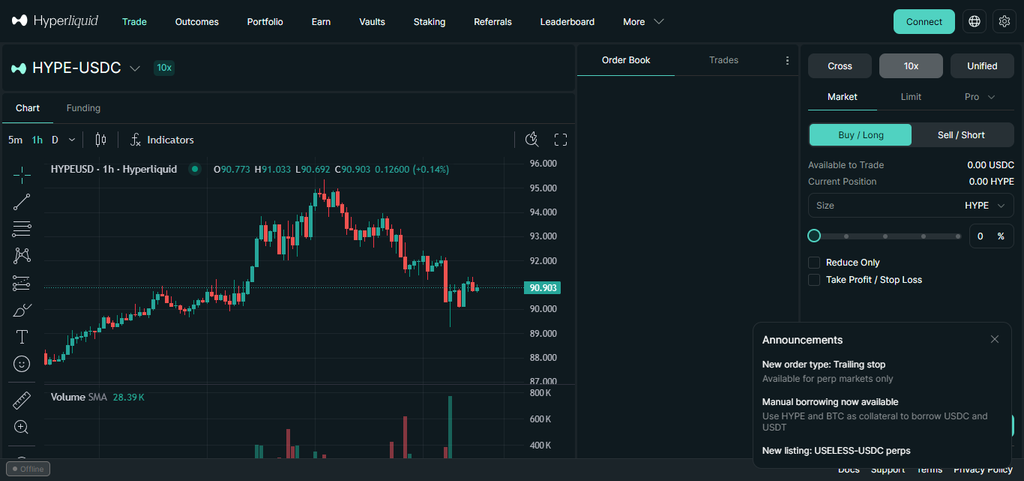
Its trading activity is high so liquidity and execution are a major strength for active traders. Fees are based on the maker-taker model and may vary depending on account status and volume. Hyperliquid’s fully on-chain architecture allows for transparent settlement and self-custody. Hyperliquid has a more developed liquidity and wider trading ecosystem than Paradex, making it more attractive for active perpetual traders.
Hyperliquid Pros & Cons
| Pros | Cons |
|---|---|
| High-performance purpose-built trading infrastructure | Primarily focused on crypto trading markets |
| Deep liquidity across major perpetual markets | Advanced features can increase learning curve |
| Broad perpetual market selection | Ecosystem complexity may challenge beginners |
| Competitive volume-based trading fees | Fees vary according to trading tier |
| Strong on-chain transparency and self-custody | Leverage increases liquidation risk |
| Supports cross and isolated margin | Market-specific limits can vary |
2. Aster
Aster is a decentralized derivatives platform with a strong focus on perpetual futures and advanced leveraged trading. Its architecture combines decentralized trading infrastructure with an order-book style experience built for active derivatives users. There is no one limit to leverage, rather available leverage is dictated by the individual market and current risk parameters. Liquidity is focused in popular perpetual markets and trading volume is an important consideration when comparing execution quality.
Fees are determined by the applicable maker-taker structure of the platform and are subject to change based on trading conditions or account programs. Aster supports a variety of crypto assets and collaterals. Its main advantage over Paradex is a broader derivative-centric product design and trading flexibility, especially for users more interested in perpetuals markets.
Aster Pros & Cons
| Pros | Cons |
|---|---|
| Strong focus on perpetual futures trading | Fee structure varies across contract types |
| Competitive maker and taker fees | Advanced leverage increases trading risk |
| Multiple fee-discount mechanisms | Some benefits require higher activity or levels |
| Supports leveraged crypto markets | Product availability can change |
| Designed for active derivatives traders | Less established than some larger competitors |
| Flexible trading-focused infrastructure | Users must understand platform-specific mechanics |
3. dYdX
dYdX is a decentralized derivatives trading platform – mainly for perpetual contracts. The architecture combines its own blockchain infrastructure with an on-chain order-book model, providing the platform with more control over trading performance. We provide perpetual markets on the major crypto assets, where leverage is set by the risk parameters for each market.
Some of the platform’s important strengths are liquidity and trading volume, as established markets can support more efficient execution. Trading costs are based on maker and taker fee tiers, generally based on trading volume. Decentralized infrastructure, transparent settlement and protocol-level risk controls benefit security. dYdX has a more mature derivatives ecosystem and better market depth than Paradex, making it a good option for experienced perpetual traders.
dYdX Pros & Cons
| Pros | Cons |
|---|---|
| Dedicated decentralized derivatives infrastructure | Primarily geared toward experienced traders |
| Strong perpetual trading ecosystem | Fee parameters can change through governance |
| Maker-taker fee structure | Liquidity varies across individual markets |
| Volume-based fee discounts | Leverage introduces significant liquidation risk |
| Transparent on-chain trading environment | Smaller markets may have wider spreads |
| Broad derivatives-focused functionality | Requires understanding decentralized trading mechanics |
4. Lighter
Lighter is built to provide high-performance decentralized perpetual trading with dedicated infrastructure for ultra-fast order processing and an exchange-like trading experience. Its primary focus is perpetual futures, not a broad spectrum of DeFi products. Leverage is determined by market and risk configuration and allows traders to shape positions according to their available margin.
Liquidity and volume are especially important as perpetual traders rely on tight spreads and efficient order-book execution. Lighter is all about cheap trading. The fee structure is designed to keep active users competitive. Supported assets are mainly in crypto perpetual markets and on-chain architecture allows for transparency and settlement verification. Lighter might be a more attractive option than Paradex for traders who want fast execution, trading efficiency and a perpetual-centric infrastructure.
Lighter Pros & Cons
| Pros | Cons |
|---|---|
| Built specifically around perpetual trading | Newer ecosystem compared with established DEXs |
| Fast trading-oriented infrastructure | Market breadth may vary |
| Order-book trading experience | Liquidity can differ between markets |
| Designed for active traders | Less broad than multi-product DeFi protocols |
| Focus on efficient execution | Advanced products may require experience |
| Decentralized trading approach | Platform conditions can evolve quickly |
5. Aevo
Aevo is a decentralized derivatives platform based on an order-book trading model, with perpetual futures accounting for a significant portion of its product offering besides options. Its infrastructure is designed for exchange-like execution and settlement on the blockchain. According to the particular perpetual market and the risk limits attached, leverage varies.
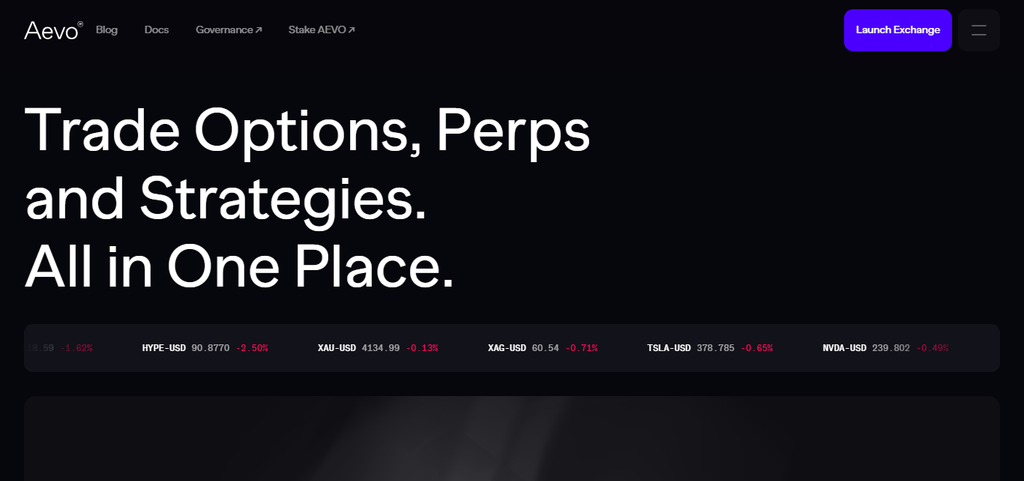
Depth varies substantially between major and smaller markets. Traders should compare depth before taking larger positions. Fees are based on a maker-taker pricing model and can vary with trading volume. Aevo offers a wide range of crypto derivatives and advanced order functionality. Aevo’s unique selling point over Paradex is the blend of perpetuals and options, which makes it a better fit for traders seeking a wider decentralized derivatives environment, and not just perpetual exposure.
Aevo Pros & Cons
| Pros | Cons |
|---|---|
| Combines perpetuals and options | Broader product range can increase complexity |
| Advanced derivatives-focused infrastructure | Liquidity differs between markets |
| Order-book trading experience | Smaller markets may experience higher slippage |
| Suitable for sophisticated derivatives strategies | Not ideal for users wanting simple spot trading |
| Supports leveraged perpetual markets | Leverage increases liquidation exposure |
| Strong derivatives specialization | Product availability may change |
6. GRVT
GRVT uses a hybrid exchange architecture, aiming to combine the performance of a centralized exchange with blockchain-based custody and settlement. Its main trading products are perpetual futures, and leverage and margin requirements are set by individual markets and risk controls. When traders look at execution quality, they look at liquidity because the deeper the order book, the less slippage you tend to get on larger trades. GRVT has a tiered trading fee model for both maker and taker activity.
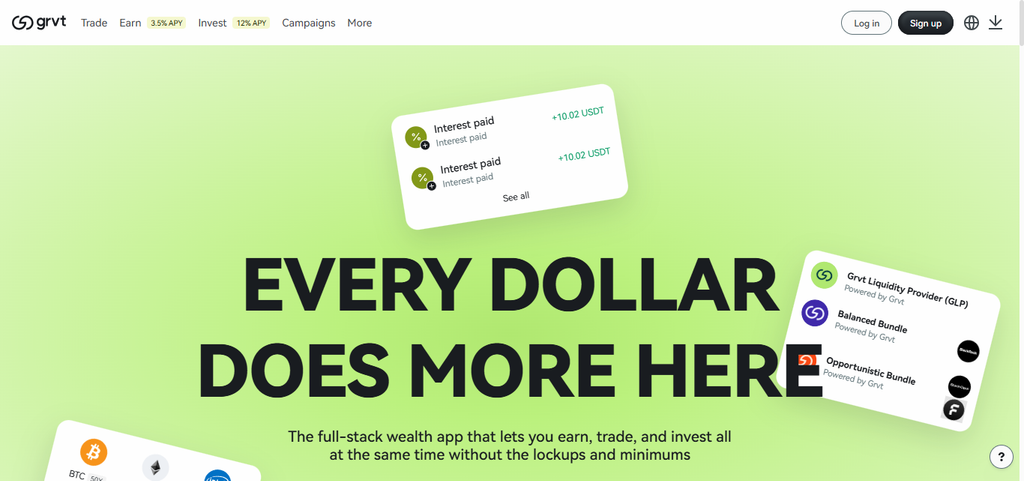
The platform provides the key cryptocurrency markets with a strong focus on professional trading infrastructure. Security merges self-custody principles with cryptographic and blockchain based settlement mechanisms. GRVT’s main edge over Paradex is its hybrid design, aiming for institutional-style execution while preserving key decentralized trading features.
GRVT Pros & Cons
| Pros | Cons |
|---|---|
| Hybrid architecture targets exchange-like performance | Hybrid design may be harder to understand |
| Focuses on professional derivatives trading | Smaller ecosystem than leading competitors |
| Supports perpetual futures | Market liquidity varies by trading pair |
| Designed for fast order execution | Advanced features suit experienced traders |
| Combines blockchain settlement with trading performance | Product availability can evolve |
| Institutional-oriented infrastructure | May be less beginner-friendly |
7. edgeX
edgeX is a decentralized derivatives platform that is focused on high-performance perpetual futures and order-book trading. Its architecture is centered around scalable trading infrastructure, and not relying on traditional blockchain transaction processing for each trading action. Perpetual markets offer leveraged exposure to various crypto assets, where the leverage amount is determined by risk parameters unique to each market.
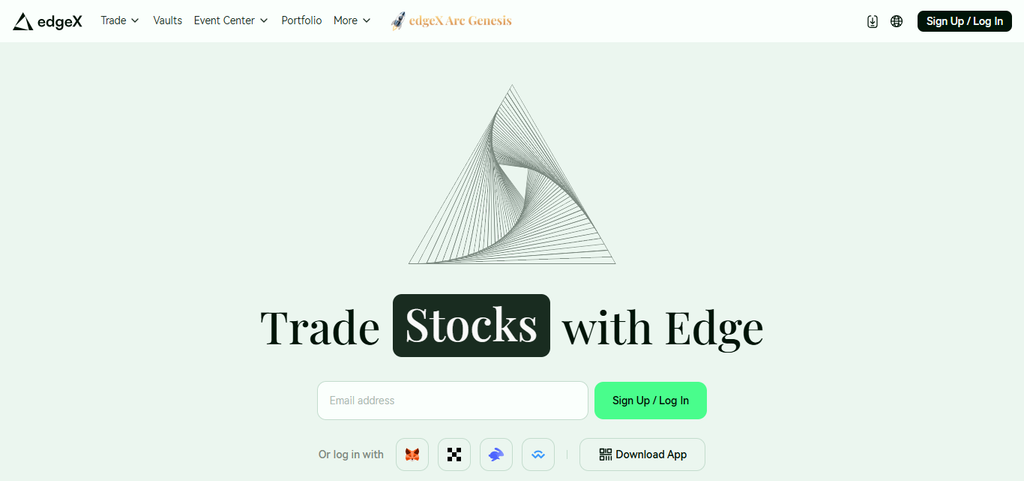
Liquidity and trading volume are key metrics as the execution quality strongly depends on the available order-book depth. Fees are based on the platform’s applicable maker-taker structure and are designed for active derivatives trading. Security = Decentralized Infrastructure + Cryptographic Settlement EdgeX differentiates itself from Paradex, with a focus on high-throughput derivatives infrastructure, which could be appealing to traders with a focus on speed, scalable execution and perpetual-centric capabilities.
edgeX Pros & Cons
| Pros | Cons |
|---|---|
| Strong focus on perpetual derivatives | Primarily derivatives-oriented |
| High-performance trading infrastructure | Market depth varies by asset |
| Competitive perpetual trading fees | Higher tiers require substantial volume |
| Order-book-based trading experience | Less suitable for casual traders |
| Multiple crypto perpetual markets | Leverage increases liquidation risk |
| Designed for active traders | Fee schedules can change over time |
8. ApeX Protocol
ApeX Protocol is a decentralized derivatives platform offering perpetual contracts through non-custodial trading infrastructure. Its architecture is designed to provide an order-book-style trading experience while maintaining blockchain-based settlement and user control over funds. Traders can access leveraged perpetual markets, with leverage limits varying by asset and risk configuration.
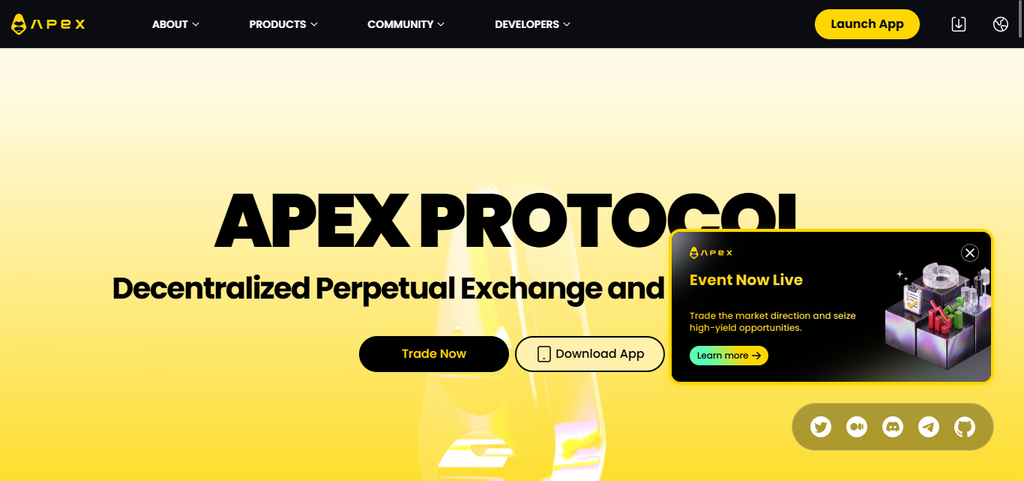
Liquidity and trading volume differ across supported markets, so major pairs generally provide better execution conditions than smaller contracts. Trading fees use maker-taker pricing and may depend on account activity or applicable platform tiers. ApeX supports a range of cryptocurrency perpetual markets. Compared with Paradex, ApeX provides a broader decentralized derivatives environment, making it useful for traders seeking multiple perpetual markets and non-custodial trading.
ApeX Protocol Pros & Cons
| Pros | Cons |
|---|---|
| Non-custodial decentralized derivatives trading | Primarily focused on crypto derivatives |
| Supports leveraged perpetual contracts | Leverage creates substantial liquidation risk |
| Multiple perpetual markets | Liquidity varies across individual markets |
| Order-book trading experience | Smaller markets may have greater slippage |
| Self-custody-oriented design | Advanced trading requires experience |
| Suitable for active perpetual traders | Product conditions can change |
9. Drift Protocol
Drift Protocol is a decentralized trading protocol on Solana that supports perpetual futures, spot markets, lending, and other portfolio-based DeFi products. Its architecture utilizes Solana’s high-throughput environment while utilizing protocol-level risk and margin systems for derivatives. Perpetual markets offer leveraged exposure to a broad spectrum of crypto assets, with leverage set by risk parameters specific to the market.
Drift’s market-making and liquidity mechanisms support liquidity, and trading volume can vary dramatically across markets. Fees are charged on a maker-taker model and may vary based on volume or product conditions. Security is built on Solana settlement and Drift’s smart contract and risk management framework. Drift has a stronger DeFi ecosystem than Paradex, which makes it particularly appealing to Solana users who want to have perps in addition to lending and spot features.
Drift Protocol Pros & Cons
| Pros | Cons |
|---|---|
| Solana-based high-throughput infrastructure | Solana ecosystem dependency |
| Supports perpetuals and spot trading | Broader functionality increases complexity |
| Includes lending and DeFi functionality | More complex than a perps-only platform |
| Strong portfolio-oriented ecosystem | Market liquidity varies across assets |
| Supports leveraged perpetual trading | Leverage increases liquidation risk |
| Useful for Solana-native traders | Requires familiarity with Solana DeFi |
10. Extended
Extended is a perpetual-focused DEX built on Starknet with user funds being held in self-custodied on-chain smart-contracts. Its perennial markets are based on an order-book model and trades, funding payments, liquidations and collateral movements are subject to on-chain solvency checks. Leverage is configurable per-market and the API documentation currently shows a 10x example for SOL-USD rather than a single limit for the entire platform.
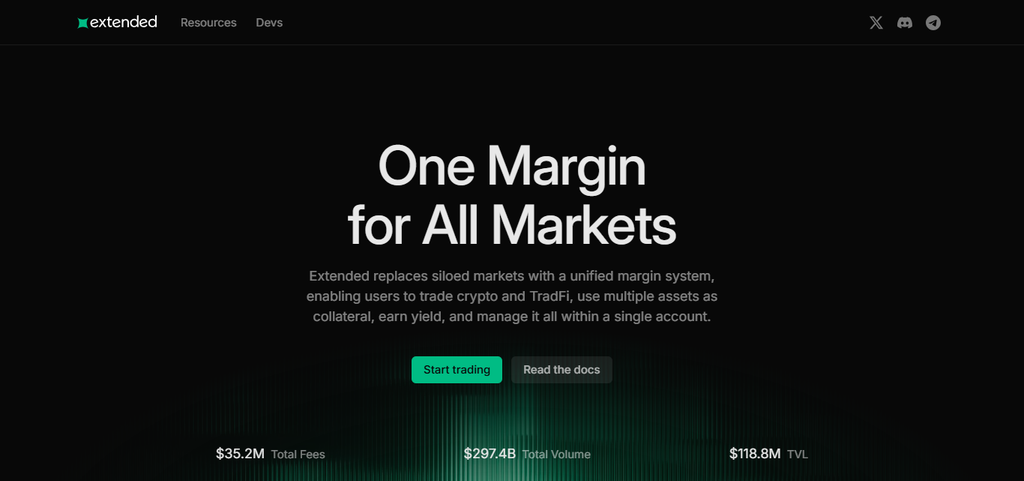
Extended has a flat 0.000% maker fee and 0.025% taker fee at the moment. The API gives you market statistics such as daily volume, open interest, funding rates and order-book data. Security by means of on-chain validation and audited intelligent contracts. Extended provides a compelling Starknet-native alternative to Paradex for traders who value on-chain settlement, transparency and self-custody.
Extended Pros & Cons
| Pros | Cons |
|---|---|
| Built around decentralized perpetual trading | Primarily focused on derivatives |
| Starknet-native infrastructure | Starknet ecosystem dependency |
| Self-custody-oriented trading model | Smaller ecosystem than leading competitors |
| Order-book-based perpetual markets | Liquidity varies across markets |
| Transparent on-chain settlement approach | New users may face a learning curve |
Conclusion
To summarize : The Best Paradex Competitors for Appchain Perps have diverse approaches to decentralized perpetual trading, including dedicated appchain infrastructure, substantial liquidity, affordable fees, fast execution, and a wide range of assets.
Hyperliquid, Aster, dYdX, Lighter, Aevo, GRVT, edgeX, ApeX Protocol, Drift Protocol and Extended all provide unique benefits. To find the best alternative to Paradex, traders should consider architecture, leverage, liquidity, fees, security and supported markets.
FAQ
Hyperliquid, Aster, dYdX, Lighter, Aevo, GRVT, and others.
Yes, Hyperliquid offers deep liquidity and high-performance perpetual trading infrastructure.
Aster provides leveraged perpetual markets with flexible decentralized trading features.
dYdX provides established decentralized derivatives infrastructure and extensive perpetual trading capabilities.

