


This article will focus on the best cryptocurrency exchanges that offer native AI trading agent frameworks. These exchanges provide advanced features such as automated algorithmic trading, AI-based automated trading, and smart trading systems.
In the article, you will learn how major exchanges allow the creation of bots using APIs, the inclusion of machine learning and other models to trade in real-time.
This article will help you identify the cryptocurrency exchanges that are most suitable for creating custom, robust, and powerful AI-based cryptocurrency trading agents.
Key Poinst & Best Crypto Exchanges Supporting Native AI Trading Agent Frameworks
| Exchange | Explanation |
|---|---|
| Binance | Largest exchange offering APIs enabling AI trading automation systems globally |
| Coinbase | Regulated US exchange with APIs supporting algorithmic AI trading bots |
| Kraken | Advanced exchange offering robust APIs for AI-driven trading strategies execution |
| OKX | Global exchange providing trading bots and AI agent integration tools |
| Bybit | Derivatives exchange supporting API trading and automated AI systems execution |
| KuCoin | Popular exchange with extensive API support for AI trading bots |
| Bitget | Copy trading exchange enabling AI agent-based strategy replication tools |
| Gate.io | Exchange offering wide API access for automated AI trading systems |
| Crypto.com | Full service exchange with APIs enabling AI trading automation features |
| Bitfinex | Professional exchange providing deep liquidity and AI trading API support |
10 Best Crypto Exchanges Supporting Native AI Trading Agent Frameworks
1. Binance
Binance is one of the most versatile ecosystems for AI-enabled crypto trading. They boast powerful APIs and Websockets for easy automated trade execution. Traders can develop their own AI agents for things like high-frequency trading, arbitrage, and automated portfolio rebalancing.

As a leader in the space, Binance has hundreds of assets and deep liquidity. They build out their offerings consistently with new features like copy trading and bot marketplaces. Binance is the top place for AI-based algorithmic trading innovations and automation.
Pros & Cons Binance
Pros
- Great liquidity = more accurate AI trades
- Advanced APIs = easy HFT automation
- Large amount of assets = more diversified AI portfolios
- Strong bot ecosystem = easy compliance of AI strategies
Cons
- Regulatory issues = limited usage in certain countries
- Complex platform = long learning time for novice traders
- API restrictions during high volatility = issues for Bots
- Centralized = higher dependency
2. Coinbase
For compliance-focused developers and institutions, Coinbase has built a highly regulated and secure playground for AI trading agents. They offer a sophisticated API for algorithmic bots that trade in a portfolio and set up recurring buys and smart strategies.

Coinbase has recently built out its tools for institutions and improved its custodial services. For those looking for safe and regulatory-compliant AI trading solutions, Coinbase provides a solid option with its AI frameworks.
Pros & Cons of Coinbase
Pros
- Strong compliance = supports institutional AI systems
- Stable APIs = reliable bot operations
- Strong security = protects AI funds
- Well-known = higher institutional adoption
Cons
- High fees = low profitability for AI systems
- Limited advanced derivatives = limited complex algorithms
- Low amount of Altcoins = low diversification
- Slow innovation = low competitiveness
3. Kraken
Kraken’s trading APIs are one of the most sophisticated in the trading industry. For AI trading agents that need highly precise trading APIs, Kraken has excellent low-latency APIs for order placement and advanced market data.
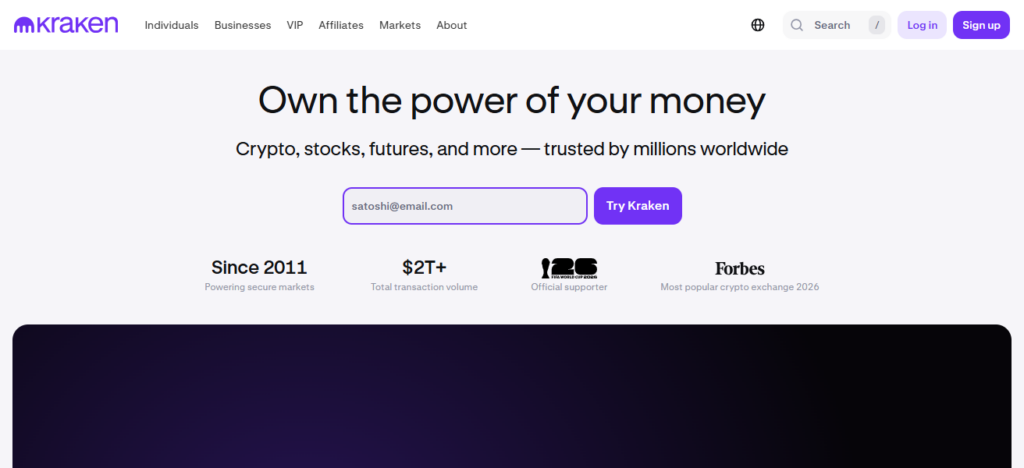
Kraken is also expanding its institutional offerings, like OTC and Futures, making advanced AI trading and hedging easy with a focus on transparency and secure transactions.
Pros & Cons Kraken
Pros
- Low latency APIs = accurate AI execution
- Advanced security = supports institutional trading
- Reliable data = improves AI accuracy
- Futures and margin = advanced strategies
Cons
- Lower liquidity in some pairs
- Complex UI for novices
- Limited built-in bot ecosystem
- Web3 innovation = slower compared to the competition
4. OKX
OKX is an established market player in the field of AI trading integration. OKX’s bot marketplace, automated strategies, and advanced API connections are some of the features that attracted the AI community.
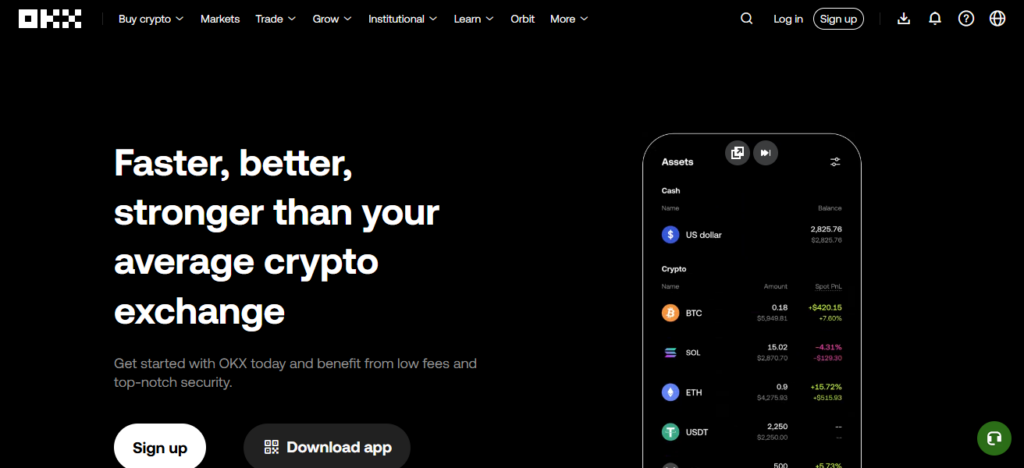
OKX’s trading infrastructure makes available multiple AI strategies across trading layers. OKX gives additional significance to Web3. OKX gives automated trading the ability to move, and smart contract automation, trading and Web3 combined. OKX is a rapidly growing platform for sophisticated trading agents with its innovations in automation and AI.
Pros & Cons OKX
Pros
- Powerful AI bot marketplace for automated trading
- Supports spot, futures, and structured products
- Strong Web3 integration for hybrid AI systems
- High-performance trading engine for complex strategies
Cons
- Regulatory uncertainty in some regions
- A feature-heavy platform can be confusing
- Liquidity varies across small tokens
- AI tools are still evolving
5. Bybit
Bybit is praised for its derivatives trading and advanced API for AI execution trading systems. Automated trading on Bybit’s platform is done on futures, perpetual contracts, and hedging strategies with low latency.
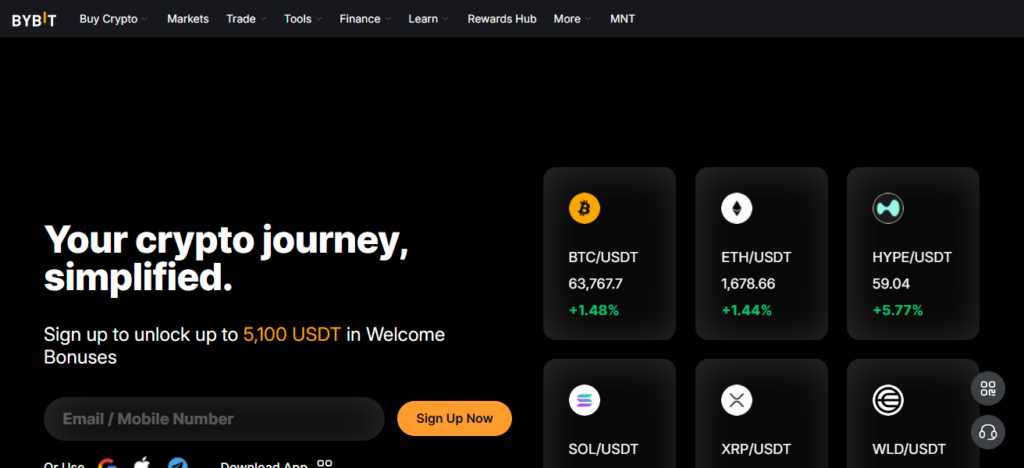
Bybit’s copy trading also helps with AI model copying and strategy scaling. With its most recent upgrades, Bybit has focused its efforts on liquidity and automation, and has great potential for the implementation of AI trading agents.
Pros & Cons KuCoin
Pros
- Fast derivatives engine for AI scalping
- Copy trading encourages strategy trading
- AI trading accuracy enhanced by low latency
- Good liquidity in perpetual futures
Cons
- Fewer spot trading offerings
- High leverage, risky for AI
- Fewer tools for longer investments
- Some regions have trading barriers
6. KuCoin
KuCoin has the infrastructure to support the development of AI trading agents. Its many markets and offerings support a wide range of trading bots and extensive APIs.
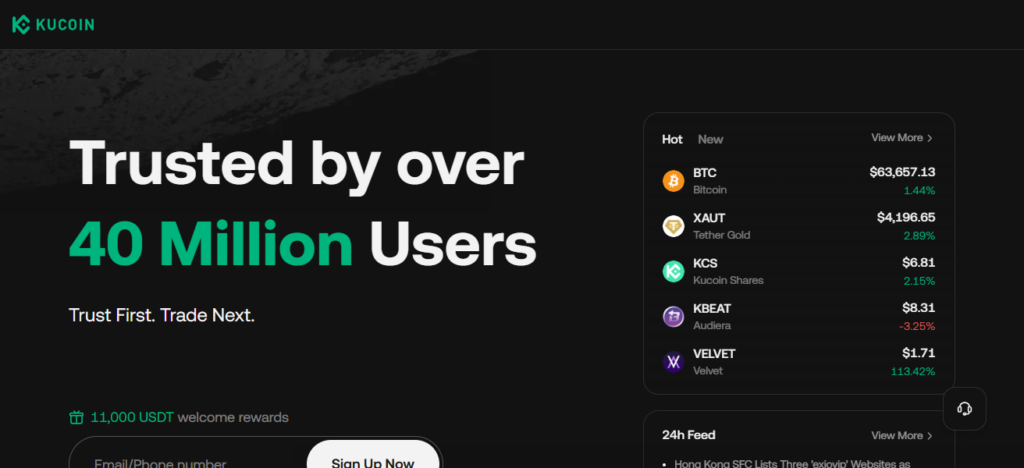
KuCoin’s built-in trading bots help both retail and professional traders automate their trades. With a lot of trading bots and features being built on KuCoin, KuCoin has a lot of appeal for creating adaptive AI trading bots.
Pros & Cons KuCoin
Pros
- Good selection of altcoins for AI
- Built-in bots for easy automation
- Good API for developers
- Futures/margins are flexible
Cons
- Regulatory concerns in some regions
- Small caps have low liquidity
- API instability during large traffic
- Poor support compared to leading exchanges
7. Bitget
Bitget is a leader in copy trading and AI strategy replication. With easily accessible APIs, automated trading agents can be built to replicate trading strategies in real-time.

Bitget stands out for its social trading and AI execution, as it is the first to popularize algorithmic trading. With its balance of trading derivatives, automation, and AI-based copy trading, it is competitive in the market for copy trading and intelligent management solutions.
Pros & Cons Bitget
Pros
- Best in class copy trading for AI
- Good derivatives and automated trading
- Easy API for devs
- Social trading for signal finding
Cons
- Small global liquidity
- Limited tools for institutions
- Copy trading model heavy reliance
- Ongoing regulatory expansion
8. Gate.io
Gate.io is another top-tier trading site, boasting the most versatile API systems for AI trading agents across all major trading disciplines, including spot, futures, margin, and even startup token markets.
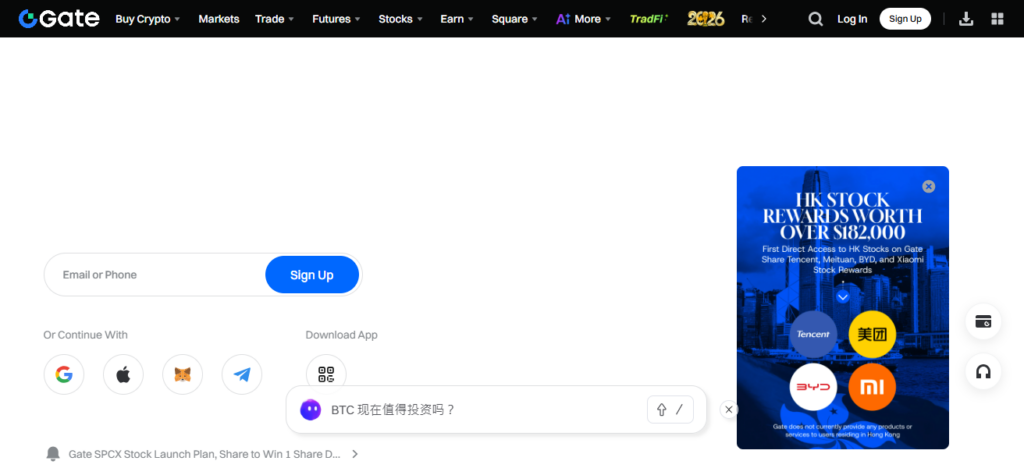
Gate.io trading systems favor flexibility and ease of deployment, encouraging traders to innovate and automate. Combining fast deployment with a broad trading scope, Gate.io systems support AI trading systems exceedingly well.
Pros & Cons Gate.io
Pros
- Many altcoins for AI
- APIs for custom bots
- Early access to tokens for predicting
- Flexible trading tools and products
Cons
- The user interface is not beginner-friendly.
- Emerging tokens have low liquidity.
- Perception of security is lower than top tier exchanges.
- Due to the high volatility, the risk involving AI is much higher.
9. Crypto.com
Crypto.com is another all-in-one centralized trading solution built from the ground up for trading automation and AI management systems. The combination of exchange, DeFi, and payment services means AI integrations can traverse all layers of the Crypto.com ecosystem.

The latest upgrades of Crypto.com focus on institutional trading access and liquidity, further expanding the already deeply automated ecosystem. Crypto.com is ideal for automated services that require a trade as it integrates the utility of crypto.
Pros & Cons Crypto.com
Pros
- The observable ecosystem supports the integration of trading and payments.
- API reliability is strengthening due to institutional expansion.
- Major crypto assets have good liquidity.
- A multi-function platform allows the combined use of AI.
Cons
- The API is less developed than other top-tier competitors.
- Higher fees reduce the effectiveness of trading.
- There are not many advanced tools for AI.
- There are slower advances in integrating AI.
10. Bitfinex
It supports a variety of order types, margin, and derivative trades that can be leveraged by AI agents to achieve more accurate results. Bitfinex has a good history of data that helps ML model training and back testing. Due to its long-standing reputation and technical depth, it is strongly preferred for AI trading.

Bitfinex is a fairly professional-grade exchange with sufficient depth of liquidity and more sophisticated trading APIs. It is excellent for AI-driven quantitative strategies.
Pros & Cons Bitfinex
Pros
- Great liquidity for AI institutional trading.
- Top-tier APIs for complex trade strategies.
- Great historical data for training AI.
- Professional trading improves the accuracy of the trades.
Cons
- Beginner-unfriendly trade platform.
- Smaller community for retail trading.
- Some regions have greater scrutiny of regulations.
- There are very few options for copy trading.
Conclusion
To sum up, the Best Crypto Exchanges Supporting Native AI Trading Agent Frameworks provide excellent environments for intelligent and automated trading.
Exchanges like Binance, Coinbase, Kraken, and OKX provide robust APIs, excellent liquidity, and bot support for AI trading. Every exchange has its distinct advantages, making it appropriate for varying strategies. Security, trading costs, specific features, and the amount of AI support will outline the ideal trading platform for specific strategies and requirements.
FAQ
AI trading agent frameworks are systems that allow automated bots or machine-learning models to analyze markets, execute trades, and manage portfolios using exchange APIs.
Binance is widely considered the best due to its deep liquidity, fast APIs, and strong automation tools.
Coinbase is excellent for regulated and institutional AI trading, but has fewer advanced derivatives tools.
Kraken and Bybit are known for low-latency APIs suitable for high-frequency AI trading.

