


In this article, we will be addressing The Best Crypto Exchanges W/Gas Fee Optimization (Crypto Trading Platforms to Avoid Cost and Block Gas Fees)
This penultimate chapter covers exchanges with low fees, multi-chain support, and Layer 2 solutions to make crypto trading efficient on the pocket as well as the investment.
How To Choose the Best Crypto Exchange With Gas Fee Optimization
Trading Fees (Maker/Taker): Look for exchanges that offer low base fees (0.1% or lower), and outlets to receive discounts using their native tokens.
Network Options: Go for platforms that can be integrated with different types of blockchains (ERC20, BEP20, TRC20), layer 2 solutions etc. to cut down on gas fees too.
Trading Off-Chain: Derivatives or internal matching systems that lower on-chain transactions and gas costs.
Liquidity is important: A high liquidity reduces your slippage which by itself can lower the total trading cost.
Withdrawal Networks: Having the choice of cheaper withdrawal networks is important for gas optimization
Key Points & Best Crypto Exchanges With Gas Fee Optimization
| Exchange | Key Strengths | Gas Fee Optimization Features |
|---|---|---|
| Kraken | Highly secure, trusted by advanced traders | Offers competitive maker/taker fees and efficient transaction batching to reduce costs. |
| PrimeXBT | Low fees with high leverage trading | Optimized for derivatives trading with minimal withdrawal fees and reduced gas overhead. |
| Binance | Largest global exchange, best overall | Discounts when using BNB token, advanced fee tiers, and efficient blockchain integration to lower gas fees. |
| KuCoin | Popular underdog exchange | Provides fee discounts via KuCoin Token (KCS) and supports off-chain settlement to minimize gas usage. |
| Coinbase | Premium US-based exchange | Recently lowered fees, uses smart routing to reduce Ethereum gas costs for retail users. |
| Bybit | Derivatives-focused platform | Low-cost perpetual contracts, optimized settlement layers to reduce gas fees. |
| Crypto.com | Full ecosystem (exchange, card, DeFi) | Fee discounts via CRO token, supports Layer-2 solutions to cut Ethereum gas fees. |
| OKX | Cost-efficient global exchange | Offers rebates for high-volume traders, integrates with Layer-2 scaling for cheaper transfers. |
| Gemini | US-regulated, simple interface | Transparent fee structure, uses batching and custodial wallets to reduce gas costs. |
| MEXC | Fast-growing low-fee exchange | Very low maker/taker fees, supports multiple chains with optimized gas fee handling. |
10 Best Crypto Exchanges With Gas Fee Optimization
1. Kraken
Kraken is a platform that has robust security and an easy-to-understand fee structure that makes it favored among professional traders.
Maker fees can be 0% to 0.25%, and taker fees range from 0% to 0.40%, based on your trading volume.
Although it does not directly reduce crypto chain gas fees, Kraken does effectively lower your overall transaction cost through superior order execution and deep liquidity making slippage a non-factor.
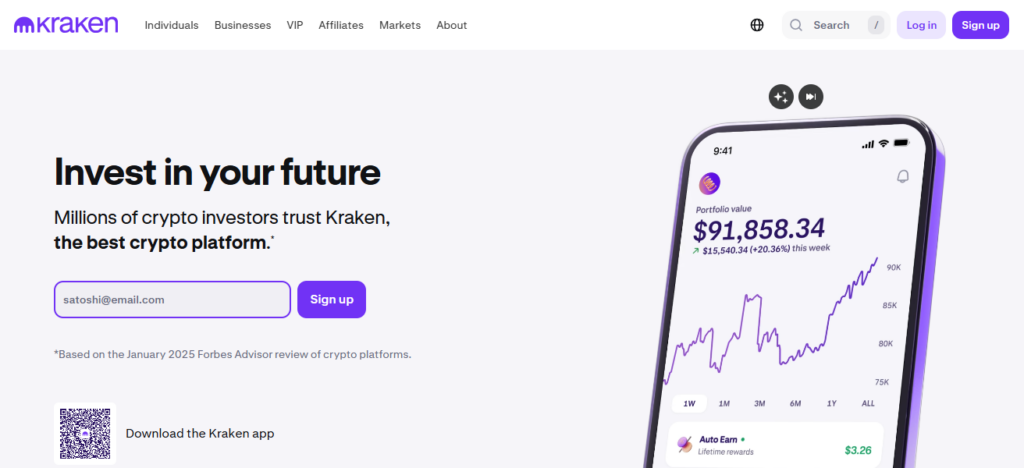
All the above is available to advanced users via Kraken Pro (and for limit orders that indirectly reduces network congestion costs).
A stable infrastructure helps lessen failed transactions, which in turn lessens wasted gas fees when engaging with blockchain withdrawals and deposits.
| Pros | Cons |
|---|---|
| Strong security and trusted global reputation | Does not directly reduce blockchain gas fees |
| Deep liquidity reduces slippage costs | Fewer low-cost network options for withdrawals |
| Advanced trading via Kraken Pro lowers execution costs | Slightly higher complexity for beginners |
| Reliable infrastructure reduces failed transactions | Limited promotional fee discounts |
2. PrimeXBT
This is because PrimeXBT specializes in derivatives trading instead of spot crypto purchases, allowing its users to avoid toggle on-chain gas fees.
Trades are CFD-based (contracts for difference); thus most of the activity is off-chain, eliminating a great portion of blockchain transaction costs.
The platform provides traders with the opportunity to trade crypto, forex, commodities, and indices in one place for capital efficiency.
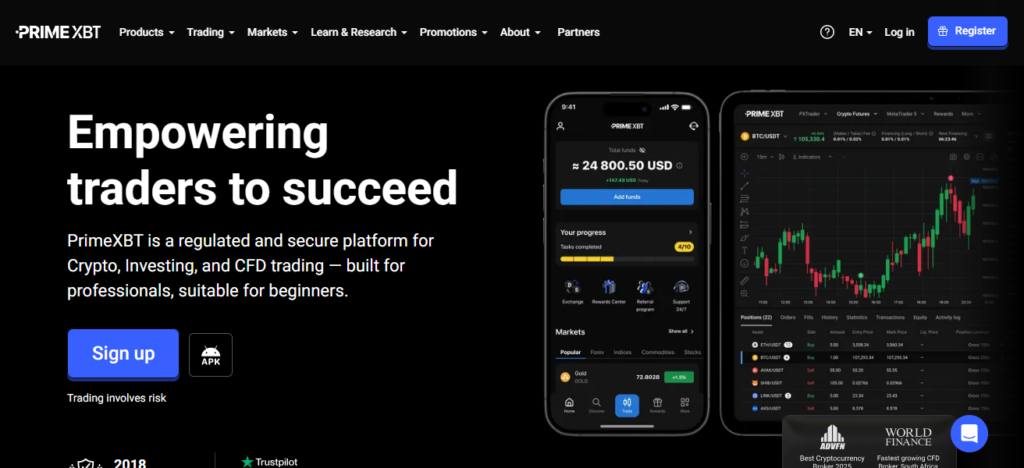
Low trading commissions and narrow spreads instead of gas fee optimization result in optimal fees. Withdrawals are also primary interaction point in the blockchain, allowing users to batch transaction and minimize gas fees.
Such attributes make PrimeXBT appealing for traders, who prioritize cost-efficient leveraged trading minus the need of repeated on-chain transfers.
| Pros | Cons |
|---|---|
| Off-chain CFD trading avoids most gas fees | Not suitable for spot crypto ownership |
| Low trading commissions and tight spreads | Limited blockchain interaction control |
| Supports crypto, forex, and commodities in one platform | Withdrawal fees still apply on-chain |
| Efficient for leveraged trading strategies | Fewer crypto network options |
3. Binance
Binance is widely regarded as one of the most affordable exchanges with a 0.1% trading fee and further discounts for using BNB tokens.
The BSC (Binance Smart Chain) feature provides very low costs per transaction when using this chain compared to Ethereum. When withdrawing crypto, users can opt for lower gas networks such as BEP20 as opposed to ERC20.
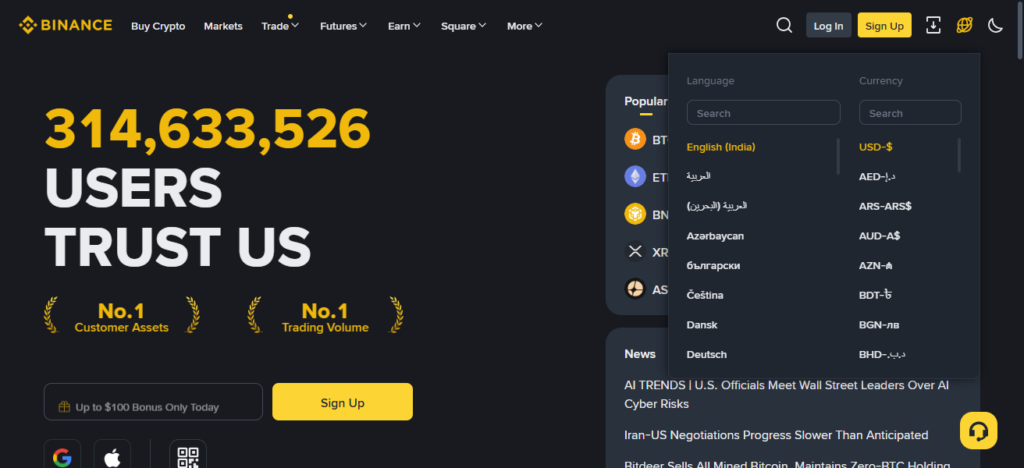
Binance also has high liquidity, resulting in a lower slippage and an indirect transaction price. Order types like limit and similar reduce unnecessary on-chain movement of funds by offering off-chain mechanisms only a valid order will utilize
while futures trading results in net accounts for utilized orders (totaling orders done, no actual funds moved on chain). Binance is the best for trading fees and gas as a whole.
| Pros | Cons |
|---|---|
| Very low trading fees (0.1% base) | Regulatory restrictions in some regions |
| BNB token offers additional fee discounts | Can be complex for beginners |
| Multiple networks (BEP20, ERC20, TRC20) reduce gas costs | Occasional network congestion |
| High liquidity reduces slippage | Customer support response time varies |
4. KuCoin
KuCoin has 0.1% maker and taker fees that can receive discounts with its KCS token. Mexc deposit supports a variety of blockchains, so users can choose low-gas or other withdrawal options depending on the coin.
This flexibility comes by way of helping to reduce Ethereum gas fees allowing for other chains such as TRC20 or BEP20. KuCoin, which also supports futures trading (which reduces on-chain activity because positions are managed internally)

Its liquidity plays in favor of its execution with minimal slippage. KuCoin’s staking and trading bonuses also enable users to lower both transaction costs in trading and on the blockchain as a whole effectively.
| Pros | Cons |
|---|---|
| Low trading fees with KCS discounts | Not fully regulated in all countries |
| Wide range of blockchain network options | Interface may feel complex |
| Supports low-gas withdrawals (TRC20, BEP20) | Liquidity lower than Binance |
| Strong altcoin availability | Higher risk due to offshore structure |
5. Coinbase
Coinbase is easy to use for beginners but usually charges higher fees than most competitors. It does optimize for gas-related inefficiencies, the roadmap favors a strong network infrastructure and automatic estimation of fees for withdrawals
Coinbase usually dynamically selects optimal network fees to expedite confirmations without excessive gas charge.
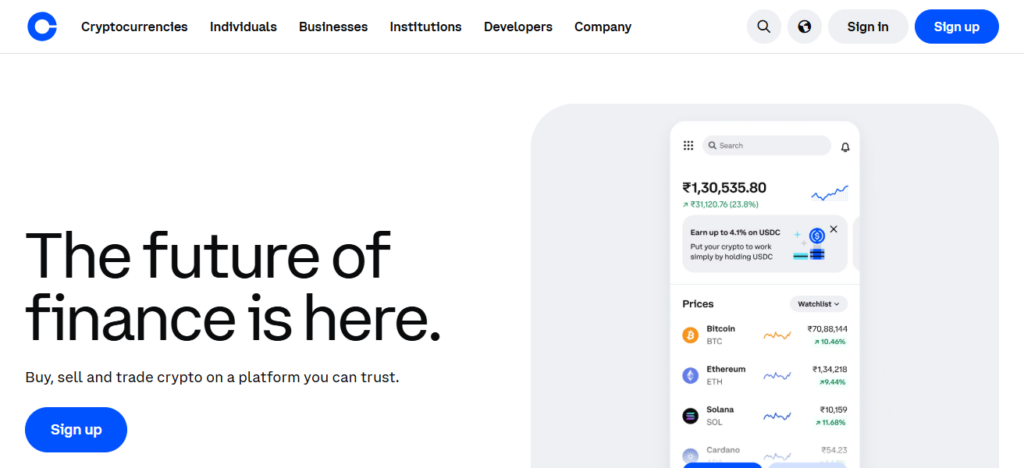
Users may also use Coinbase Advanced Trade for lower trading fees, which mitigates the cost impact overall. As Ethereum gas fees still apply to users during withdrawals, Coinbase enhances reliability by preventing failed transactions and uncompleted transfers.
Dirty it is, but being easy to use makes it a great choice for those that value usability over ultra-low gas.
| Pros | Cons |
|---|---|
| Very secure and beginner-friendly | Higher trading fees compared to competitors |
| Reliable network fee estimation reduces failed transfers | Limited gas optimization options |
| Strong regulatory compliance | Ethereum gas fees fully passed to users |
| Easy fiat on/off ramp | Fewer advanced fee-saving tools |
6. Bybit
Derivatives trading is one of the key areas where Bybit has gained huge popularity, as most transactions are settled off-chain, minimizing gas fee exposure.
The spot trading fees are just about 0.1% and their futures fees are even lower. As most trades occur internally, users can avoid making redundant blockchain calls and pay minimal gas fees.
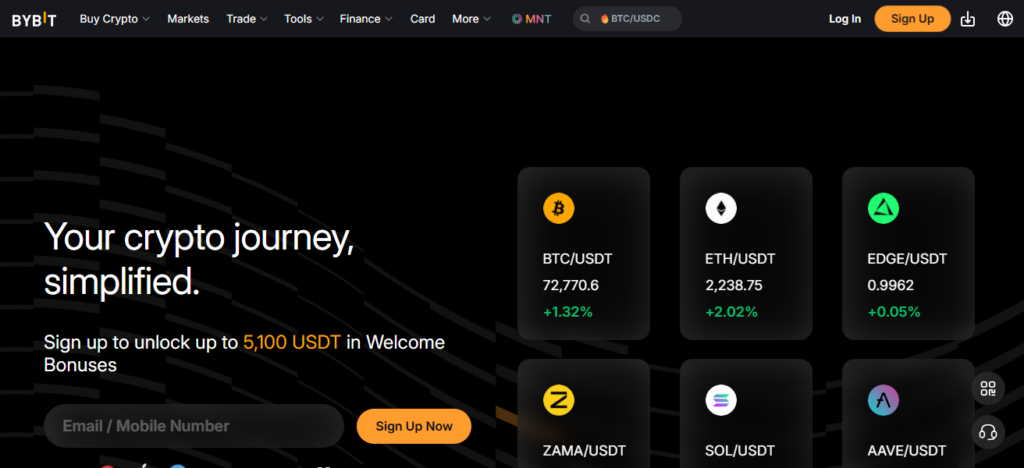
It offers multiple deposit and withdrawal networks so users can choose lower-fee blockchain routes, such as TRC20 or Arbitrum.
It minimizes slippage costs, which indirectly makes it more efficient. By mainly utilizing perpetual contracts, the exchange is perfect for both traders that want to access some exposure without having multiple on-chain transfers and large gas fees.
| Pros | Cons |
|---|---|
| Low spot and futures trading fees | Limited fiat support in some regions |
| Mostly off-chain trading reduces gas usage | Not ideal for long-term custody |
| Supports cheaper networks (TRC20, Arbitrum) | Regulatory uncertainty in some countries |
| High liquidity in derivatives market | Focus mainly on trading, not holding |
7. Crypto.com
Crypto. Cex homepage in October 2023 — Ccrypto.com provides a tiered fee structure based on CRO token staking.
It also minimizes gas fees by keeping dozens of blockchain networks as an option for deposits and withdrawals to select lower-cost chains.
The platform’s app contains automatic fee estimation tools, preventing users from overpaying for network fees. Moreover, its internal transfer network between Crypto.
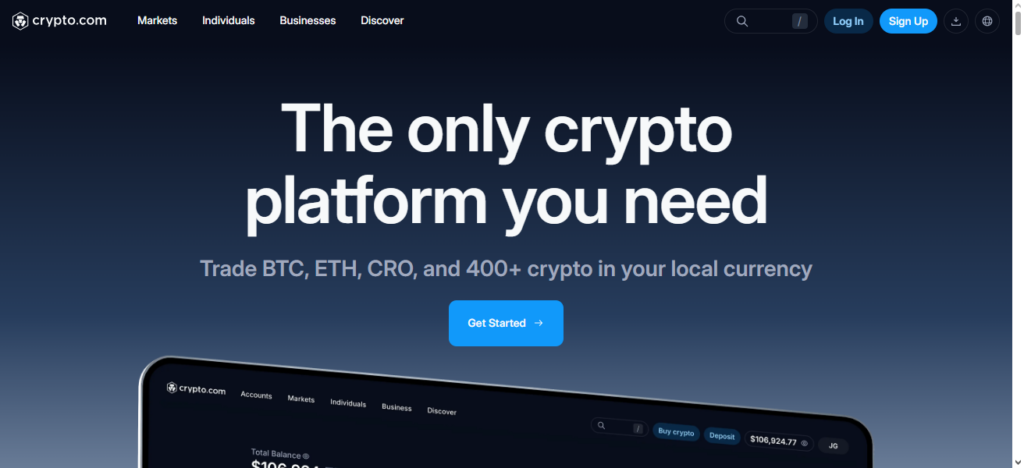
It is free of gas on the rights to purchases from.com users, minimizing transaction costs. Although Ethereum withdrawals are still subjected to gas fees, users can avoid high costs by opting for alternative networks.
Overall, Crypto. com provides an easy user experience while rewarding you each month through staking rewards to optimize your payment die.
| Pros | Cons |
|---|---|
| CRO staking reduces trading fees | Requires staking for best benefits |
| Supports multiple low-cost networks | Higher fees without CRO staking |
| Internal transfers are gas-free | Complex fee tiers for beginners |
| Good mobile app experience | Withdrawal fees still apply on-chain |
8. OKX
OKX offers low trading fees starting at 0.08%–0.1% and excellent gas optimization with multi-chain support.
When withdrawing assets, users can select a low-cost network such as OKT Chain, Arbitrum or TRON, greatly minimizing Ethereum gas costs.
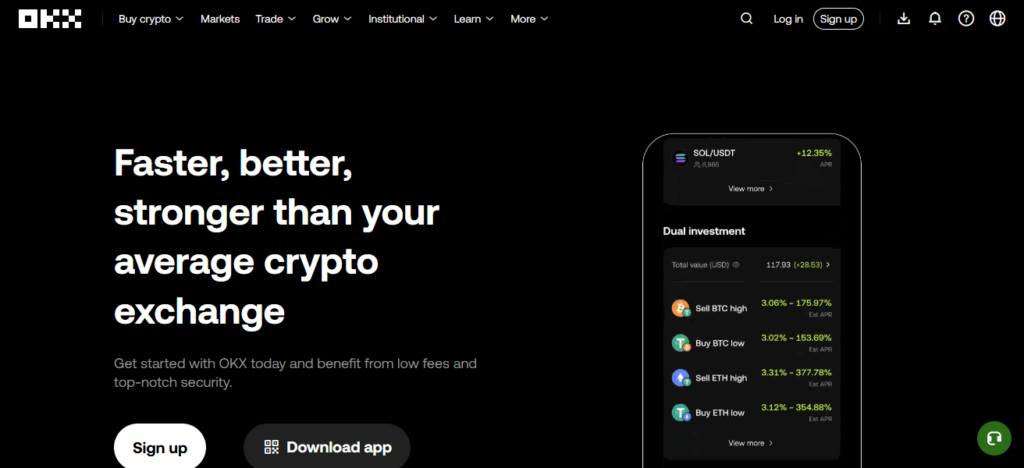
OKX is also natively integrated with Layer 2 solutions, which aid in bringing down congestion costs. Liquidity is extremely high so order execution has low slippage which in effect reduces total transaction costs.
The futures and options markets, which are predominantly off-chain, are advantageous to advanced traders. In summary, OKX is an excellent option for anyone looking to minimize both trading fees and the costs associated with on-chain transactions.
| Pros | Cons |
|---|---|
| Low trading fees (0.08%–0.1%) | Not available in all regions |
| Supports Layer 2 networks (Arbitrum, OKT Chain) | Interface may feel advanced for beginners |
| High liquidity reduces slippage | Some features require verification |
| Strong derivatives ecosystem | Occasional regulatory limitations |
9. Gemini
Gemini features strong security and regulatory compliance, as well as higher trading fees than many competitors.
But it does at least mitigate some of the gas inefficiencies with its ActiveTrader platform, which provides for finer-grained order execution and tighter spreads.
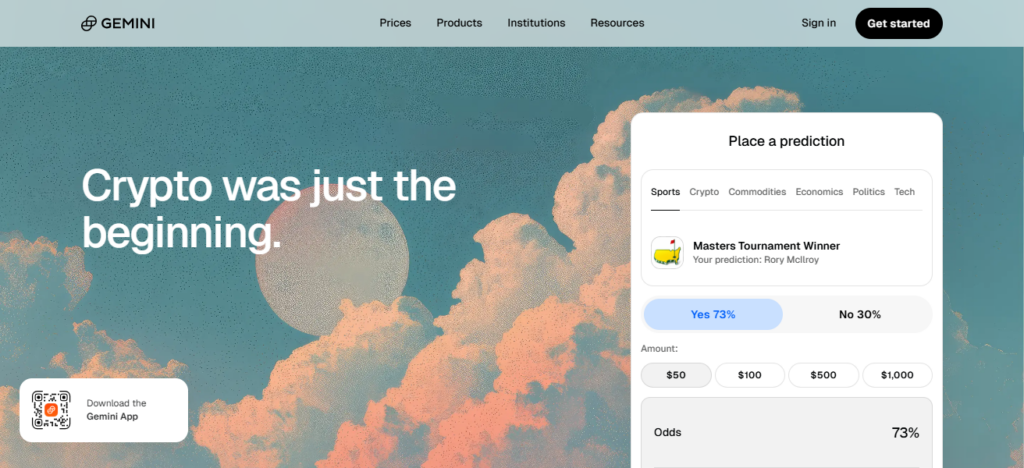
Gemini utilizes a dynamic network fee estimator, which helps users avoid paying unnecessary gas fees.
It is also compatible with multiple cryptocurrencies and networks, enabling users to select cost-effective transfer routes.
That said, unlike decentralized platforms, it does not aggressively optimize gas fee price calculations, but its reliability means that transactions are less likely to fail which protects users from wasted gas costs. The best choice for those that prioritize safety over minimal fees.
| Pros | Cons |
|---|---|
| Highly secure and regulated exchange | Higher trading fees |
| Dynamic gas fee estimation reduces overpayment | Limited low-cost network options |
| Strong compliance and trust factor | Less competitive fee structure |
| ActiveTrader reduces spreads | Fewer discount incentives |
10. MEXC
With some of the lowest trading fees in the industry, including near-zero maker fee markets, MEXC is attractive for those looking to get into DeFi.
It helps minimize gas overhead by supporting a broad selection of blockchain networks, enabling users to bypass costly Ethereum gas fees by choosing inexpensive alternatives.
MEXC also has a frequent offer of zero-fee trading pairs, completely removing any potential trading costs in reality.
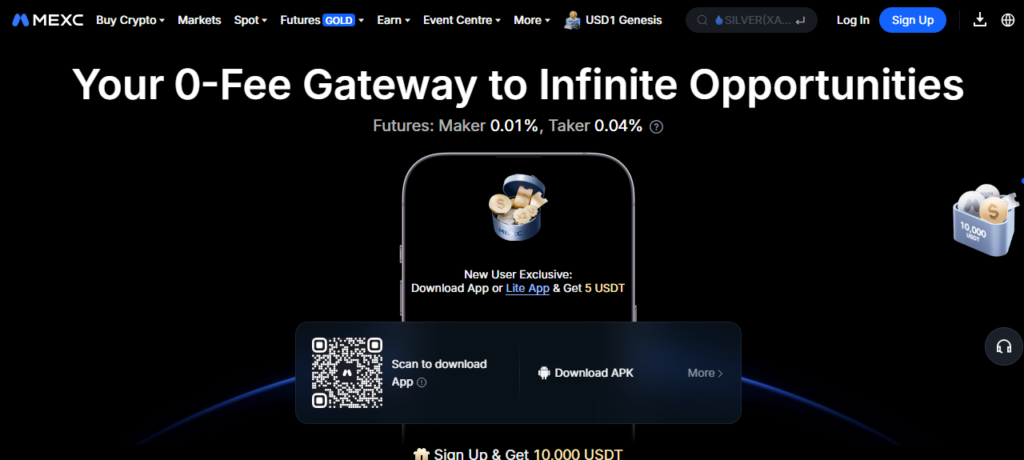
This significantly reduces slippage and enhances cost efficiency due to its high liquidity in altcoin markets.
As most trades are not recorded via blockchain until a withdrawal, users can batch as many transactions up before signalling on-chain and only using gas once. It is perfect for traders focused on costs and altcoin investors.
| Pros | Cons |
|---|---|
| Extremely low or zero trading fees in some pairs | Less regulated globally |
| Supports multiple low-gas blockchain networks | Higher risk for beginners |
| Strong altcoin liquidity | Interface can be overwhelming |
| Batch transactions reduce gas usage | Limited fiat support |
Is Binance Good for gas fee optimization?
So yes, gas fee optimization is one thing in which Binance is extremely well-read because there are various low-cost networks available such as BEP20 (Binance Smart Chain) that provide a very lower transaction cost or gas fees when compared to what they have on Ethereum.
Users can also opt for less expensive withdrawal paths, lowering the complete gas cost. Binance also has high liquidity, low trading fees, and BNB-based discounts
That reduce overall transaction costs, making it one of the most effective platforms for reducing crypto trade and transfer penalties.
Conclsuion
All in all, the top crypto exchanges for gas fee optimization such as Binance, OKX, KuCoin, Bybit and MEXC enable traders to drastically minimize their overall transaction costs by offering low trading fees, multi-chain support and Layer 2 solutions.
Picking a suitable platform will help you to reduce Ethereum gas fees, build an efficient and lucrative trading process that keeps an agile posture, and enhance crypto transaction safety.
FAQ
The best exchanges for gas fee optimization include Binance, KuCoin, OKX, Bybit, Kraken, Coinbase, Crypto.com, Gemini, MEXC, and PrimeXBT. These platforms reduce costs through low trading fees, multi-chain support, and Layer 2 integration.
Binance and MEXC generally offer the lowest overall trading fees, often around 0.1% or less, with additional discounts using native tokens like BNB or promotional zero-fee pairs.
Binance, OKX, KuCoin, and Bybit are best for avoiding high Ethereum gas fees because they support cheaper networks like BEP20, TRC20, and Layer 2 solutions such as Arbitrum.
They reduce gas fees by supporting multiple blockchain networks, using Layer 2 scaling solutions, and allowing off-chain trading where transactions are not recorded on the blockchain until withdrawal.

