


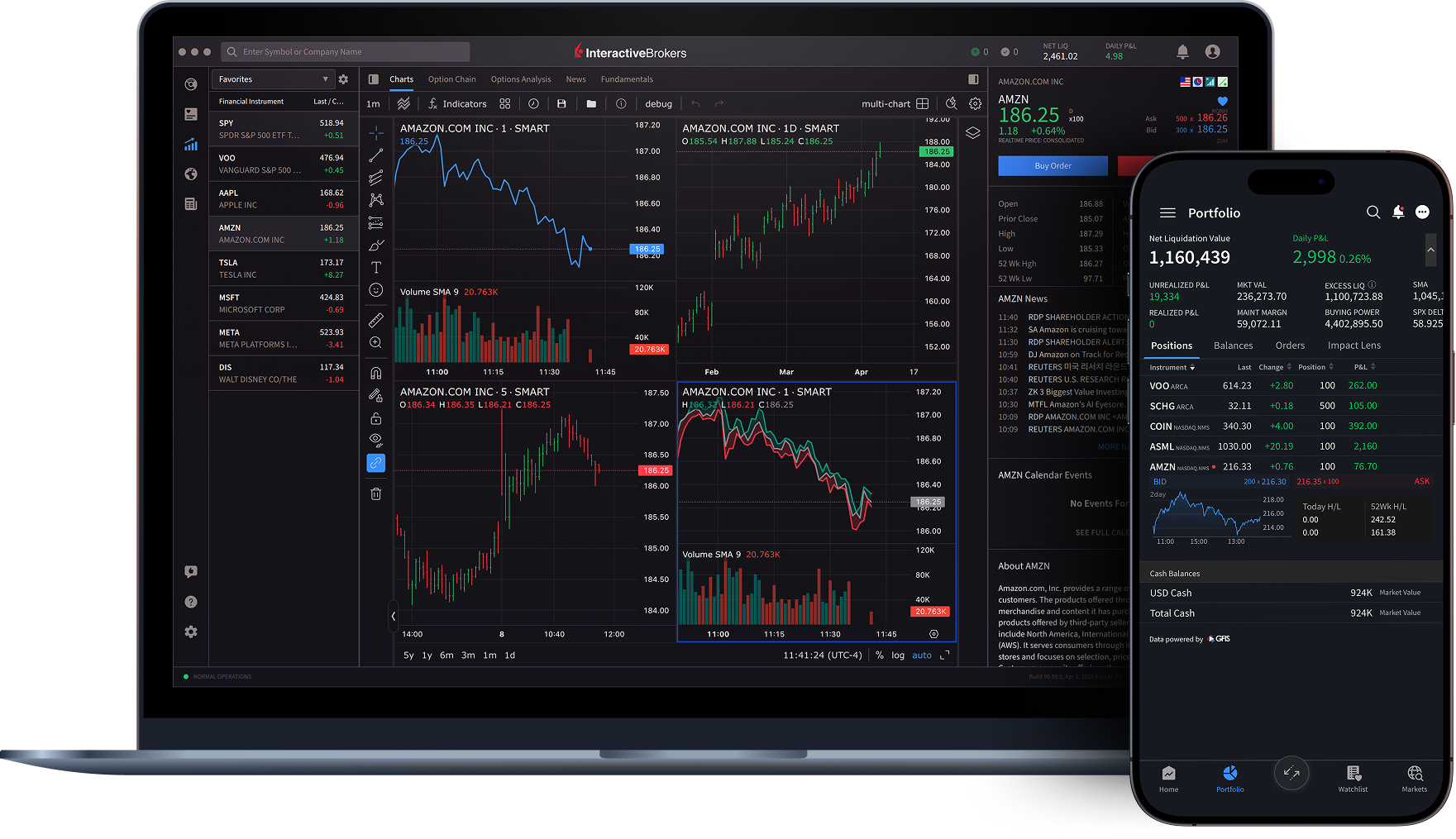
In this article, I will cover Best Matching Engine Providers that offer incredible speed, reliability, and flexibility. I will cover their benefits and features, the asset classes the support, and the most appropriate use cases. This guide will let exchanges, brokers, and fintechs choose the best provider to secure and optimize their trading operations.
What Is a Matching Engine?
All financial exchanges employ matching technology to facilitate automatic trade executions. They use proprietary algorithms to parse the sequence of registries (usually made through buying and selling) and respond to them much faster than humans.
Exchanges that deal in any of the asset classes (stocks, forex, crypto, and derivatives) deploy matching technology to facilitate the maintenance of order books and other functions to improve liquidity and lessen delay.
Why Choose a Professional Matching Engine Provider?
- Speedy Trade Execution: Functions to purchase and liquidate orders in milliseconds due to latency.
- Increased Market Liquidity: Facilitates order and trade matchings.
- Compliance: Assists in secure and compliant trading.
- Scalability: Accommodates increased trade throughput.
- Cross-Asset Trading: Empowers trading of stocks, foreign exchange, cryptocurrencies, and derivatives.
Key Points & Best Matching Engine Providers
| Platform | Explanation |
|---|---|
| Nasdaq | Provides regulated enterprise market technology powering global exchanges with advanced trading infrastructure solutions. |
| Devexperts | Delivers ultra-low latency trading systems supporting stocks, forex, crypto, and derivatives markets. |
| Adaptive | Creates Aeron Exchange Accelerator technology enabling real-time risk management and cross-asset trading. |
| Aquis Technologies | Offers adaptable ultra-fast matching engines trusted by UK and European regulated markets. |
| Exberry | Provides cloud-native scalable matching platforms helping markets grow from startups to enterprises. |
| Vermiculus Financial Technology | Develops VeriTrade microservices-based trading engines used by leading global financial exchanges. |
| Match-Trade Technologies | Provides proprietary matching software designed for retail Forex and crypto spot markets. |
| B2Broker | Supplies multi-asset liquidity technology powering advanced brokerage infrastructure and trading operations. |
| HashCash Consultants | Delivers high-throughput crypto and forex engines with FIX API connectivity solutions. |
| Fix8 Market Tech (F8ME) | Provides customizable rules-based trading engines with price-time matching and PostgreSQL integrations. |
10 Best Matching Engine Providers
1. Nasdaq
As one of the largest regulated market technology companies, Nasdaq offers exceptional matching engine technology to global exchanges and other financial institutions. Their trading infrastructure handles equities, derivatives, and fixed income markets with almost perfect reliability.
Nasdaq’s technology can be used for digital assets markets and focuses on execution speed, low latency, and on the flexibility of being modified. Nasdaq also considers the growing demand of most exchanges by providing cloud technology and automation, so their systems are ready to support AI capabilities for market operations.
Nasdaq – Key Features
- Ultra-Low Latency Execution: Allows matching of orders very quickly for markets across the globe, as well as for high-frequency trading.
- Multi-Asset Market Support: Covers trading operations for equities, derivatives, fixed income, commodities, and digital assets.
- Advanced Scalability: Accommodates growth in the number of transactions with sustained high performance and reliability.
- Regulatory Compliance Tools: Features built to assist worldwide exchange regulations and market compliance.
- Cloud-Based Infrastructure: Employs current cloud technologies to facilitate flexible, secure, and efficient exchange operations.
- AI-Driven Market Solutions: Automation and analytics injected to boost trading solutions and enhance the quality of decisions.
| Pros | Cons |
|---|---|
| Global reputation with highly trusted exchange technology infrastructure. | Enterprise solutions can involve high implementation costs. |
| Supports multiple asset classes including equities and digital assets. | May require complex integration with existing systems. |
| Provides strong security, compliance, and regulatory features. | Best suited for large institutions rather than small businesses. |
| Offers advanced scalability for high-volume trading environments. | Customization options may be limited compared with specialized providers. |
| Uses modern cloud and automation capabilities for market operations. | Requires skilled technical teams for deployment and management. |
2. Devexperts
Devexperts designs fast trading technologies for brokers, exchanges, and other financial service providers, and focuses on matching engine technology for multiple asset classes. Devexperts also designs and deploys low latency, flexible trading technology systems. The systems are easy to scale and help improve the liquidity and operational efficiency for their clients.

Devexperts modern trading technology architecture supports firms to build trading systems and platforms with advanced analytics and market connectivity.
Devexperts – Key Features
- High Speed Matching Technology: Ultra-fast order processing technology for brokers, exchanges, and financial institutions.
- Multi-Asset Trading Support: Supports trading markets of forex, stocks, cryptocurrencies, options, and derivatives.
- Custom Trading Infrastructure: Supports configuration of systems on the basis of market need.
- Improved Execution Quality: Advanced Order Flow Management.
- Easy Integration to External Systems: Great interfacing with Trading Platforms, APIs, and external Market Systems.
- High-Frequency Trading Support: Designed to meet the requirements of a low-latency and high-performance environment.
| Pros | Cons |
|---|---|
| Provides ultra-low latency trading technology for professional markets. | Advanced features may require significant technical expertise. |
| Supports forex, stocks, crypto, and derivative trading. | Pricing may be higher for smaller trading firms. |
| Offers flexible and customizable trading infrastructure. | Implementation process can take time for complex platforms. |
| Provides strong connectivity with multiple financial systems. | Requires ongoing maintenance and technical support. |
| Suitable for brokers and institutional trading environments. | May offer more features than basic trading businesses need. |
3. Adaptive
The Adaptive Aeron Exchange Accelerator was built to support the needs of modern financial markets by providing systems for extremely fast and reliable trading.
Adaptive also considers risk and offers technology that helps quickly and easily manage risk in a 24/7 trading environment. Adaptive also designs technology for financial markets that helps fulfill the needs of modern exchanges to support large trading volumes and low latency.
Adaptive – Key Features
- Aeron Exchange Accelerator: Focused on providing low-latency Matching technology for real-time trading.
- 24/7 Trading: Continuous trading across multiple asset classes without downtime.
- In-Market Risk Management: Real-time monitoring of control trading risk.
- Low Latency, High Throughput: Enables high volume trading with low execution time.
- Flexible Exchange Infrastructure: Supports various financial market requirements with tailored solutions.
- Advanced Performance Optimization: Offers superior performance across all dimensions of an exchange, including speed and reliability.
| Pros | Cons |
|---|---|
| Aeron Exchange Accelerator delivers extremely fast transaction processing. | Mainly focused on advanced institutional trading environments. |
| Supports continuous 24/7 cross-asset trading operations. | Requires experienced teams for proper configuration. |
| Provides effective real-time risk management capabilities. | Limited public information about pricing availability. |
| Handles large trading volumes with low latency. | May not be ideal for small-scale exchanges. |
| Offers flexible infrastructure for modern marketplaces. | Advanced technology can increase operational complexity. |
4. Aquis Technologies
Aquis Technologies develops high-speed matching engines with applications in regulated European financial markets and beyond. With a focus on speed and flexibility, the technology easily accommodates scaling. Aquis Technologies also provides the necessary infrastructure for equities and alternative trading venues while remaining compliant with regulatory frameworks.
The technology is distinguished by its sophisticated order management and efficient market functionality and even supports new trading paradigms. The technology assists trading venues in enhancing the quality of trade execution and reliability of operations.
Aquis Technologies – Key Features
- Ultra-Fast Matching Engine: Provides very quick order execution across regulated financial marketplaces.
- Regulatory Market Support: Composed with consideration of stringent European and international exchange requirements.
- Scalable Architecture: Supports increasing trading volume with no decrease in system performance.
- Advanced Order Management: Enhances market operations through advanced order management.
- Flexible Trading Models: Facilitates exchanges in supporting new trading paradigms.
- Reliable Infrastructure: Guarantees stable and reliable systems in critical trading scenarios.
| Pros | Cons |
|---|---|
| Provides high-speed matching engines for regulated markets. | Primarily targeted toward established exchanges. |
| Strong compliance support for European financial regulations. | Setup and integration may require significant resources. |
| Offers scalable technology for growing trading volumes. | Smaller businesses may find solutions expensive. |
| Supports innovative exchange and trading models. | Requires technical expertise for customization. |
| Delivers reliable order management capabilities. | Limited suitability for non-regulated markets. |
5. Exberry
Exberry provides a cloud-backed, modular, and scalable matching engine with the ability to support various asset classes and markets. Exberry prioritizes efficiency and flexibility within its infrastructure by developing a digital exchange modular architecture that enables organizations to launch digital exchanges quickly.
Exberry’s flexible, cloud-based, and modular architecture supports the launch of trading venues of varying size and scale and beyond, with future marketplace expansion in mind.
Exberry – Key Features
- Cloud-Native Architecture: Makes exchange technology more flexible and scalable with modern cloud infrastructure.
- Rapid Exchange Deployment: Optimizes speed and simplicity to improve the launch of trading platforms.
- Multi-Market Support: Covers both traditional trading of securities and alternative digital asset marketplaces.
- Modular Design: Provides the option to tailor business offerings to the degree desired.
- Enterprise-Level Scalability: Ensures enhanced performance and reliability with market growth.
- Automated Exchange Management: Sufficiently addresses operational complexity with advanced automation.
| Pros | Cons |
|---|---|
| Cloud-native platform enables faster exchange deployment. | Cloud dependency may concern some organizations. |
| Provides scalable infrastructure for growing marketplaces. | Advanced customization may require additional development work. |
| Supports multiple asset classes and market types. | Smaller companies may face learning challenges. |
| Modular architecture improves flexibility and upgrades. | Enterprise features can increase overall costs. |
| Reduces complexity through automated exchange management. | Requires proper cloud security management practices. |
6. Vermiculus Financial Technology
Vermiculus Financial Technology’s VeriTrade is a microservices-based trading engine designed to function in even the most demanding exchange environments. Its technology is used by many of the world’s largest financial services client who require infrastructure that is market safe and scalable. Like Aquis Technologies and Exberry, Vermiculus Financial Technology also focuses on modular technology.
However, this organization aims to improve exchange technology by integrating modular architecture which enables organizations to improve their exchange technology with minimal disruption. The design and technology also supports trading venues with the ability to manage the complexity of international trade.
Vermiculus Financial Technology – Key Features
- VeriTrade Trading Engine: Offers the next generation trading infrastructure with advanced microservices.
- High Availability System: Guarantees near zero downtime for trade execution.
- Flexible Market Models: Supports almost any trading model.
- Secure Architecture: Provides high assurance for protection of sensitive financial transaction data.
- Modern Microservices Design: Simplifies upgrading and enhancing the system.
- Risk Management Ability: Enables exchanges to analyze and manage trade patterns.
| Pros | Cons |
|---|---|
| VeriTrade provides modern microservices-based exchange infrastructure. | Mainly designed for large financial institutions. |
| Offers high availability and reliable trading operations. | Implementation can require complex technical planning. |
| Supports multiple trading models and workflows. | May involve longer deployment timelines. |
| Enables flexible upgrades through modular architecture. | Smaller exchanges may not need all capabilities. |
| Provides strong security and performance management. | Requires specialized expertise for maintenance. |
7. Match-Trade Technologies
Match-Trade Technologies offers tailored matching software engines specifically for the retail Forex and spot market for Cryptocurrency. Their software helps Brokers handle liquidity, fast order execution, and reliable trading.
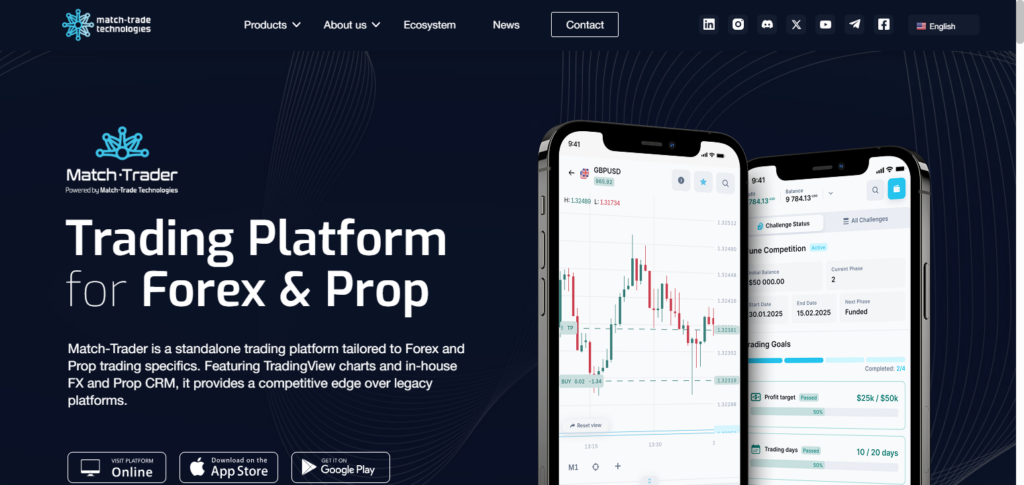
Match-Trade focuses on automation, optimization, and connectivity with trading systems. The company also helps with brokerage infrastructures and systems with an emphasis on risk management and liquidity. Their technology helps firms configure a trading system, handle rapid order execution, and increase customer satisfaction.
Match-Trade Technologies – Key Features
- Retail FX Matching Engine: Tailored for retail foreign exchange trading.
- Crypto Market Friendly: Facilitates the execution of cryptocurrency spot market orders.
- Liquidity Consolidation: Merges various liquidity resources for better trading outcomes.
- Reduced Latency: Offers faster trade execution.
- Broker Friendly: Integrates well with several trading platforms and systems.
- Automated Trading: Assists brokers in improving the efficiency of the execution and trading processes.
| Pros | Cons |
|---|---|
| Specialized matching engine for forex and crypto markets. | Limited focus outside forex and digital assets. |
| Provides fast execution for retail trading platforms. | Advanced customization may require additional support. |
| Supports liquidity aggregation and broker integrations. | Better suited for brokerage businesses than exchanges. |
| Helps automate trading operations efficiently. | May require integration with third-party platforms. |
| Offers practical solutions for growing brokers. | Enterprise-level scalability may vary by requirements. |
8. B2Broker
B2Broker offers a broad range of services and products that combine liquidity solutions, trading technology, and brokerage services. Their matching engine is designed for multi-asset trading platforms that include Forex and Cryptocurrency, among others. B2Broker achieves greater order execution and trading liquidity for Brokers and Exchanges, as well as improving their business operations.
The company focuses on offering scalable, advanced solutions to support a rapid launch and growth of their trading business activities. Their technology systems helps new brokerage firms with trading services that are competitive and flexible.
B2Broker – Key Features
- Multi-Asset Trading: Covers forex, cryptocurrency, and a variety of financial instruments.
- Liquidity Services: Offers liquidity solutions for brokers and exchanges.
- Comprehensive Brokerage Solutions: Assists companies in building their trading solutions.
- APIs: Simplifies integration with third-party services.
- Flexible Trading Systems: Adapts to the needs of a growing business.
- Trading Tools: Provides means to manage trading activities and risk.
| Pros | Cons |
|---|---|
| Provides complete trading infrastructure with liquidity solutions. | Full ecosystem services may increase costs. |
| Supports multiple asset classes including crypto and forex. | Large feature sets may require training. |
| Enables faster brokerage platform development. | Custom requirements may need additional development. |
| Offers strong API connectivity and integrations. | Smaller firms may not use all available features. |
| Helps businesses scale trading operations efficiently. | Dependence on provider ecosystem can increase vendor reliance. |
9. HashCash Consultants
HashCash Consultants develops high speed matching engines used in Cryptocurrency and Forex trading platforms. Their solutions emphasize the rapid processing of transactions, liquidity, and reliable market connectivity using FIX API and Bridges. HashCash enables firms to establish secure Digital Asset Exchanges that have flexible infrastructures for varying levels of trade.
By combining their expertise in both Blockchain and Financial Technology, HashCash enables modern exchange solutions. Their matching engines enhance order execution and trading across financial ecosystems.
HashCash Consultants – Key Features
- High Volume Matching Engine: Handles extensive volumes of crypto and forex trading.
- FIX API: Connects to advanced trading and liquidity solutions.
- Minted Solutions: Fuses fintech with a digital assets framework.
- Speed of Trading: Offers quick order matching with less processing holdups.
- Safe Exchange: Assists in the building of secure crypto trading platforms.
- Liquidity Bridges: Connects multiple markets.
| Pros | Cons |
|---|---|
| Provides high-throughput matching engines for crypto markets. | Stronger focus on digital assets than traditional markets. |
| Supports FIX API and liquidity bridge connectivity. | Requires blockchain and trading technology knowledge. |
| Helps build secure cryptocurrency exchange platforms. | Implementation complexity may vary by project scope. |
| Combines blockchain expertise with financial technology. | Smaller businesses may require additional technical assistance. |
| Offers scalable solutions for growing trading volumes. | Regulatory requirements depend on supported markets. |
10. Fix8 Market Tech (F8ME)
Fix8 Market Tech constructs customizable trading platforms that feature rules-based matching and price-time priority execution, alongside database integration. F8ME’s technology supports organizations that demand a highly flexible exchange infrastructure that offers high performance and reliability. F8ME also provides advanced trading services and enables organizations to define their matching rules based on the prevailing needs of the market.
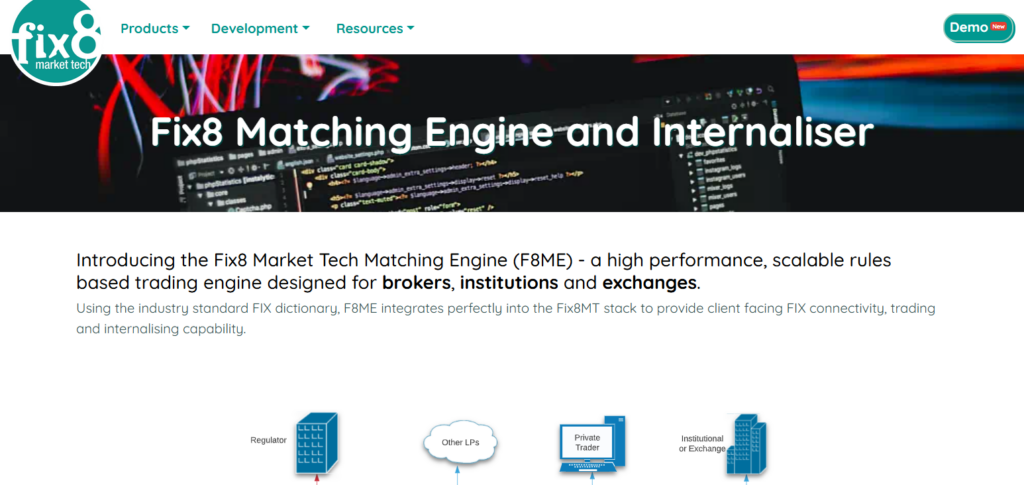
The platform integrates the latest technologies, including PostgreSQL, to enhance the management and optimization of data. With these solutions, exchanges and financial service platforms can design flexible trading frameworks that adapt to changing market conditions.
Fix8 Market Tech (F8ME) – Key Features
- Rules-Based Matching Engine – Enables automated custom trading logic and execution workflows.
- Price-Time Priority Matching – Order execution is handled fairly and efficiently.
- PostgreSQL Integration – Database management is reliable, and operational performance is consistently high.
- Customizable Trading Rules – Exchanges can configure matching behavior as preferred.
| Pros | Cons |
|---|---|
| Provides customizable rules-based matching engine technology. | Requires technical knowledge for configuration. |
| Supports price-time priority execution models. | May need additional development for unique workflows. |
| Offers flexible infrastructure for different trading environments. | Less recognized compared with larger providers. |
| PostgreSQL integration improves data management capabilities. | Limited public information on global adoption. |
| Suitable for organizations needing adaptable trading systems. | Advanced features may require ongoing technical support. |
How To Choose the Best Matching Engine Provider
- Latency & Performance: Look for faster order processing and execution performance reliability.
- Asset Class Support: Check which markets are available (e.g. stocks, forex, crypto, derivatives) and ensure they fit your requirements.
- Scalability: Will the trading matching engine support the growth of your trading volumes and your business?
- Security & Compliance: Review the security offered and the provider’s potential to comply with regulations.
- API Integration: Look for adaptable APIs that will connect easily to your trading systems.
- Pricing & Support: Compare costs, the cost of maintenance, and the availability of support in the future.
- Business Goals: Choose a provider that fits your trading model, your market requirements, and the needs of your business growth.
Conclusion
In cocnlsuion Choosing the right Best Matching Engine Providers is essential for building fast, secure, and scalable trading platforms. Advanced features from leading providers include low-latency executions, multi-asset support, security, and strong, reliable infrastructure.
Companies should look at the performance, compliance, and integration of the provider as well as the scalability of the solution for the future. Choosing the right matching engine will help exchanges and brokers optimize the efficiency and liquidity of their trading and will create the best trading experience.
FAQ
Matching engines are used in stock, forex, cryptocurrency, derivatives, and commodity markets.
Ultra-low latency means orders are processed within microseconds for faster trade execution.
Yes. Most modern providers support equities, forex, crypto, derivatives, and other financial instruments.
Compare performance, scalability, security, compliance, integration options, pricing, and technical support.

