



This article will cover the Best Order Management Systems which allow businesses to automate and simplify the order management process, inventory management, fulfillment, and satisfaction of customers.
You will learn about the leading OMS software, the features and benefits of each, the pricing details, and the factors to consider in selecting the best OMS software for your business to optimize and grow your business in the long run.
What Is an Order Management System?
An Order Management System (OMS) is a useful software that allows businesses to manage orders from creation to fulfillment and even returns. OMS is useful for retailers that sell through multiple platforms as it compiles orders placed on all sales channels. OMS is also useful for tracking inventory, automating fulfillment tasks, and streamlining communication with customers.
OMS helps businesses maximize efficiency, accuracy, and reduces the burden of manual tasks by integrating with fulfillment partners, payment systems, and eCommerce platforms. Also, because OMS systems track inventory and orders, you get real-time analytics of the state of your business.
Why Businesses Need Order Management Systems
- Handle Higher Order Quantity: Helps organizations efficiently process a large volume of orders.
- Increase Order Accuracy: Automating order processing dramatically reduces the chances of errors.
- Visibility of Inventory Levels in Real Time: Order management systems empower businesses to observe levels of stock, which helps prepare for shortages and fulfill orders more promptly.
- Boost Customer Satisfaction: Automated order systems will keep customers updated on the status of their orders. This leads to higher satisfaction from customers.
Key Points & Best Order Management Systems
| 10 Best Order Management Systems | Explanation |
|---|---|
| Shopify Order Management | Simplifies order processing, inventory tracking, fulfillment, and customer management for online businesses. |
| Salesforce Order Management | Provides centralized order handling with automation, flexibility, and seamless customer experiences. |
| Oracle Order Management Cloud | Enables scalable order orchestration, fulfillment control, and enterprise-level commerce operations. |
| SAP Order Management | Delivers advanced order processing, inventory visibility, and omnichannel retail capabilities. |
| NetSuite Order Management | Integrates orders, inventory, customers, and financial operations within one platform. |
| Zoho Inventory | Helps businesses manage orders, warehouses, shipments, and inventory efficiently. |
| Cin7 Order Management | Offers powerful inventory control, automation, and multi-channel order management features. |
| Brightpearl | Provides retail-focused order management with automation and real-time inventory synchronization. |
| Orderhive | Supports order processing, shipping automation, and marketplace integrations for sellers. |
| Skubana | Optimizes ecommerce operations through automation, inventory management, and order fulfillment tools. |
10 Best Order Management Systems
1. Shopify Order Management
Shopify Order Management helps streamline order management for retailers. It brings order management to sales and fulfillment dashboards and addresses many of the retailers’ concerns with fulfillment (e.g. order management, shipping, customer sales notifications, etc.) by integrating sales channels, fulfillment services, payment providers, and shipping services.
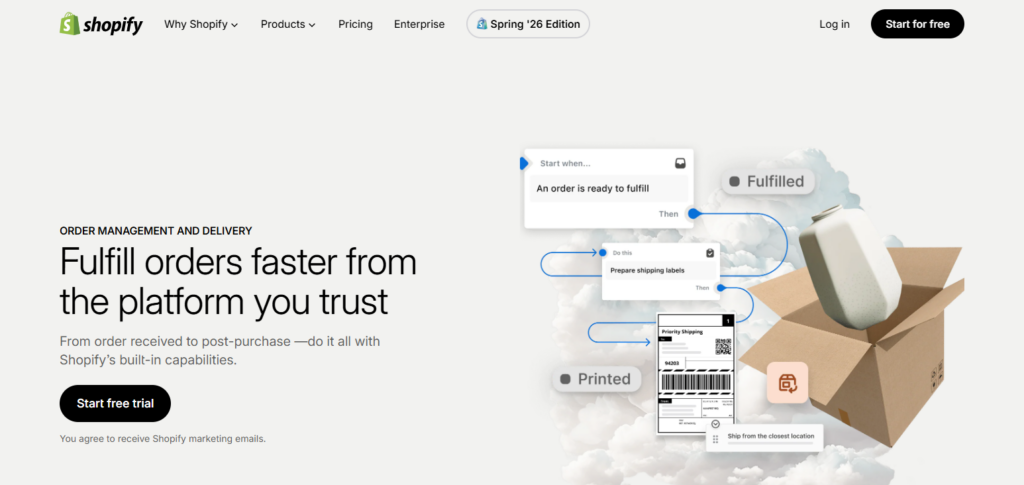
Retailers looking for a solution that brings fulfillment optimization, order management, and customer sales notifications all in one place will find Shopify’s advanced and automated fulfillment and order systems a great addition. Shopify’s strong and scalable system will help growing retailers manage their fulfillment and order needs with ease.
Shopify Order Management Features
- Multi-Channel Order Management: Order management from stores, marketplaces, and social channels.
- Automated Fulfillment: Automates shipping, tracking, and order processing tasks.
- Real-Time Inventory Tracking: Shows stock levels and availability across all sales channels.
- Customer Management Tools: Monitors customer profiles, orders, and spending.
- Third-Party Integrations: Integrates payment, shipping, and business apps.
| Pros | Cons |
|---|---|
| Easy setup and user-friendly interface for ecommerce beginners. | Advanced features may require expensive third-party apps. |
| Supports multiple sales channels and payment integrations. | Limited customization for highly complex enterprise workflows. |
| Provides real-time inventory and order tracking. | Transaction fees can increase overall operational costs. |
| Offers extensive marketplace and shipping integrations. | Large businesses may need more powerful enterprise tools. |
| Scales effectively for growing online stores. | Reporting features are limited compared to enterprise platforms. |
2. Salesforce Order Management
Salesforce Order Management strikes a balance between simplifying order management systems and addressing the complexities of global order management. The system provides order management for multiple channels and enhanced order management fulfillment and customer engagement.
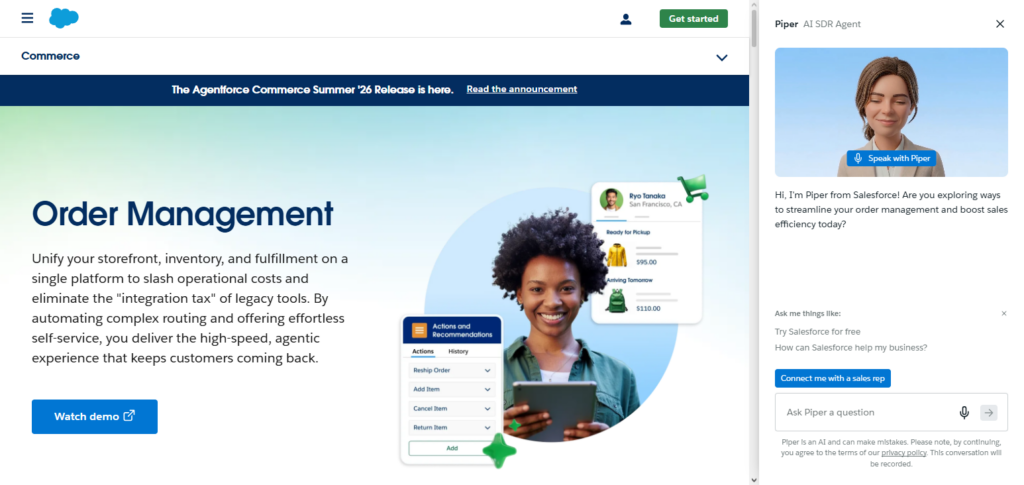
The system’s advanced integrations and modern automation coupled with Salesforce’s strong suite of CRM, fulfillment, and customer service systems helps companies build their global order management system with advanced automation and less manual interventions.
Salesforce Order Management Features
- Centralized Order Processing: Manages complicated orders via a singular enterprise solution.
- Intelligent Order Routing: Chooses the optimal fulfillment location to expedite delivery.
- Omnichannel Commerce Support: Ensures uniform customer journeys for all shopping channels.
- CRM Integration: Merges customer order and service data with sales and order workflows.
- Workflow Automation: Empowers the workforce by minimizing manual steps.
| Pros | Cons |
|---|---|
| Provides powerful enterprise-level order automation capabilities. | Requires technical expertise for setup and customization. |
| Integrates seamlessly with Salesforce CRM ecosystem. | Higher pricing compared with smaller business solutions. |
| Supports complex omnichannel fulfillment operations. | Implementation process can be time-consuming. |
| Offers advanced customer insights and personalization. | May require additional Salesforce products for full functionality. |
| Provides strong workflow customization options. | Too complex for small businesses with simple needs. |
3. Oracle Order Management Cloud
Large enterprises that need flexible and robust order management systems will find Oracle’s Order Management Cloud to be a great fit for their business. The platform’s ability to handle complex fulfillment systems, flexible order routing, and improved inventory management and visibility provides enterprises a great deal of control and flexibility.
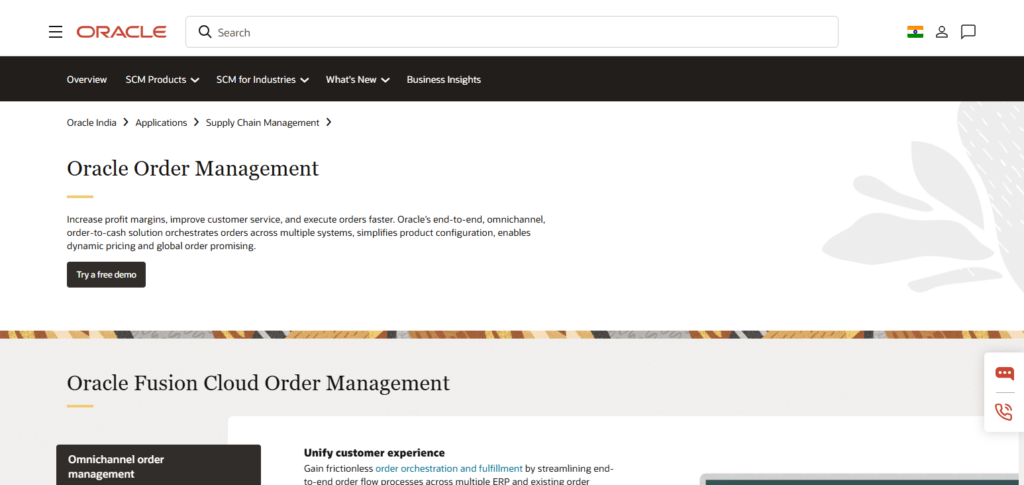
The cloud-based system combined with Oracle’s Analytics and AI services allows enterprises to optimize their fulfillment dimensions quickly and reduce fulfillment costs. Customer experience improves when fulfillment speeds improve and fulfillment costs decrease for the enterprise.
Oracle Order Management Cloud Features
- Advanced Order Orchestration: Facilitates multiple business channels and complicated order flows.
- Inventory Availability Management: Tracks stock levels and availability across all locations.
- Cloud-Based Scalability: Growth of business is no concern due to the cloud infrastructure.
- AI-Powered Decision Making: Smart insights dictate order fulfillment.
- Global Fulfillment Support: Handles all aspects of global order and supply chain fulfillment.
| Pros | Cons |
|---|---|
| Handles large-scale enterprise order operations efficiently. | Higher investment costs for implementation and maintenance. |
| Provides advanced automation and fulfillment capabilities. | Requires skilled professionals for configuration. |
| Supports global commerce and complex supply chains. | Learning curve can be challenging for new users. |
| Offers strong analytics and reporting features. | Not ideal for small businesses with limited requirements. |
| Provides reliable cloud scalability and security. | Custom integrations may require additional resources. |
4. SAP Order Management
For businesses at the cutting edge of international and high-volume trade, SAP Order Management provides a set of sophisticated services. Take advantage of order processing and inventory automation, order fulfillment and inventory visibility, and integration with SAP enterprise solutions.
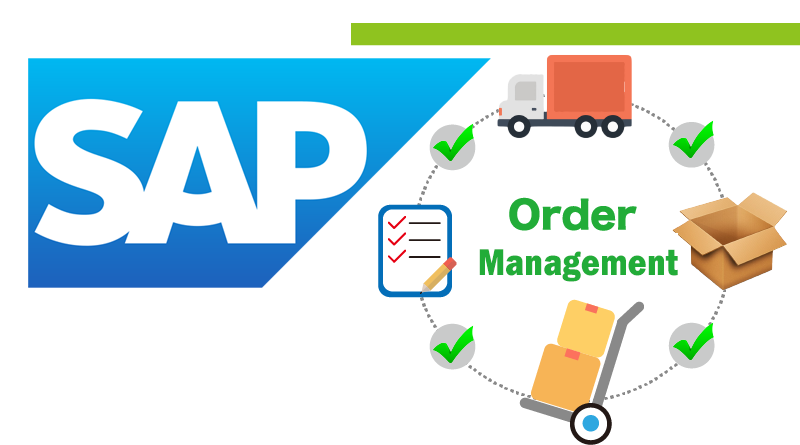
It provides a fulfillment edge to businesses in retail, manufacturing, and distribution. SAP Order Management provides the flexibility and control necessary to optimize the order fulfillment process.
SAP Order Management Features
- Real-Time Order Visibility: Monitors all orders in all steps of the fulfillment process.
- Supply Chain Integration: Links systems to order fulfillment, manufacturing, and distribution networks.
- Automated Fulfillment Processes: Workflow automation increases speed and accuracy.
- Enterprise Resource Planning Integration: Compatible with SAP business applications.
- Predictive Analytics Tools: Analyzes data to improve inventory and demand planning.
| Pros | Cons |
|---|---|
| Excellent integration with SAP enterprise applications. | Expensive compared with small business solutions. |
| Supports global supply chain and retail operations. | Complex implementation requires expert support. |
| Provides accurate real-time order visibility. | User training may require significant time investment. |
| Offers advanced automation and analytics features. | Customization can increase project complexity. |
| Suitable for large organizations with high volumes. | Less suitable for startups and small companies. |
5. NetSuite Order Management
Oracle NetSuite Order Management allows businesses to cloud-base sales order, inventory, finance, and fulfillment operations coverage in one place. Keep a pulse on stock and customer orders, as well as shipments, with enterprise order management.
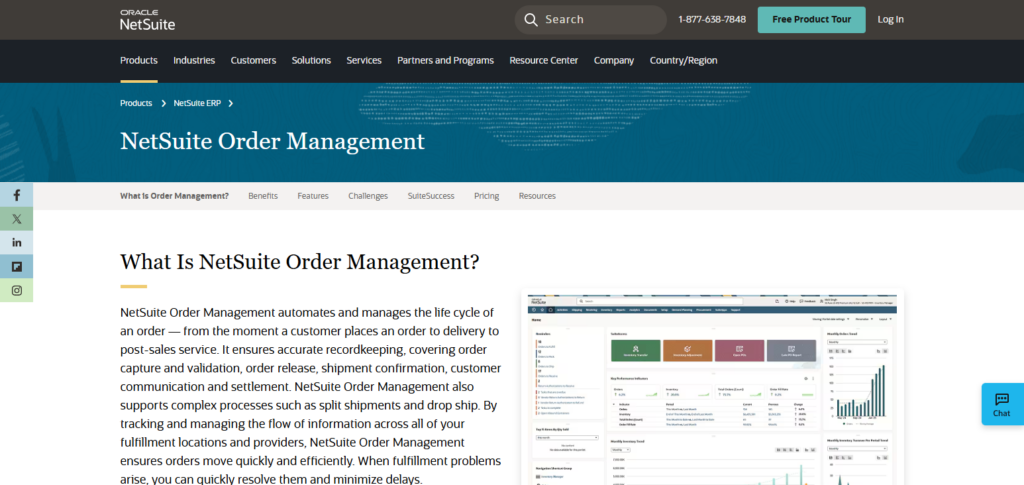
Support automated fulfillment with NetSuite’s multi-channel supply and demand tools and fulfillment operations. For fast growing businesses, NetSuite Order Management fosters a connected order to cash ecosystem while reducing operational overhead and scaling fulfillment accuracy.
NetSuite Order Management Features
- Unified Order Management: Integrates sales, inventory, finance, and fulfillment.
- Multi-Location Inventory Control: Inventory control in all business locations and warehouses.
- Automated Order Processing: Intelligent workflows reduce manual processing.
- Financial Integration: Links orders to accounting and payment processing.
- Customer Experience Management: Enhances service by providing estimated delivery dates.
| Pros | Cons |
|---|---|
| Combines order, inventory, and financial management. | Subscription costs may be high for small businesses. |
| Provides real-time visibility across business operations. | Customization often requires developer assistance. |
| Supports multi-location inventory management. | Advanced features may need additional modules. |
| Improves automation and reduces manual processes. | Initial setup can take considerable time. |
| Works well for growing companies. | Interface may feel complex for beginners. |
6. Zoho Inventory
Zoho Inventory provides a sales, purchase, and order management solution for small to medium sized businesses. Manage warehouse operations and shipment tracking all in one place. Streamline operations and integrate your order management system with eCommerce, payment, and accounting systems.
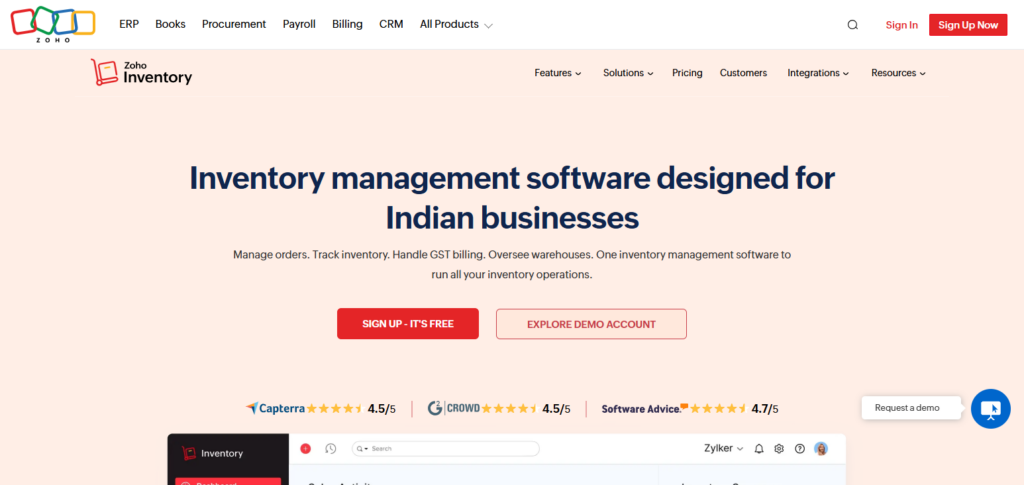
Automated order management, real-time inventory, and barcoding reduce order fulfillment issues and inventory discrepancies, allowing your staff to better serve your customers.
Zoho Inventory Features
- Inventory Tracking: Product quantities and movements plus warehouse tracking.
- Order Automation: Automation of sales order and fulfillment.
- Barcode Management: Product and inventory control efficiency.
- Marketplace Integration: Integration of sales and ecommerce channels.
- Shipping Management: Management of shipment and delivery with various couriers.
| Pros | Cons |
|---|---|
| Affordable solution for small and medium businesses. | Limited advanced features for large enterprises. |
| Easy integration with Zoho business applications. | Reporting capabilities are less comprehensive. |
| Provides simple inventory and order tracking tools. | Limited customization options compared to premium platforms. |
| Supports barcode scanning and warehouse management. | Advanced automation requires higher plans. |
| User-friendly interface with quick setup process. | May struggle with very high order volumes. |
7. Cin7 Order Management
Cin7 Order Management streamlines the processing and management of orders and inventory. Effective system management requires connection to multiple sales channels, warehouses, and providers.
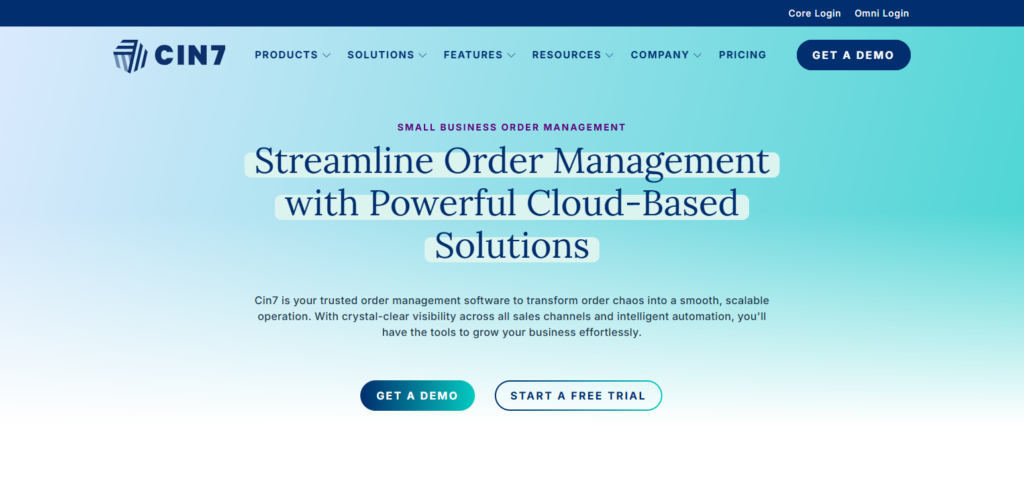
The platform integrates multiple sales channels and warehouses within an operational system. Order fulfillment and inventory management can be automated with the functionality of the platform. Cin7 Order Management also supports services offered by other e-commerce platforms and provides real-time order demand and inventory updates and synchronizations.
Cin7 Order Management Features
- Advanced Inventory Control: Inventory control in multiple locations.
- Sales Channel Integration: Integration of all ecommerce and retail sales channels.
- Warehouse Management: Efficient packing and shipping operations.
- Demand Forecasting: Inventory forecasting based on sales.
- Automated Workflow Management: Smart automation reduces manual processes.
| Pros | Cons |
|---|---|
| Provides strong inventory management capabilities. | Pricing can be expensive for smaller companies. |
| Supports multiple sales channels and warehouses. | Requires training for complete feature usage. |
| Offers automation for complex order workflows. | Interface may seem complicated initially. |
| Includes useful forecasting and reporting tools. | Some integrations may require additional configuration. |
| Suitable for growing retail businesses. | Customer support response times may vary. |
8. Brightpearl
Brightpearl is an order management system focused on eCommerce, especially systems handling fast-growing online retail. The system combines order and inventory management, automated accounting, and CRM functionality in an integrated system.
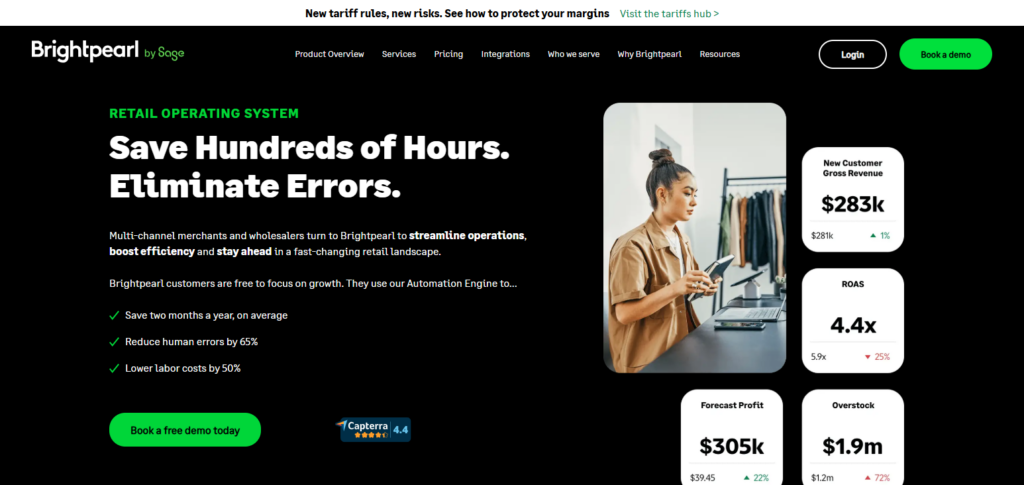
The platform helps manage the high velocity of retail sales and the automation of multiple business processes. The system combines real-time business reporting and automated workflows with integrated marketplaces to provide operational fulfillment and business task automation to improve the customer experience.
Brightpearl Features
- Retail Order Automation: Automated processing of retail orders.
- Real-Time Inventory Synchronization: Instant updates of inventory across all sales channels.
- Accounting Integration: Merging of order and finance management.
- Customer Relationship Management (CRM): Saves customer data and tracks their purchases.
- Business Reporting Tools: Generates data on sales and business operations.
| Pros | Cons |
|---|---|
| Designed specifically for retail and ecommerce brands. | Not ideal for non-retail industries. |
| Combines inventory, orders, and accounting features. | Pricing may be high for smaller retailers. |
| Automates repetitive business processes effectively. | Limited flexibility outside retail workflows. |
| Provides real-time operational insights. | Setup requires proper planning and configuration. |
| Handles high-volume ecommerce transactions efficiently. | Advanced features may require additional learning. |
9. Orderhive
Orderhive is an automated order management system for online retail businesses. The system combines sales, inventory, and automated shipping for multiple online marketplaces from a centralized system. Order management can be automated, and inventory management streamlined to ensure inventory accuracy at all fulfillment sales channels.
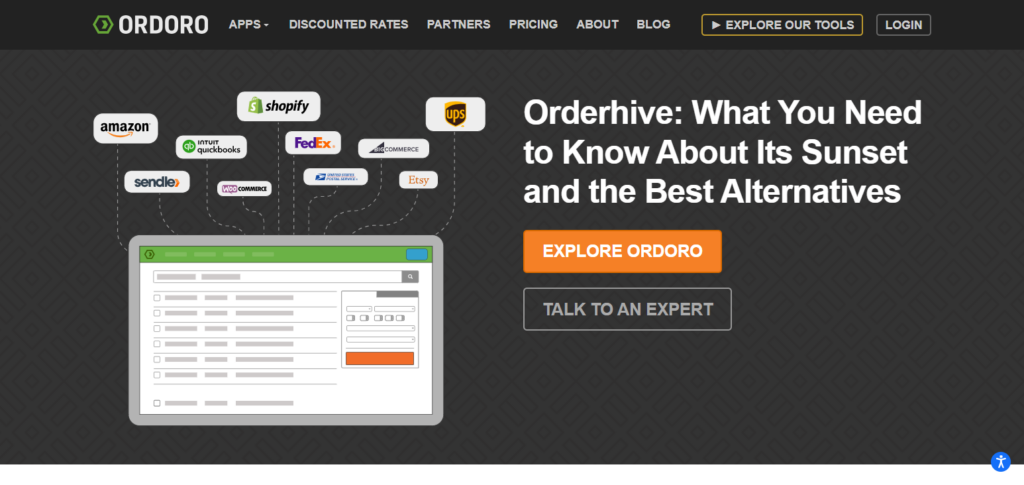
The system synchronizes all channels in real time and facilitates bulk, automated shipping and order fulfillment processes. Orderhive integrates multiple online retail businesses and streamlines the order management process.
Orderhive Features
- Multi-Channel Order Management: Handles orders from numerous ecommerce business channels.
- Shipping Simplification: Eases the process of shipping labels, tracking, and carrier services.
- Bulk Orders: Handles large orders with ease.
- Inventory Control: Manages stock levels across sales channels and listings.
- Warehouse Management: Helps with the management of storage and the fulfillment process.
| Pros | Cons |
|---|---|
| Supports multiple marketplaces and ecommerce platforms. | Advanced enterprise features may be limited. |
| Provides shipping and fulfillment automation tools. | Interface may require time to understand. |
| Helps manage bulk orders efficiently. | Pricing structure may vary depending on usage. |
| Offers real-time inventory synchronization. | Limited customization compared with larger platforms. |
| Suitable for online sellers and growing brands. | Some users report integration challenges. |
10. Skubana
The ecommerce brand orders, fulfillment, inventory, and automation management systems by Skubana aim to simplify ecommerce. Sales channel and warehouse shipping optimization are also easy with the Skubana systems.
Skubana consolidates the control and data of orders, inventories, and the performance insights of products. The fulfillment automation and tools of Skubana are ideal for rapidly growing ecommerce brands.
Skubana Features
- Fulfillment Automation: Simplifies management of order and shipping automation.
- Multi-Channel Order Management: Orders across various ecommerce platforms.
- Inventory Management: Keeps stock levels accurate and balances shortages.
- Warehouse Automation: Speeds up fulfillment by the automation of processes.
- Business Intelligence: Analyzes sales and inventory data.
| Pros | Cons |
|---|---|
| Strong automation for ecommerce operations. | Higher cost compared with basic solutions. |
| Helps optimize inventory and fulfillment processes. | Mainly focused on ecommerce businesses. |
| Supports multiple sales channels effectively. | Requires learning for advanced features. |
| Provides useful analytics and operational insights. | May not suit very small sellers. |
| Improves warehouse and supply chain efficiency. | Setup complexity can be challenging initially. |
How to Choose the Right Order Management System
- Assess Your Business Demands: Understand the volume of orders, preferred sales channels, and the level of control over the inventory. Take note of operational constraints.
- Check for the Right Features and Integrations: Look for OMSs that have automation, inventory visibility, and shipping capabilities. Review other integrations.
- Consider Cost and the Ability to Scale: Evaluate pricing, the cost of implementation, and the OMSs ability to grow alongside the business.
- Go for the Right Fit Towards Your Goals: Ensure the OMS that is being selected meets business goals, customer demands, and anticipated growth.
Conclusion
In n Conclusion Best Order Management Systems The Best Order Management Systems help companies manage order processing seamlessly, ensure accurate inventory, and enhance the customer experience.
Order Management Solutions from Shopify, Salesforce, Oracle, SAP and NetSuite are some of the emerging platforms. Order volume, integration, budget, and the system’s flexibility are important factors in the selection. An effective order management system helps in overcoming operational issues and fulfilling business needs at a rapid pace.
FAQ
Important features include order automation, inventory tracking, multi-channel support, shipping management, reporting, and system integrations.
Shopify, Brightpearl, Orderhive, and Skubana are popular choices for ecommerce businesses due to automation and marketplace support.
Yes, modern OMS platforms can manage orders from websites, marketplaces, mobile apps, and physical stores in one place.
Yes, solutions like Zoho Inventory and Shopify Order Management provide affordable features for small and growing businesses.
An OMS provides real-time inventory tracking, prevents stock shortages, and helps businesses maintain accurate product availability.

