



In this article, the Best Brokerage Infrastructure Platforms are discussed. These Platforms offer businesses the ability to build, launch, and scale brokerage operations.
These Platforms provide the following; technology to trade, liquidity, CRM, payments, and risk management. Here, the features, benefits, and how these Platforms assist brokerage businesses.
What Are Brokerage Infrastructure Platforms?
Brokerage Infrastructure Platforms are tech solutions that offer all the necessary tools to establish and operate online brokerage businesses. These cover a whole range of services from trading and liquidity platforms to CRM, Payment, Risk, and Compliance solutions.
They provide Retail Forex, Crypto, CFD and Multi-Asset Brokers an ideal solution to build their brokerage business much faster, operate efficiently, and provide safe, scalable, and reliable trading services to their clients across the globe.
Why Use Brokerage Infrastructure Platforms?
- Fast Deployment: With pre-built technology infrastructure, companies no longer need to invest time or money to design the technology from the ground up to commence brokerage operations.
- Cost Savings: Companies save the costs of developing and designing technology solutions, and costs associated with upkeep and repairs.
- Access to Market Liquidity: Better market opportunities for brokers through access to various liquidity providers.
- Enhanced Trading: Better execution, speed, and efficiency of trades with a more reliable platform.
- Automated Support: Automation of onboarding and support of clients, as well as account management, is a great improvement to customer service.
- Risk/Compliance Monitoring: Automation facilitates the monitoring of risk and compliance.
- Easier Market Access: Simplicity of entering various markets makes global reach easy.
Key Points & Best Brokerage Infrastructure Platforms
| Brokerage Infrastructure Platform | Explanation |
|---|---|
| B2Broker | Provides complete brokerage technology, liquidity, CRM, and trading solutions globally. |
| Leverate | Offers advanced brokerage software, risk management, and trading technology solutions. |
| Match-Trade Technologies | Delivers white-label platforms with liquidity, payment, and broker tools. |
| Finalto | Provides multi-asset trading infrastructure, liquidity, and institutional solutions. |
| Devexperts | Builds scalable brokerage platforms with advanced trading and analytics features. |
| Brokeree Solutions | Supplies broker plugins, automation tools, and MetaTrader enhancement solutions. |
| Tools for Brokers | Develops brokerage software, automation systems, and operational management tools. |
| PrimeXM | Provides connectivity, aggregation, and execution infrastructure for brokers worldwide. |
| Your Bourse | Offers liquidity management, monitoring, and trading technology solutions efficiently. |
| Sucden Financial | Delivers institutional brokerage infrastructure with liquidity and execution services. |
10 Best Brokerage Infrastructure Platforms
1. B2Broker
B2Broker provides various solutions based on business type and size, allowing streamlined service provision to clients. Established and newer brokers can utilize customizable technology tools to support business operations.
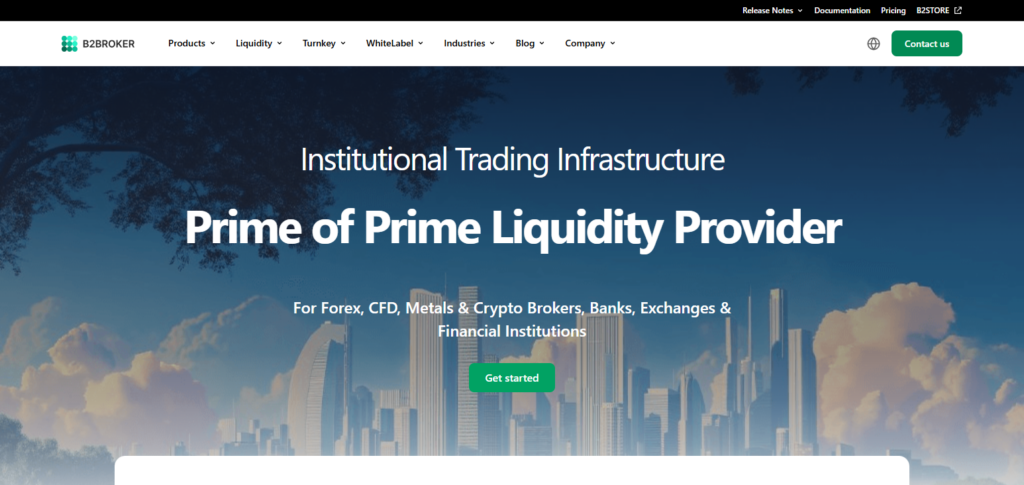
Infrastructure helps brokers support multi-asset trading and utilize institutional liquidity with automation. Infrastructure is also designed with greater flexibility to extend services beyond traditional offerings to clients with modern brokerage needs.
Pros & Cons of B2Broker
| Pros | Cons |
|---|---|
| Complete brokerage ecosystem with liquidity, CRM, and trading tools. | Advanced solutions may require higher investment costs. |
| Supports forex, crypto, and CFD brokerage businesses. | Beginners may need technical assistance during setup. |
| Offers customizable white-label brokerage solutions. | Wide range of features can feel complex initially. |
| Provides scalable infrastructure for growing businesses. | Custom integrations may increase implementation time. |
| Includes automation and institutional liquidity access. | Suitable mainly for serious brokerage ventures. |
2. Leverate
Leverate provides a brokerage setup with a cloud infrastructure service combined with technology to support automated workflows on a brokerage platform.
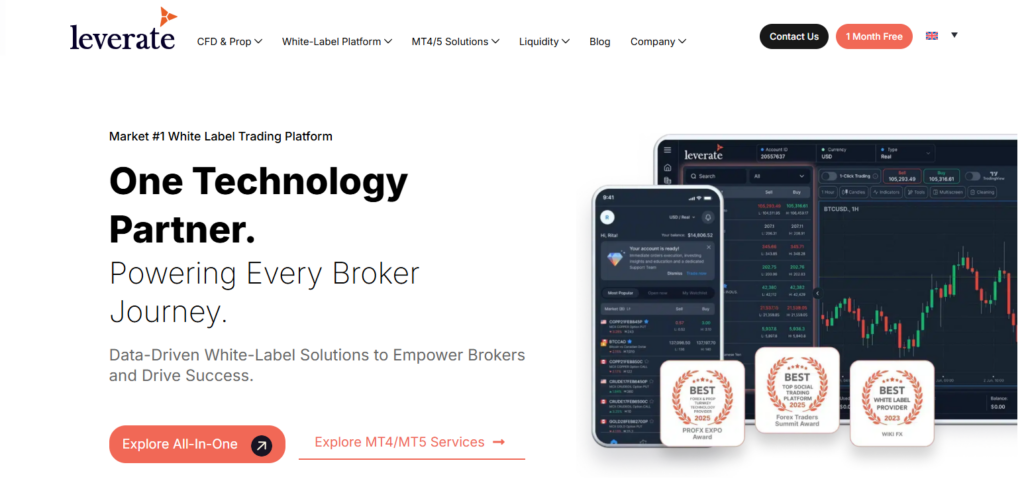
Leverate combines trading, risk, CRM, and marketing automation to support the brokerage services and helps streamline operations by reducing the time and cost needed for brokerage development. The suite allows plug and play brokerage setup and supports a significant improvement in the brokerage operations.
Pros & Cons of Leverate
| Pros | Cons |
|---|---|
| Provides complete white-label brokerage technology solutions. | Pricing details are not publicly transparent. |
| Includes CRM, risk management, and marketing tools. | Customization options may vary by package. |
| Helps brokers launch quickly with ready infrastructure. | Advanced features may require additional configuration. |
| Supports forex, CFD, and crypto businesses. | Smaller brokers may find some tools expensive. |
| Cloud-based technology improves operational efficiency. | Learning curve exists for new users. |
3. Match-Trade Technologies
Match-Trade Technologies helps provides various tools to support broker automation and liquidity management. Services to support control of operations and client management is also provided.
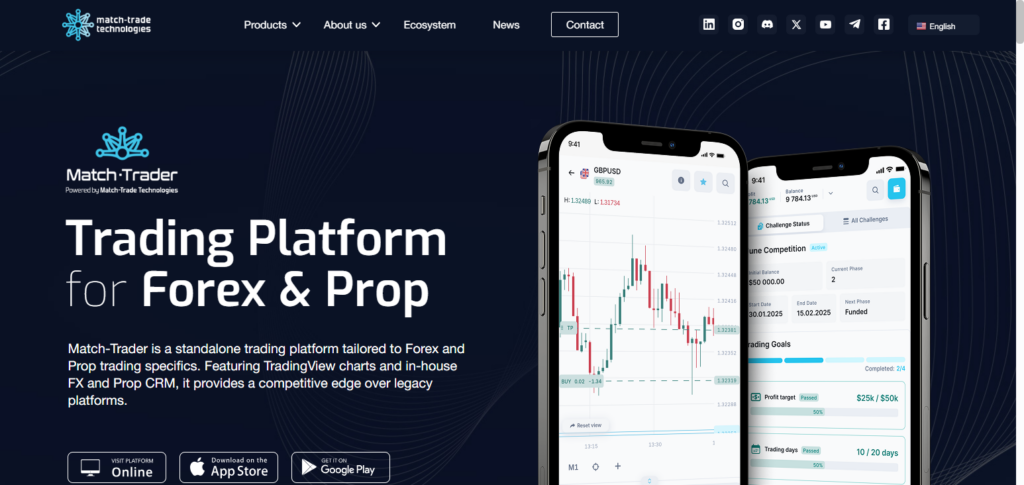
‘Match-Trade Technologies specializes in providing tools to support integration of liquidity with a trading platform. Consumer brokerage operations have also been made a priority for brokerage technology.
Pros & Cons of Match-Trade Technologies
| Pros | Cons |
|---|---|
| Offers powerful trading and liquidity management solutions. | Primarily focused on forex and CFD markets. |
| Provides customizable white-label brokerage platforms. | May require technical knowledge for integrations. |
| Improves execution speed and operational control. | Limited public information about pricing. |
| Includes payment and automation tools. | Smaller firms may need additional support. |
| Supports scalable brokerage growth. | Advanced customization can increase costs. |
4. Finalto
Finalto provides a state-of-the-art brokerage infrastructure for institutional clients across multiple trading technologies, liquidity, and risk solutions. Its platform provides advanced trading solutions for broking, banking, and trading institutions that require access to Forex, CFDs, equities, and other trading solutions.

Finalto provides an optimal combination of deep liquidity, flexible technology, and professional execution. Through their advanced infrastructure solutions, brokers can easily connect to the market and improve client services.
Pros & Cons of Finalto
| Pros | Cons |
|---|---|
| Provides institutional-grade liquidity and trading infrastructure. | Enterprise solutions may have higher costs. |
| Supports multiple asset classes globally. | Better suited for established financial businesses. |
| Offers professional execution and risk management tools. | Implementation can require technical expertise. |
| Strong market connectivity and liquidity network. | Smaller brokers may not need all features. |
| Delivers customizable brokerage technology solutions. | Setup process may take longer. |
5. Devexperts
Devexperts designs advanced trading technology that supports scalable brokerage infrastructure. Systems include multi-asset trading, brokerage, and analytics software, as well as bespoke technology.

Devexperts builds high-performance systems to support trading for brokers and other financial service institutions. The company has an extensive background in building secure and comprehensive trading systems for professional and retail traders in all markets and helps its clients build flexible and feature-rich trading systems.
Pros & Cons of Devexperts
| Pros | Cons |
|---|---|
| Provides highly scalable trading infrastructure. | Custom development may increase expenses. |
| Supports brokers, exchanges, and institutions. | Requires professional technical management. |
| Offers advanced analytics and multi-asset platforms. | Not ideal for small startup brokers. |
| Delivers secure and flexible technology solutions. | Deployment timelines can be lengthy. |
| Experienced in complex financial markets. | Solutions may be more enterprise-focused. |
6. Brokeree Solutions
Brokeree Solutions focuses on brokerage infrastructure and tool systems that enhance the operation and performance of trading systems. Systems include extensive MetaTrader plugins, automation systems, monitoring systems, and risk management systems.
solutions offered by Brokeree enable brokers to enhance the operational workflows of the brokerage, as well as improve transparency and the trading experience. The systems incorporate automation, security, and client management improvements.
Pros & Cons of Brokeree Solutions
| Pros | Cons |
|---|---|
| Provides specialized broker automation tools. | Mainly focused on MetaTrader environments. |
| Improves operational efficiency and transparency. | Limited standalone platform capabilities. |
| Offers useful plugins and monitoring solutions. | Advanced tools may require integration support. |
| Helps brokers optimize trading operations. | Smaller brokers may have budget limitations. |
| Regularly develops new brokerage solutions. | Depends on existing trading platforms. |
7. Tools for Brokers
Tools for Brokers builds specialized systems to improve trade and operational management for brokerages. They have a CRM, several automation and reporting tools, and some MetaTrader-based systems. Tools for Brokers builds systems to help brokerages manage their client relationship systems, improve business workflows, and decrease the need for manual entry.
Tools for Brokers endeavors to build systems that are safe, flexible, and can be tailored to the brokerage’s needs, allowing brokerages to manage and accommodate higher levels of trade traffic and complex business operations.
Pros & Cons of Tools for Brokers
| Pros | Cons |
|---|---|
| Provides automation and brokerage management solutions. | Some features are platform-specific. |
| Helps reduce manual operational tasks. | May require training for full utilization. |
| Offers CRM and reporting technologies. | Pricing may vary based on requirements. |
| Supports growing brokerage operations efficiently. | Smaller firms may need fewer features. |
| Strong experience with MetaTrader solutions. | Limited focus outside brokerage industries. |
8. PrimeXM
PrimeXM creates high speed trading infrastructure solutions that unify trade and liquidity systems for brokerages. Their XCore system allows brokerages great flexibility in working with different liquidity providers and greatly facilitates trade processing.
PrimeXM develops low latency systems and complex infrastructure for brokerage and institutional trade systems. Their systems help brokerages greatly improve the quality and reliability of trade and liquidity management.
Pros & Cons of PrimeXM
| Pros | Cons |
|---|---|
| Provides low-latency liquidity connectivity solutions. | Mainly designed for professional brokers. |
| Offers advanced liquidity aggregation technology. | Infrastructure costs can be significant. |
| Improves execution speed and trade processing. | Requires technical expertise for management. |
| Connects brokers with multiple liquidity providers. | Less suitable for small-scale operations. |
| Strong reputation in institutional trading markets. | Focused mainly on forex and CFD sectors. |
9. Your Bourse
Your Bourse develops complex brokerage systems focused on trade liquidity, execution and risk analysis, and trade system analytics. They provide systems for brokerages that allow trade performance analysis and risk and liquidity management.
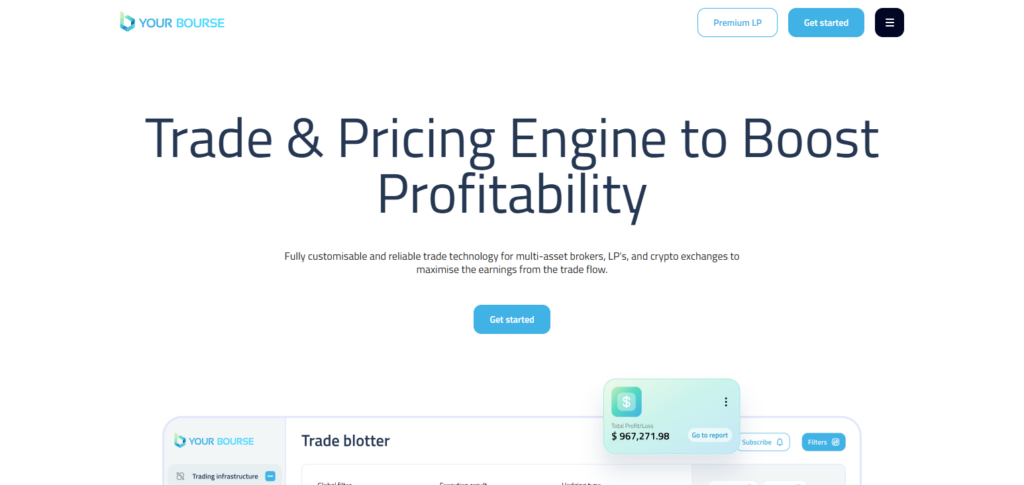
They help brokerages improve their operational decisions and optimize trade execution using their systems. Their systems also help brokerages maintain the low latency and high system stability required for brokerage operations.
Pros & Cons of Your Bourse
| Pros | Cons |
|---|---|
| Provides advanced liquidity monitoring solutions. | Requires integration with existing systems. |
| Offers real-time analytics and execution tracking. | Less known compared to larger providers. |
| Helps brokers improve risk management. | May require technical expertise. |
| Supports transparency and operational efficiency. | Features may be specialized for brokers. |
| Provides tools for better trading decisions. | Small companies may find it complex. |
10. Sucden Financial
Establishing Sucden Financial’s infrastructure, fueled by collaborative liquidity, execution, and technology offerings, provides Sucden customers with greater resources and means to trade. Sucden Financial’s clients include brokers, financial firms, and professional traders and spans multiple, global markets.

Sucden Financial’s offerings include custom, liquidity, and risk management services and reliable execution infrastructure. Their expertise enables firms to manage secure brokerage with optimal trading performance, across multiple asset classes.
Pros & Cons of Sucden Financial
| Pros | Cons |
|---|---|
| Strong institutional experience in financial markets. | Mainly targets professional market participants. |
| Provides reliable liquidity and execution services. | May not suit small brokerage startups. |
| Offers customized financial technology solutions. | Enterprise services can be expensive. |
| Supports multiple asset classes and global markets. | Less focused on retail broker tools. |
| Provides trusted market infrastructure expertise. | Requires proper onboarding process. |
Future Trends in Brokerage Infrastructure Platforms (2026)
- AI Driven Brokerage Automation: Refers to the use of AI for the automation of trading, support, and workflows.
- Cloud-Based Trading Systems: Refers to flexible, scalable, and cost-efficient brokerage systems with best-in-class performance and reliability.
- ML Risk Management: Refers to the ability to predict particular market risks and abnormalities that assist in the enhancement of risk management.
- Instant Compliance Verification: Provides real-time regulatory assessments and automated reporting of compliance for brokers.
- Decentralized Settlement Systems: Provides enhanced speed, transparency, and security for the settlement of transactions.
- Multi-Asset Systems: Demand for systems that support trading in forex, crypto, stocks, CFDs, etc., is increasing.
- Brokerage APIs: Refers to fully developed brokerages with accessible APIs and third-party integrations.
Conclusion
In Conclusion Best Brokerage Infrastructure Platforms The Best Brokerage Infrastructure Platforms offer tools to build secure brokerage operations. Automated trading technologies, tools for liquidity, risk management, and B2Broker, Leverate
Finalto, and Devexperts are platforms that have flexible solutions to brokerage. The correct choice for an infrastructure provider is your business objectives, your market, your budget, and the options that give your business growth the longest span of time.
FAQ
Top platforms include B2Broker, Leverate, Match-Trade Technologies, Finalto, Devexperts, Brokeree Solutions, Tools for Brokers, PrimeXM, Your Bourse, and Sucden Financial.
Yes, startups can use white-label and ready-made solutions to launch brokerage services without developing complete technology from scratch.
Important features include liquidity integration, trading platforms, CRM systems, risk management, payment processing, analytics, and compliance tools.
Many modern platforms support crypto, forex, CFDs, and multi-asset trading through advanced technology and liquidity connections.

