


In this article, I will explore the Top Aevo Alternatives for Crypto Options Trading, highlighting the top decentralized protocols and centralized exchanges accessible to crypto traders.
You will know about their features, trading options, pros, cons, liquidity and usability. This guide will assist you to compare different platforms and find a suitable alternative to Aevo based on your trading goals and preferences.
Key Points & Top Aevo Alternatives for Crypto Options Trading
| Platform | Description |
|---|---|
| Derive.xyz | Offers decentralized options trading with onchain settlement and capital-efficient strategies for crypto traders. |
| Premia Labs | Provides decentralized options markets with flexible strategies for users seeking noncustodial crypto derivatives. |
| Stryke.xyz | Enables onchain options trading, allowing users to manage positions through decentralized financial infrastructure. |
| Panoptic | Introduces perpetual options markets using concentrated liquidity pools for permissionless decentralized trading strategies. |
| Hegic | Offers onchain options trading with simplified strategies for cryptocurrency holders seeking flexible hedging opportunities. |
| Thetanuts Finance | Provides structured options vaults and automated strategies designed to generate crypto trading yields. |
| Rysk Finance | Develops decentralized options infrastructure focused on structured products, liquidity, and capital-efficient derivatives strategies. |
| Lyra Finance | Offers decentralized options markets with automated pricing mechanisms and liquidity provision for crypto traders. |
| Hypersurface | Explores innovative decentralized derivatives infrastructure for traders seeking alternatives to traditional crypto options exchanges. |
| Harmonix Finance | Focuses on decentralized derivatives and structured trading strategies for cryptocurrency markets and investors. |
| Deribit | Specializes in crypto options and futures, offering advanced tools, liquidity, and professional trading features. |
| OKX | Provides crypto derivatives, options on supported markets, and advanced trading tools for experienced traders. |
| Bybit | Offers crypto derivatives and options products alongside futures, perpetual contracts, and comprehensive trading tools. |
| Binance | Supports crypto derivatives and selected options products, depending on region, availability, and account eligibility. |
| Delta Exchange | Specializes in crypto options and futures, providing derivatives trading tools for active cryptocurrency market participants. |
15 Top Aevo Alternatives for Crypto Options Trading
1. Derive.xyz
Derive, previously known as Lyra, is one of Aevo’s closest on-chain competitors. It has its own OP Stack Layer 2, Derive Chain, with a non-custodial order book for options, perpetuals and spot trading. Supported cryptocurrencies include ETH, BTC and an ever-growing list of major altcoins. Trading fees are generally around 0.03% of the underlying notional, up to about 12.5% of the option price and makers can receive rebates.
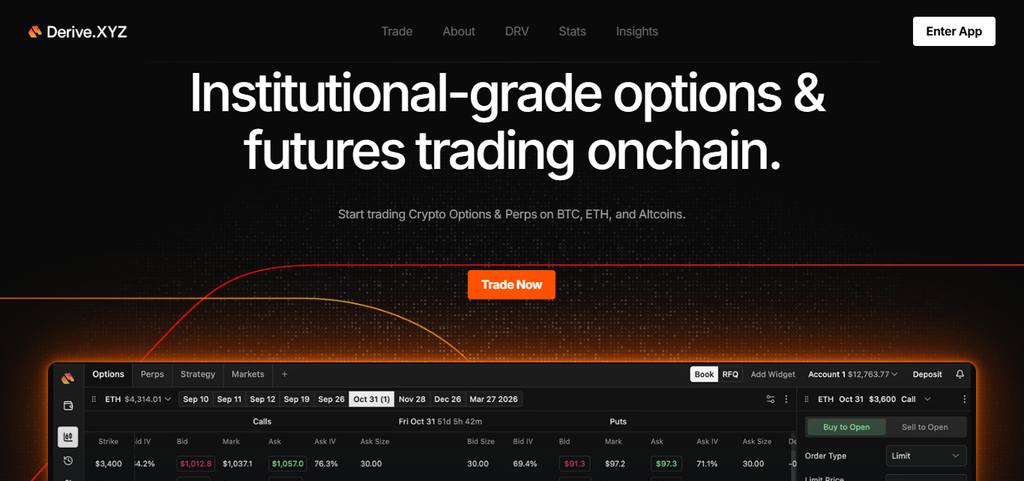
Bridging allows transferring funds between ethereum, arbitrum, optimism, base, and derive chain. Wallet-based access, no KYC, some geo-restrictions in certain jurisdictions. Its portfolio margin system also makes it efficient for advanced strategies such as spreads and straddles.
Derive.xyz
| Pros | Cons |
|---|---|
| Non-custodial order book for options and perps | Liquidity is lower than Deribit |
| Portfolio margin for spreads and straddles | Requires bridging funds to Derive Chain |
| Maker rebates available | Some regions are geo-restricted |
| No KYC, wallet-based access | Smart-contract and bridge risk |
2. Premia Labs
Premia is a long-running decentralized options protocol. Its v3 version uses a peer-to-pool design where liquidity providers write options and traders buy them at oracle-informed prices. Supported assets include ETH, WBTC, ARB, LINK, and other major tokens, with both calls and puts available. Fees are generally a small percentage of notional value, capped relative to the option premium.
The main network is Arbitrum, with deployments on Ethereum, Optimism, Base, and others. Accessibility is permissionless through any Web3 wallet, with no account creation or KYC. Premia suits traders who want transparent, on-chain execution and flexible strike and expiry choices.
Premia Labs
| Pros | Cons |
|---|---|
| Permissionless and fully on-chain | Thinner liquidity on less popular markets |
| Flexible strikes and expiries | Pricing can be wider than order-book venues |
| Multi-chain deployments | Fewer advanced tools than CEXs |
| Transparent execution | Smart-contract risk |
3. Stryke.xyz
Stryke, formerly Dopex, offers a unique options model built on concentrated liquidity (CLAMM). It lets liquidity providers earn yield from Uniswap v3-style positions while the same liquidity backs options. Supported assets include ETH, WBTC, ARB, and other tokens with concentrated-liquidity pools.
Fees combine a small option premium fee with a liquidity-usage cost, so effective costs vary by market conditions. It operates mainly on Arbitrum, with support on other EVM chains. Accessibility is wallet-based and open to anyone, with no KYC. Stryke is aimed at DeFi-native traders who want capital-efficient, long-tail options markets.
Stryke.xyz
| Pros | Cons |
|---|---|
| Capital-efficient concentrated-liquidity design | Complex model for beginners |
| Lets LPs earn yield from the same liquidity | Effective costs vary with market conditions |
| Supports long-tail assets | Limited volume compared with major venues |
| No KYC | Smart-contract risk |
4. Panoptic
Panoptic offers “perpetual options,” which have no expiry. Positions are built on top of Uniswap liquidity and can be held as long as collateral allows. Because it works on Uniswap pools, nearly any token with a Uniswap pair can theoretically have options, giving much broader coverage than most platforms, including ETH, major stablecoin pairs, and long-tail assets.
Fees consist of a commission on notional value plus the ongoing streamia (the funding-like cost of holding). Panoptic runs on Ethereum and other EVM chains such as Base and Unichain. Accessibility is permissionless through a wallet. It is well suited to advanced DeFi traders who want hedging and yield strategies without expiries.
Panoptic
| Pros | Cons |
|---|---|
| Perpetual options with no expiry | Steep learning curve |
| Works with almost any Uniswap pair | Ongoing streamia cost can add up |
| Permissionless access | Liquidations are possible if collateral falls short |
| Flexible hedging and yield strategies | Newer protocol with less track record |
5. Hegic
Hegic is one of the oldest on-chain options protocols and aims for simplicity. Traders buy calls and puts on major assets from pooled liquidity, without having to navigate an order book. The main supported cryptocurrencies are ETH and WBTC. There is no separate trading fee on purchase as fees are included in the option premium which is determined by the pricing model.
The protocol is built on Arbitrum with a history on Ethereum. It is entirely non-custodial and requires no signup or KYC, and the interface is beginner-friendly. Hegic works well for retail users who want an easy way to buy options without the complications of margin systems.
Hegic
| Pros | Cons |
|---|---|
| Simple, beginner-friendly interface | Limited asset selection (mainly ETH, WBTC) |
| No order book or margin to manage | Fewer strategy options |
| Non-custodial, no KYC | Premiums may be higher than market rates |
| Long track record in DeFi options | Lower volume and liquidity |
6. Thetanuts Finance
Thetanuts is known for its structured option vaults and more recently, an order-book-style options product. Its vaults automate strategies such as covered calls, cash-secured puts and range-based products so users can earn yield passively. depending on vault ETH, BTC, SOL, and other major tokens
Fees are usually in the form of a performance or management fee on vault yield, and direct trading is subject to small per trade charges. Supports Ethereum, Base, Arbitrum, BNB Chain and other EVM networks. Access without permission and through wallets. Thetanuts is for users that want to generate income automatically instead of actively trading options manually.
Thetanuts Finance
| Pros | Cons |
|---|---|
| Automated covered-call and put vaults | Not ideal for active directional trading |
| Passive yield from options premiums | Performance and management fees reduce returns |
| Supports multiple chains | Yield is not guaranteed and can lose value |
| Permissionless | Vault and smart-contract risk |
7. Russian Finance
Rysk is a decentralized options protocol with a dynamic hedging vault that acts as counterparty to traders. It began on Arbitrum, and grew to be HyperEVM, the Hyperliquid ecosystem. Supported cryptocurrencies are ETH, BTC and HYPE (subject to market). Fees are extracted from the premium spread and a protocol-defined trading fee, and they vary depending on vault usage and risk.

Options can be purchased by users, or deposited into the liquidity vault to earn yield. Open, non-custodial access through a standard crypto wallet. Rysk appeals to traders looking for deep liquidity and low friction execution with delta hedged counterparties.
Rysk Finance
| Pros | Cons |
|---|---|
| Delta-hedged counterparty vault | Smaller ecosystem than major exchanges |
| Option buying and LP yield in one place | Pricing varies with vault utilization |
| Expanding into the Hyperliquid ecosystem | Limited asset range |
| Non-custodial | Newer chains carry added risk |
8. Lyra Finance
Lyra Finance was an early options AMM and is the ancestor of today’s Derive. It was the first to launch on-chain options trading with a pooled-liquidity model on Optimism and Arbitrum, for ETH, BTC and a handful of other assets. Fees were a fixed trading fee plus dynamic elements based on volatility and vault utilization.
Since the rebrand, the project’s activity has moved to Derive with a modern order book and a dedicated chain. Wallet-based, permissionless access persisted. Still a good reference point when comparing options protocols, but most new users should head straight to Derive for current liquidity and features.
Lyra Finance
| Pros | Cons |
|---|---|
| Pioneer of on-chain options AMMs | Activity has moved to Derive |
| Proven, well-known brand | Older design with less capital efficiency |
| Wallet-based, no KYC | Limited asset range |
| Useful as a reference point | Little reason for new users to start here |
9. Hyper-surfaces
Hypersurface is a provider of structured options and yield products, focusing on covered calls and cash-secured puts. It began in the Ethereum ecosystem and has now spread to Hyperliquid and other chains. Collateral assets supported include ETH, BTC, HYPE and stablecoins.
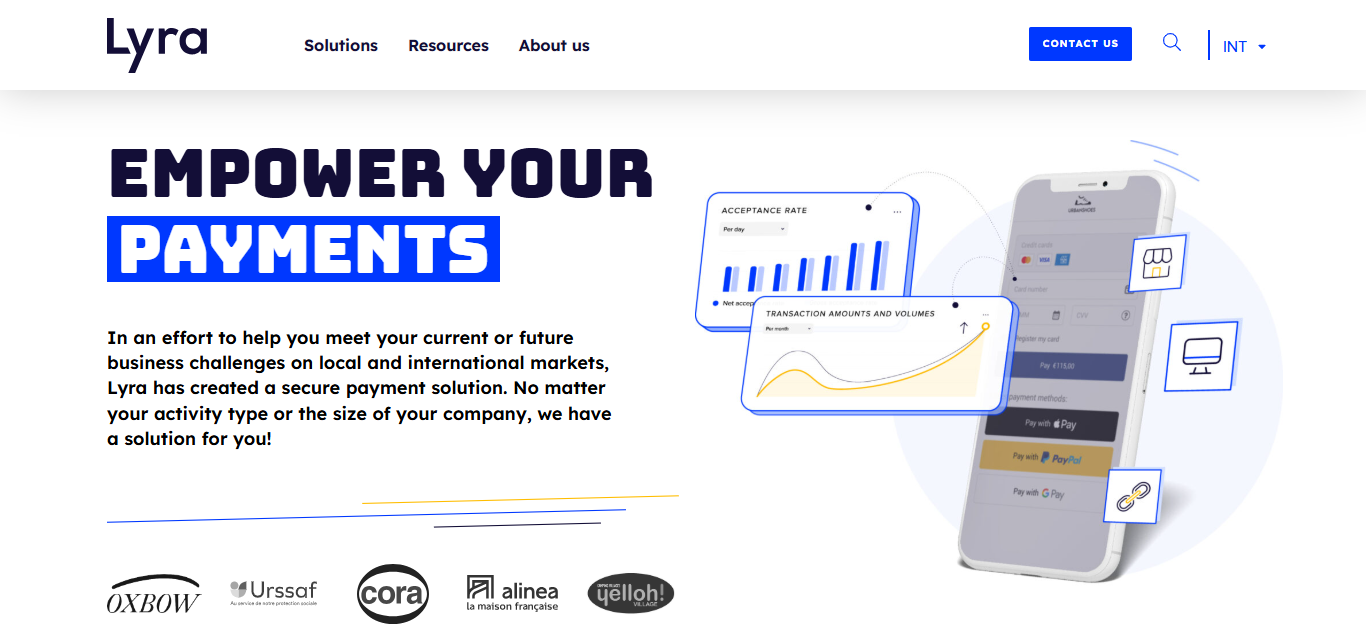
Fees are generally built into the product, for example a performance or protocol fee on earned premiums, so costs are usually lower than active trading. It’s walletized and permissionless accessibility. Hypersurface is for people who want options income but don’t want to deal with strikes and expiries every week. It is not as well suited to complex directional or multi-leg trades.
Hypersurface
| Pros | Cons |
|---|---|
| Simple covered-call and put income products | Weak for complex or multi-leg trading |
| No need to manage strikes weekly | Upside can be capped in covered-call strategies |
| Lower costs than active trading | Fewer supported assets |
| Permissionless | Smart-contract risk |
10. Harmonix Finance (HMX)
Harmonix is a DeFi yield platform that operates automated options and delta-neutral vaults. Users can deposit assets and the protocol sells options and manages hedges. Supported assets include ETH, BTC, SOL, SUI and stablecoins, depending on the vault. Fees typically consist of a management fee and a performance fee based on profits. It’s deployed on multiple networks like Arbitrum, Solana, Sui, etc.
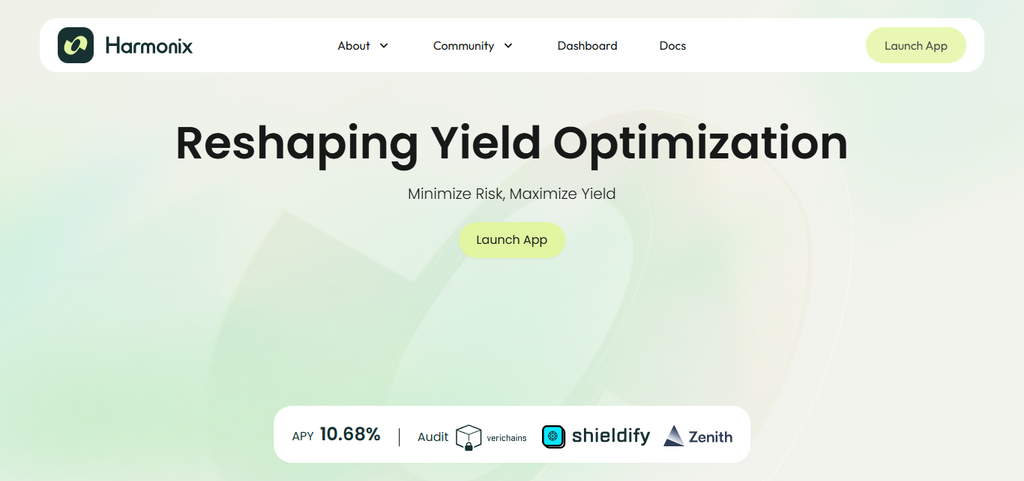
Clean UI and affordable for new users. For passive investors, this is a good complement to Aevo since Harmonix is best viewed as an options-based yield product, not a direct trading venue.
Harmonix Finance
| Pros | Cons |
|---|---|
| Automated options and delta-neutral vaults | Not a direct options trading venue |
| Multi-chain, including Solana and Sui | Management and performance fees |
| Beginner-friendly interface | Returns vary and are not guaranteed |
| Good for passive investors | Less control over positions |
11. Deribit
Deribit is the biggest centralized crypto options exchange by volume and has ruled this market for a long time. Supported assets include BTC, ETH, SOL, and USDC-margined options on other altcoins. Fees are usually about 0.03% of the underlying, capped at around 12.5% of the option price, with discounts for high-volume traders.
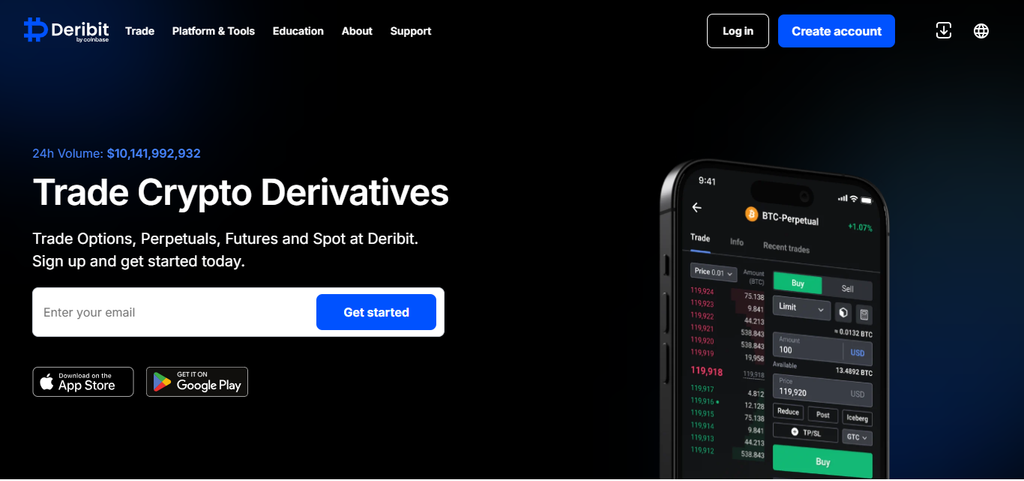
Funded through native blockchain deposits including Bitcoin, Ethereum and Solana. Availability: KYC registered account required, US & some other Jurisdictions are restricted. Professionals and institutions prefer it because it has deep liquidity, tight spreads, advanced portfolio margin and a strong API.
Deribit
| Pros | Cons |
|---|---|
| Deepest options liquidity in crypto | KYC required |
| Tight spreads and portfolio margin | Restricted in several jurisdictions, including the US |
| Strong API for professionals | Custodial, so exchange risk applies |
| Wide range of expiries and strikes | Interface is intimidating for beginners |
12. OKX
OKX is one of the biggest exchanges in the world and has a rapidly growing options marketplace. It supports options in BTC, ETH, SOL and several other large cap assets as well as spot, futures and perpetuals on one account. Options fees are generally 0.02% for makers and 0.03% for takers – with the VIP tiers lowering the price.
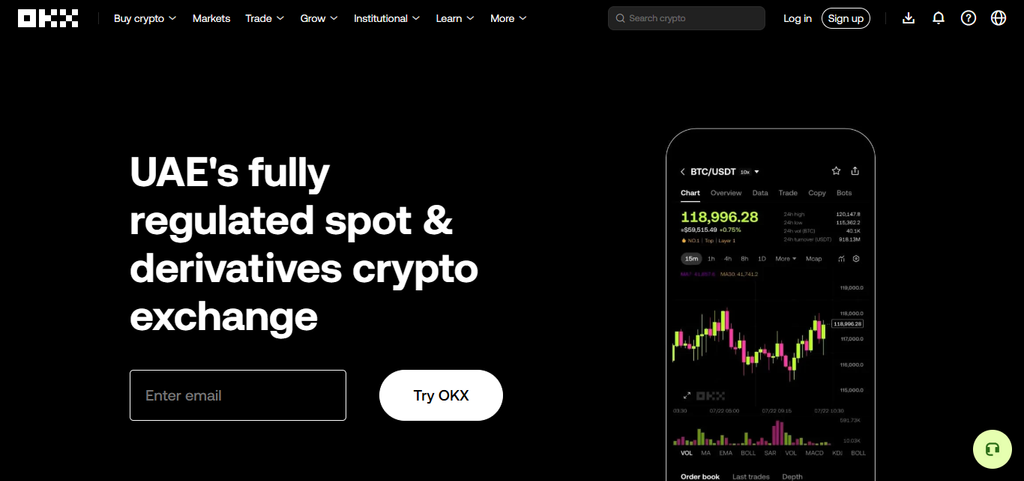
Deposits work on many networks such as Bitcoin, Ethereum, Tron, Solana and many Layer 2s. Accessibility is subject to account creation and KYC depending on country. OKX boasts a simple and advanced interface with robust mobile apps, making it the perfect all-in-one option for traders graduating from Aevo.
OKX
| Pros | Cons |
|---|---|
| Spot, futures, perps, and options in one account | KYC required |
| Competitive maker and taker fees | Availability varies by country |
| Many deposit networks | Options liquidity is below Deribit |
| Strong mobile apps | Custodial risk |
13. Bybit
Bybit is a popular derivatives exchange with a mature options product . It has a clean interface and fast execution, and offers USDC-settled options on BTC, ETH, SOL and other major assets. Generally fees are about 0.02%-0.03% of the underlying, with a cap based on option price and discounts for VIP users.
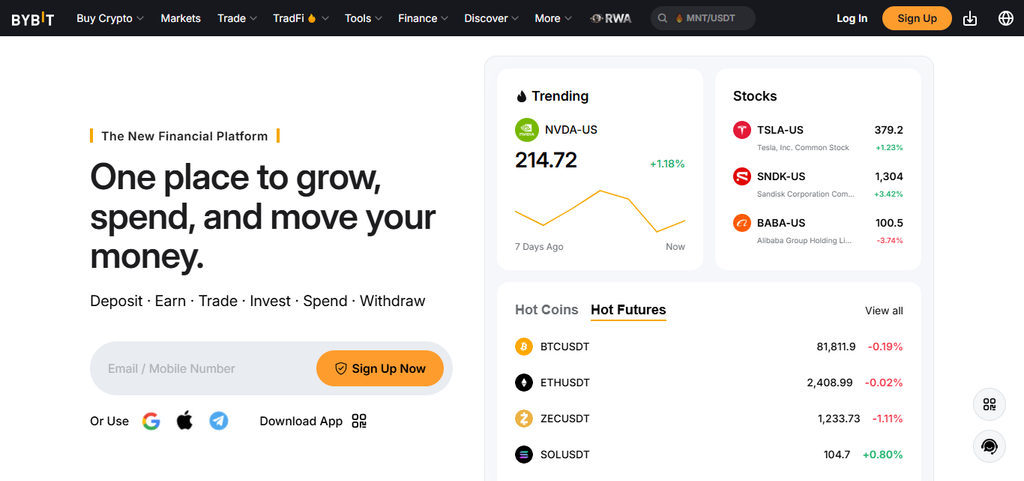
Bybit supports deposits from various networks including Bitcoin, Ethereum, Tron, Solana, and BNB Chain. Accessibility requires registration and verification, with limited availability in certain regions (e.g., US). Bybit also provides unified margin accounts, which enable options positions to share collateral with other derivatives, thereby boosting capital efficiency.
Bybit
| Pros | Cons |
|---|---|
| Unified margin shares collateral across products | Restricted in the US and some other regions |
| Fast execution and clean interface | Fewer altcoin options than some rivals |
| VIP fee discounts | KYC and verification needed |
| Wide deposit network support | Custodial risk |
14. Binance Exchange
Binance is the world’s largest crypto exchange by volume and offers European-style options with a simple, user-friendly interface. Supported assets are BTC, ETH, BNB, SOL, XRP and DOGE. Settlement currency is USDT. The fees are typically around 0.03% of the underlying, with a cap of a percentage of the option premium, discounted for VIP tiers and BNB fee payment.
It supports a very wide range of deposit networks such as Bitcoin, Ethereum, BNB Chain, Tron and Solana. KYC required. Binance. Accessibility depends on region.US not giving options. Binance’s core strengths are a deep ecosystem, high liquidity and user-friendliness.
Binance
| Pros | Cons |
|---|---|
| Largest ecosystem and strong liquidity | KYC required |
| Beginner-friendly interface | Regulatory restrictions in several regions |
| Fee discounts with BNB and VIP tiers | Binance.US does not offer options |
| Very wide deposit network support | Options depth is behind Deribit |
15. Delta Exchange
Delta Exchange is one of the popular crypto derivatives platforms in India and Asia. It provides daily, weekly and monthly options on BTC and ETH, plus futures and other derivatives. Fees are around 0.02%-0.03% of the underlying, capped by a share of the premium, with volume discounts. We take deposits from all the major networks including Ethereum, Tron and more supporting USDT and USDC.
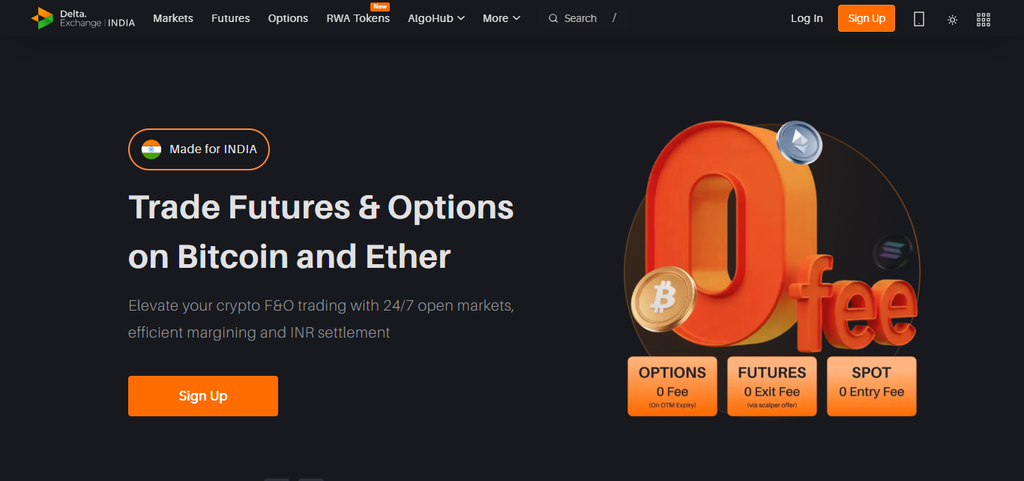
KYC and account registration is required for access and a local India-based entity is available for users there. Delta Exchange is a good option for traders who want short-dated options, access that is INR-friendly and an easier alternative to the bigger global exchanges.
Delta Exchange
| Pros | Cons |
|---|---|
| Short-dated daily, weekly, and monthly options | Mostly limited to BTC and ETH |
| India-friendly access and local entity | Smaller liquidity than global leaders |
| Simpler than large global exchanges | KYC required |
| Volume-based fee discounts | Custodial risk |
Conclusion
To summarize, the Top Aevo Alternatives for Crypto Options Trading provide a variety of features, trading tools, and opportunities for cryptocurrency traders. There are platforms like Derive, Premia Labs, Panoptic, and Deribit for different trading styles and levels.
Before choosing an alternative compare trading fees, liquidity, assets supported, security and platform availability. The platform that is right for you will depend on your trading goals, risk appetite and preferred trading experience.
FAQ
Derive and Deribit support major cryptocurrency options, subject to current product availability.
Yes, fees vary by platform, including trading commissions, network costs, and spreads.
Thetanuts Finance and Rysk Finance have offered structured options strategies through vault-based products.
Panoptic focuses on perpetual options built around concentrated liquidity and decentralized market mechanisms.
Deribit offers established centralized options markets, while Aevo emphasizes decentralized derivatives infrastructure.

