


The Top Orderly Network Rivals for Omnichain Trading will be covered in this article, together with their salient characteristics, supported blockchains, trading capabilities, security features, transaction speeds, and fee schedules.
In order to help traders, developers, and investors find appropriate solutions for their omnichain trading requirements, you will discover how various platforms vary in terms of cross-chain interoperability, liquidity availability, and decentralized trading infrastructure.
Key Points & Top Orderly Network Rivals for Omnichain Trading
- LayerZero – Enables cross-chain messaging and applications supporting seamless communication across multiple blockchain networks.
- Wormhole – Connects diverse blockchains, enabling token transfers, messaging, and interoperable decentralized finance applications.
- Axelar – Provides secure cross-chain messaging infrastructure connecting decentralized applications across blockchain ecosystems.
- Chainlink CCIP – Supports secure cross-chain token transfers and programmable messaging for decentralized applications.
- deBridge – Facilitates cross-chain swaps and asset transfers with efficient execution across supported blockchains.
- Across Protocol – Enables fast cross-chain transfers using intent-based architecture and competitive transaction fees.
- Synapse Protocol – Supports cross-chain asset bridging and swaps between compatible blockchain networks.
- Stargate Finance – Provides unified liquidity pools for native asset transfers across supported blockchain networks.
- THORChain – Enables decentralized native asset swaps between supported blockchain networks without wrapped tokens.
- Osmosis – Offers decentralized trading and cross-chain asset connectivity within the broader Cosmos ecosystem.
- Hyperlane – Provides permissionless cross-chain messaging infrastructure for applications operating across multiple blockchain ecosystems.
- Router Protocol – Connects blockchain networks through cross-chain messaging and asset-transfer infrastructure for applications.
- LI.FI – Aggregates bridges and decentralized exchanges to optimize cross-chain swaps and routing.
- Rango Exchange – Aggregates cross-chain swaps across multiple ecosystems, helping users find efficient trading routes.
- Squid – Simplifies cross-chain swaps and transfers through integrated routing across supported blockchain networks.
15 Top Orderly Network Rivals for Omnichain Trading
1. LayerZero
Applications can communicate between blockchains via LayerZero, an interoperability protocol. Supported Blockchains: Depending on the application, it integrates with both EVM networks and non-EVM ecosystems. Execution Speed: Source-chain finality, destination-chain processing, and verification settings all affect delivery time. Fees: Source-chain gas, communications or verification fees, and any configured executor fees are typically paid by users.
Security Mechanism: LayerZero verifies communications in accordance with application-selected security parameters using customizable Decentralized Verifier Networks (DVNs). Trading Features It facilitates messaging-based DeFi procedures, omnichain token applications, and cross-chain token transfers. Instead of being a stand-alone order-book exchange like Orderly Network, it is essentially interoperability infrastructure.
LayerZero — Features
| Feature | Explanation |
|---|---|
| Cross-Chain Messaging | Enables applications to send messages between connected blockchains. |
| Omnichain Applications | Supports applications and tokens operating across multiple blockchain networks. |
| Configurable Verification | Allows applications to configure Decentralized Verifier Networks for message verification. |
| Developer Tools | Provides messaging infrastructure, endpoints, and developer integration tools. |
| Trading Use Case | Supports cross-chain DeFi applications and token-transfer workflows. |
| Key Advantage | Offers customizable interoperability rather than operating a native trading exchange. |
2. Wormhole
Wormhole uses token transfers, cross-chain messaging, and application interoperability to link blockchain ecosystems. Supported Blockchains: Ethereum, Solana, Arbitrum, Base, Sui, Aptos, and more networks are part of its ecosystem. Execution Speed: Guardian verification, relaying, source-chain finality, and destination-chain confirmation all affect transfer timeframes. Fees: Users may be required to pay relayer fees, network gas, and transfer expenses particular to a given route.
Security Mechanism: Verified messages are signed by a Guardian network; ordinary messages require a signature of 13 out of 19. Trading Characteristics: Multichain asset movement is supported by settlement integrations, wrapped-token transfers, and native token transfers. Wormhole does not offer Orderly-style centralized shared order-book infrastructure, but it can support omnichain trading.
Wormhole — Features
| Feature | Explanation |
|---|---|
| Cross-Chain Messaging | Enables decentralized applications to exchange verified messages between blockchains. |
| Token Transfers | Supports wrapped-token transfers and native-token transfer integrations. |
| Guardian Network | Uses Guardian-signed attestations to verify cross-chain messages. |
| Multichain Integrations | Connects supported ecosystems, including Ethereum and Solana. |
| Developer Tools | Provides SDKs, APIs, and integration products for multichain applications. |
| Key Advantage | Combines messaging, token transfers, and additional interoperability products. |
3. Axelar
Axelar offers token-transfer infrastructure and programmable cross-chain messaging for decentralized apps. Supported Blockchains: Depending on the integration, it links supported EVM and non-EVM networks. Execution Speed Axelar network processing, destination-chain execution, and source-chain confirmation all affect how quickly a transaction is completed. Fees Structure: When applicable, users pay destination-chain gas in addition to source-chain gas and Axelar-related execution expenses.
Security Mechanism Axelar authorizes cross-chain actions through gateway contracts and proof-of-stake validator infrastructure. Features of Trading: Its Overarching Message Token transfer, cross-chain swaps, and DeFi application operations can all be supported via Passing and Interchain Token Service. Axelar is more of a connecting layer than a native trade place for orderly comparisons.
Axelar — Features
| Feature | Explanation |
|---|---|
| General Message Passing | Enables smart contracts to communicate across connected blockchains. |
| Cross-Chain Transfers | Supports asset movement between integrated blockchain ecosystems. |
| Validator Security | Uses proof-of-stake validators and threshold cryptography for cross-chain authorization. |
| Interchain Token Service | Provides infrastructure for creating and managing interoperable tokens. |
| DeFi Integrations | Supports cross-chain application workflows and decentralized finance integrations. |
| Key Advantage | Combines programmable messaging with token interoperability infrastructure. |
4. Chainlink CCIP
The Chainlink Cross-Chain Interoperability Protocol (CCIP) is interoperability infrastructure, not a perpetual-futures exchange or shared order book. It allows smart contracts to transfer tokens and exchange arbitrary data across supported networks. Supported Blockchains: Available chains depend on the current CCIP deployment and token-pool configuration.
Execution Speed Completion depends on source-chain confirmations, risk checks, message execution, and destination-chain finality. Fees Structure: CCIP combines decentralized oracle infrastructure with independent risk-management mechanisms designed to detect suspicious cross-chain activity.
Chainlink CCIP — Features
| Feature | Explanation |
|---|---|
| Cross-Chain Messaging | Sends application data between supported blockchain networks. |
| Token Transfers | Enables configured tokens to move across supported chains. |
| Programmable Transfers | Combines token transfers with instructions for destination-chain applications. |
| Risk Management | Includes rate limits and additional cross-chain security controls. |
| Developer Integration | Provides routers, smart-contract interfaces, and development resources. |
| Key Advantage | Supports programmable interoperability with a defense-in-depth security architecture. |
5. deBridge
deBridge offers messaging, execution infrastructure, and cross-chain transfers to transfer assets between linked networks. Supported Blockchains: Depending on the product and route, coverage covers both supported EVM and non-EVM ecosystems. Execution Speed: Relayer execution, destination-chain processing, source-chain finality, and available liquidity all affect transfer timeframes.
Fees Structure: For information on protocol fees, gas prices, and any relevant liquidity or execution charges, users should refer to the quoted route. Security Mechanism A validator/solver-related execution model and on-chain verification are utilized in its architecture; the specific security presumptions vary depending on the functionality. Trading Features Traders can access liquidity across ecosystems with the use of cross-chain swaps, asset transfers, and application connections. DeBridge does not mainly use a shared perpetual order book, in contrast to Orderly.
deBridge — Features
| Feature | Explanation |
|---|---|
| Cross-Chain Transfers | Facilitates asset transfers between supported blockchain networks. |
| Cross-Chain Swaps | Enables users and applications to exchange assets across chains. |
| Messaging Infrastructure | Supports cross-chain application interactions and transaction execution. |
| Developer APIs | Provides integration options for applications requiring cross-chain functionality. |
| Trading Applications | Can support multichain swaps and liquidity-access workflows. |
| Key Advantage | Focuses on cross-chain execution and asset movement rather than native order-book trading. |
6. Across Protocol
Across Protocol is an intent-based bridge that facilitates the effective transfer of assets between compatible blockchains. Supported Blockchains: Depending on the availability of routes at the moment, it supports a few Ethereum Layer 2 networks as well as further integrations. Execution Speed: Relayers use destination-side liquidity to complete qualifying transfers, and protocol rules are followed for ultimate settlement and verification. Fees Structure Before transferring, compare the presented quote.
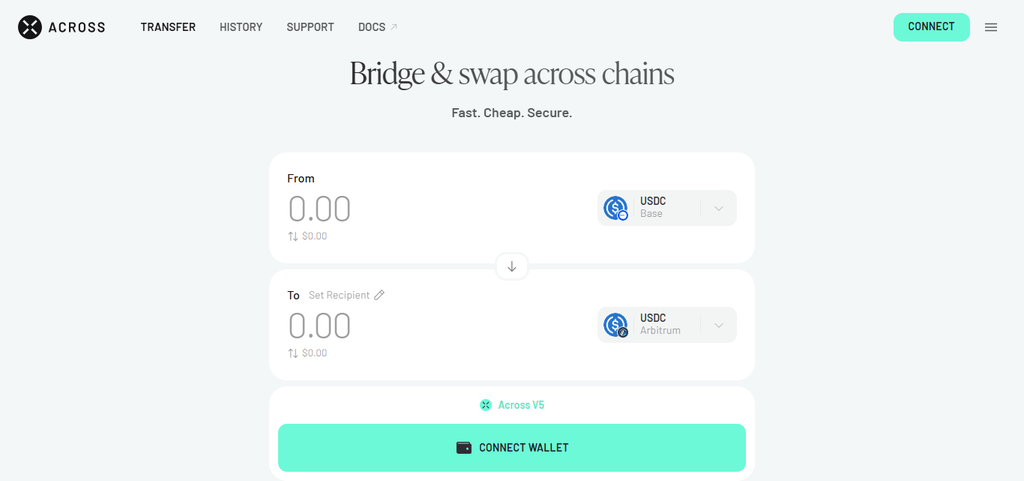
Fees may include source-chain gas, bridge fees, and relayer-related expenses. Security Mechanism: Across’s settlement architecture supports a dispute mechanism and optimistic verification. Trading Features: Traders transferring money between DeFi ecosystems can benefit from its quick bridging and cross-chain transfer capabilities. It does not, however, directly replace Orderly’s trading engine; rather, it is a bridging protocol.
Across Protocol — Features
| Feature | Explanation |
|---|---|
| Intent-Based Bridging | Uses user-defined transfer intents to facilitate cross-chain transactions. |
| Relayer Network | Relayers fulfil eligible transfers using destination-side liquidity. |
| Capital Efficiency | Its architecture is designed to improve liquidity utilization across supported routes. |
| Cross-Chain Transfers | Helps users move supported assets between blockchain ecosystems. |
| Settlement Mechanism | Uses protocol-defined verification and settlement processes. |
| Key Advantage | Specializes in efficient bridging rather than operating a full trading exchange. |
7. Synapse Protocol
Synapse Protocol facilitates asset transfers between compatible blockchain networks by offering cross-chain bridging and routing features. Supported Blockchains: The active bridge routes and integrations determine the networks and coins that are available. Execution Speed: Chain confirmations, liquidity availability, token swaps, and destination-chain execution all affect transfer timeframes. Fees: Along the chosen route, users may be charged network gas, bridge fees, and exchange fees.
Security Mechanism Users should examine the most recent documentation since security is dependent on the pertinent bridge contracts, validation procedures, and route-specific elements. Trading Characteristics: In order to find appropriate routes and output quantities, Synapse Router can coordinate bridging and intermediate-token swaps. Although it does not natively support Orderly’s shared perpetual order book, it is helpful for cross-chain liquidity access.
Synapse Protocol — Features
| Feature | Explanation |
|---|---|
| Cross-Chain Bridge | Transfers supported assets between connected blockchain networks. |
| Swap Routing | Routes transactions through available bridging and swapping mechanisms. |
| Liquidity Access | Connects users to supported liquidity sources for asset movement. |
| Multichain Support | Enables interoperability across participating blockchain ecosystems. |
| DeFi Integration | Supports applications that require cross-chain transfers and token swaps. |
| Key Advantage | Combines cross-chain transfer functionality with routing for multichain asset access. |
8. Stargate Finance
To enable asset mobility between compatible blockchain ecosystems, Stargate Finance is a cross-chain liquidity-transfer protocol. Supported Blockchains: The network coverage varies according to the asset, route, and supported deployment. Execution Speed: Source-chain verification, destination-chain processing, and available liquidity all affect how quickly a transfer is completed. Fees Structure: The route’s displayed fees include source-chain gas, destination execution expenses, and transfer or liquidity-related fees.
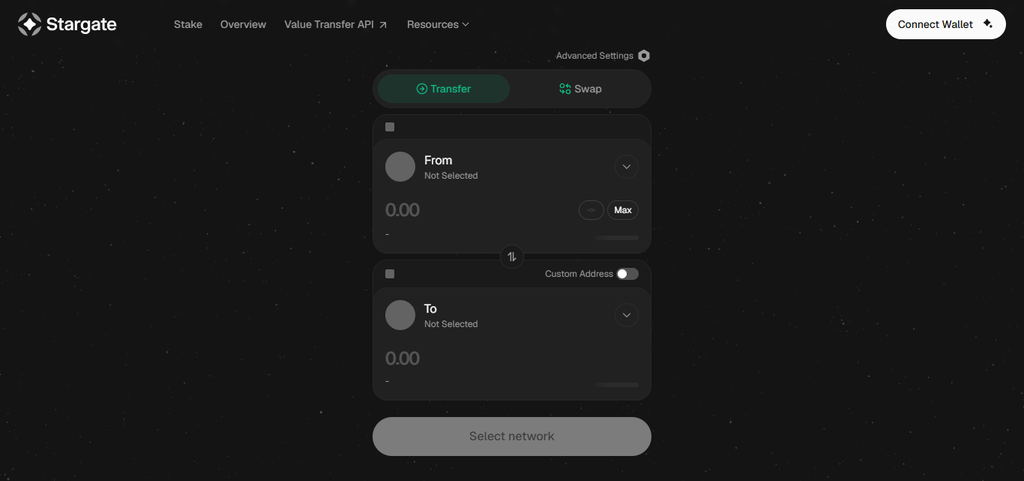
Security Mechanism Users should examine the present security model and audits because Stargate depends on its underlying cross-chain communications integration and smart contracts. Trading Features: Users can reposition capital between DeFi networks with its liquidity-based transfers. Although Stargate concentrates on cross-chain asset movement rather than running a native derivatives order book, it can supplement omnichain trading applications.
Stargate Finance — Features
| Feature | Explanation |
|---|---|
| Cross-Chain Liquidity | Provides liquidity infrastructure for transfers between supported chains. |
| Native Asset Transfers | Supports eligible transfers designed to deliver assets on destination networks. |
| Unified Liquidity Model | Uses its protocol architecture to facilitate cross-chain liquidity movement. |
| DeFi Integration | Can be integrated into applications requiring multichain asset transfers. |
| Transaction Quoting | Enables users to review available routes and transfer costs. |
| Key Advantage | Focuses on cross-chain liquidity transfers rather than perpetual order-book trading. |
9. THORChain
THORChain is a decentralized liquidity protocol that eliminates the need for traditional wrapped-token representations and allows exchanges between native assets on supported blockchains. Supported Blockchains: It integrates with networks like Ethereum, Bitcoin, and other Layer 1 ecosystems that are supported. Execution Speed Network circumstances, transaction processing, and inbound and outgoing chain confirmations all affect how long a swap takes.
Fees Structure Source-chain gas, liquidity-based swap fees, outbound fees, and optional affiliate charges are examples of costs. Security Mechanism: To control cross-chain operations, THORChain employs threshold-signature cryptography, vault infrastructure, and validator consensus. Trading Features: Native-asset trading across chains is made easier by ongoing liquidity pools and streaming swaps. Although its pool-based execution is different from Orderly’s order-book methodology, it is a significant substitute for cross-chain spot swaps.
THORChain — Features
| Feature | Explanation |
|---|---|
| Native Asset Swaps | Enables swaps between native assets on supported blockchains. |
| Liquidity Pools | Uses liquidity pools to facilitate decentralized trading. |
| Cross-Chain Settlement | Coordinates asset swaps across connected networks. |
| Streaming Swaps | Can split eligible swaps into smaller executions over time. |
| Decentralized Infrastructure | Uses validator consensus and vault mechanisms to support operations. |
| Key Advantage | Offers native cross-chain spot swaps without relying exclusively on wrapped assets. |
10. Osmosis
Within the Cosmos ecosystem, Osmosis is a decentralized exchange based on linked blockchain applications and on-chain trade. Supported Blockchains: The Osmosis chain is its native environment, and cross-chain access is made possible by IBC connections and integrations that are supported. Execution Speed: The needs of the chosen transaction, network congestion, and Osmosis block generation all affect how quickly trades are executed.

Fees Structure Depending on the pool, transaction gas, and relevant network fees, traders may have to pay swap fees. Security Mechanism: Although there are still hazards, Osmosis depends on its blockchain consensus, validator set, and certified smart-contract architecture. Trading Features: It provides token swaps, automated market maker pools, and liquidity. Although its main trading architecture is different from Orderly’s shared order-book infrastructure, osmosis is pertinent to omnichain DeFi comparisons.
Osmosis — Features
| Feature | Explanation |
|---|---|
| Decentralized Exchange | Provides on-chain trading within the Cosmos ecosystem. |
| Automated Market Makers | Supports liquidity pools for decentralized token swaps. |
| IBC Connectivity | Uses supported Inter-Blockchain Communication connections to interact with other chains. |
| Liquidity Provision | Allows users to supply assets to eligible liquidity pools. |
| Trading Ecosystem | Supports token swaps and other integrated DeFi activities. |
| Key Advantage | Combines Cosmos ecosystem connectivity with decentralized exchange functionality. |
11. Hyperlane
A permissionless interoperability technology called Hyperlane enables developers to link apps across compatible blockchain ecosystems. Blockchains Supported: Depending on particular installations, it supports a variety of EVM and non-EVM scenarios. Execution Speed: Relayer activity, destination-chain execution, source-chain finality, and Interchain Security Module verification all affect message delivery.
Fees Structure: Source-chain gas, message-relaying costs, and destination-chain transaction fees are examples of costs. Security Mechanism: Applications can select message-verification configurations thanks to Hyperlane’s configurable Interchain Security Modules (ISMs).
Trading Features Developers can create interoperable DeFi applications, token transfers, and cross-chain exchanges. Rather than being a direct rival offering native order-book trading, Hyperlane is more pertinent to Orderly Network comparisons as a customisable messaging layer.
Hyperlane — Features
| Feature | Explanation |
|---|---|
| Permissionless Deployment | Enables developers to deploy interoperability infrastructure for supported environments. |
| Cross-Chain Messaging | Allows applications to communicate across connected blockchain networks. |
| Configurable Security | Uses Interchain Security Modules to customize message verification. |
| Developer Infrastructure | Provides tools for building cross-chain applications and integrations. |
| DeFi Applications | Supports workflows involving cross-chain transfers and decentralized applications. |
| Key Advantage | Emphasizes permissionless connectivity and customizable verification architecture. |
12. Router Protocol
In order to link blockchain networks and facilitate cross-chain application interactions, Router Protocol creates interoperability infrastructure. Supported Blockchains: The particular router product, deployment, and accessible integrations determine which networks are supported. Execution Speed: Relayer performance, destination-chain execution, source-chain confirmations, and verification requirements all affect transaction timeframes.
Fees Structure For information on gas prices, bridging fees, and any relevant protocol or liquidity fees, users should review the most recent route quotations. Security Mechanism: The product and its verification architecture determine the router’s security model; users should examine the most recent audits and recorded trust assumptions.
Trading Features Token transfers and multichain DeFi operations are supported via its cross-chain architecture. Orderly’s shared order book and perpetual trading services are not exactly replaced by it; rather, it is an infrastructure-level substitute for connectivity.
Router Protocol — Features
| Feature | Explanation |
|---|---|
| Blockchain Interoperability | Connects supported blockchain ecosystems through cross-chain infrastructure. |
| Asset Transfers | Facilitates eligible token transfers between integrated networks. |
| Messaging Capabilities | Supports communication between applications across connected chains. |
| Developer Integration | Provides infrastructure for applications requiring multichain functionality. |
| DeFi Connectivity | Can support cross-chain financial applications and asset movement. |
| Key Advantage | Focuses on interoperability infrastructure rather than native shared order-book trading. |
13. LI.FI
Applications can locate appropriate bridge and swap routes with the aid of LI.FI, a cross-chain aggregation and routing infrastructure provider. Supported Blockchains: Depending on the bridges, exchanges, and currencies that are available, it connects a number of EVM and non-EVM ecosystems. Execution Speed: The chosen route, liquidity, bridge mechanism, and chain confirmation requirements all affect completion timings.
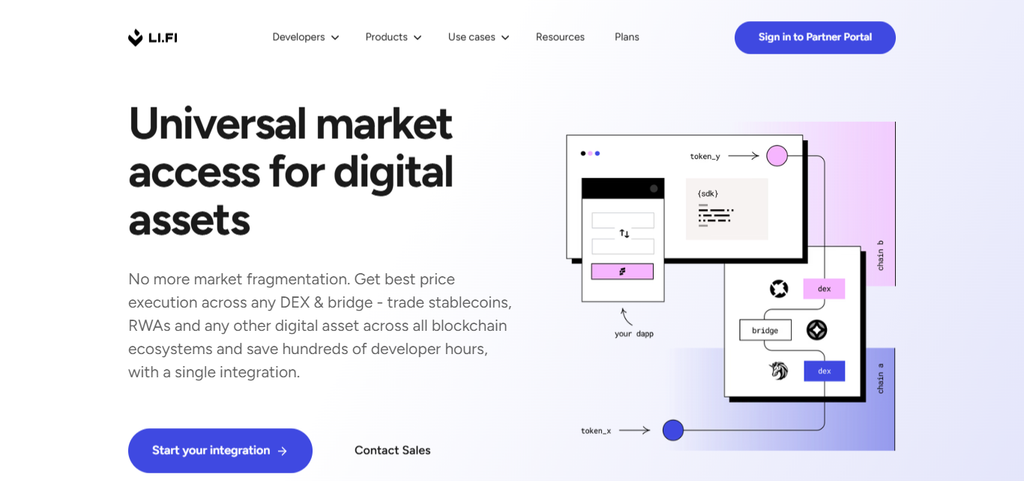
Fees Structure: Network gas, underlying bridge fees, exchange fees, and any relevant integrator charges may all be included in the total expenses. Security Mechanism: Route-level evaluation is crucial because security is dependent on the underlying protocols and smart contracts that each route uses. Trading Features: To improve execution and output, its routing APIs aggregate cross-chain swaps and transfers. Orderly’s native shared order book is not provided by LI.FI, although it can support omnichain trading platforms.
LI.FI — Features
| Feature | Explanation |
|---|---|
| Bridge Aggregation | Integrates multiple bridging protocols to discover available transfer routes. |
| DEX Aggregation | Connects decentralized exchanges for token swaps. |
| Route Optimization | Evaluates available routes based on factors such as cost and output. |
| Developer APIs | Provides integration infrastructure for wallets and decentralized applications. |
| Cross-Chain Swaps | Combines bridging and swapping steps into multichain transaction workflows. |
| Key Advantage | Aggregates liquidity and routing options instead of operating a single native exchange. |
14. Rango Exchange
Rango Exchange is a cross-chain swap aggregator that facilitates multichain transactions by searching across decentralized exchanges and integrated bridges. Supported Blockchains: Depending on the token and route, it links other blockchain ecosystems and supported EVM networks. Execution Speed: The chosen bridge, swap route, liquidity circumstances, and participant chains’ confirmation requirements all affect transfer speed. Fees: Network gas, exchange swap fees, bridge charges, and other route-specific expenses may be paid by users.
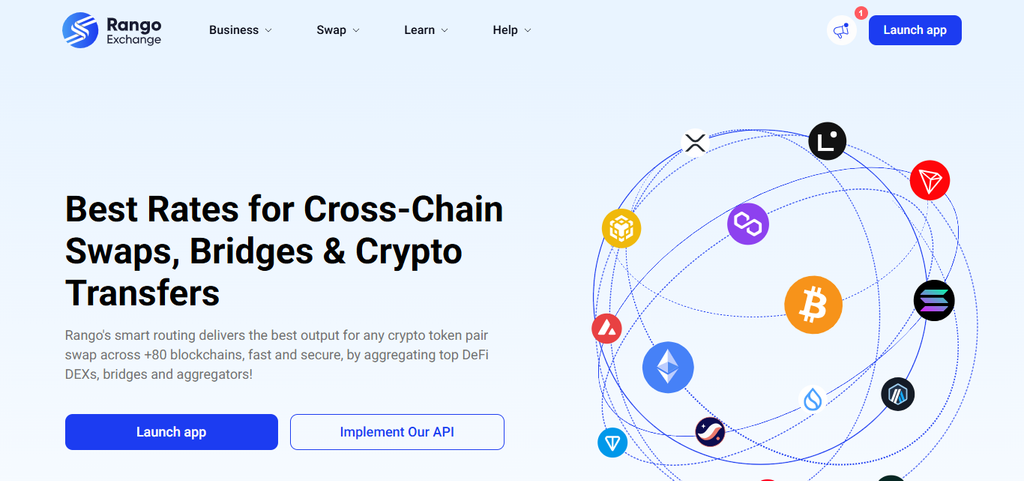
Security Mechanism: The chosen path’s execution providers, contracts, and protocols all affect security. Trading Characteristics: Rango provides token swaps and cross-chain route discovery via integrated liquidity sources. Orderly’s order-book trading infrastructure is not immediately replaced by it, but it is helpful for comparing multichain swap access.
Rango Exchange — Features
| Feature | Explanation |
|---|---|
| Cross-Chain Aggregation | Connects supported bridges and decentralized exchanges. |
| Swap Routing | Finds eligible transaction paths across integrated protocols. |
| Multichain Asset Access | Helps users exchange assets between supported blockchain ecosystems. |
| Route Comparison | Enables users to compare available transaction options and estimated outputs. |
| DeFi Connectivity | Combines multiple services to facilitate cross-chain swaps. |
| Key Advantage | Focuses on cross-chain route discovery and swap aggregation. |
15. Squid
Squid is a cross-chain swap and transfer application that was developed using integrated liquidity sources and Axelar interoperability architecture. Supported Blockchain Current integrations, accessible pathways, and the assets chosen for every transaction determine which networks are supported. Execution Speed Source-chain confirmation, cross-chain message conveyance, liquidity execution, and destination-chain processing all affect completion time. Fees Structure: Swap fees, route-specific cross-chain execution charges, and source and destination gas are examples of costs.
Security Mechanism Squid transactions rely on the smart contracts and liquidity providers that the chosen route uses, as well as Axelar’s messaging security. Trading Features It helps consumers transfer assets between ecosystems by streamlining cross-chain token swaps and application interfaces. Orderly’s native order-book and perpetual trading architecture cannot be directly replaced by Squid, however it is a helpful omnichain access tool.
Squid — Features
| Feature | Explanation |
|---|---|
| Cross-Chain Swaps | Enables token swaps between supported blockchain ecosystems. |
| Axelar Integration | Uses Axelar interoperability infrastructure for cross-chain communication. |
| Liquidity Routing | Connects supported swap and liquidity mechanisms for transaction execution. |
| Application Integration | Offers infrastructure for embedding cross-chain transactions into applications. |
| Simplified Transfers | Aims to make multichain asset movement easier for end users. |
| Key Advantage | Combines cross-chain swaps and application integrations into a simplified experience. |
Conclusion
To sum up, the leading Orderly Network competitors for omnichain trading provide a variety of options for decentralized trading, asset transfers, liquidity access, and cross-chain messaging. platforms such as THORChain, LayerZero, Wormhole, Axelar, and LI.
Within the blockchain ecosystem, FI have several functions. Find the best option by comparing supported networks, trading features, costs, security measures, and execution speed before selecting an alternative.
FAQ
Omnichain trading enables financial activities across multiple interconnected blockchain networks.
LayerZero primarily provides cross-chain messaging infrastructure rather than native trading services.
Wormhole connects blockchains through messaging infrastructure and cross-chain token-transfer capabilities.
Axelar enables programmable messaging and asset transfers between supported blockchain ecosystems.

