



This article focuses on the best Intent-based DEXs for Zero Slippage. Intent-based trading improves the execution of trades and reduces slippage to zero, it lessens price impact and MEV on users.
I will cover the features, pros, and cons of CoW Swap, Hashflow, 1inch Fusion, Velora, deBridge, Across, Odos, Symbiosis, Matcha and GMX v2.
Key Points
| Project | Explanation |
|---|---|
| CoW Swap | Uses intent-based batch auctions and Coincidence of Wants to protect traders against MEV. |
| Hashflow | Employs RFQ model where professional market makers provide firm, zero-slippage pricing quotes. |
| 1inch (Fusion Mode) | Integrates intent-based Fusion with gasless transactions and resolver-filled orders preventing unfavorable execution. |
| Velora / ParaSwap | Combines traditional multi-path DEX aggregation with modern intent-based execution concepts efficiently today. |
| deBridge | Functions as intent-based cross-chain infrastructure allowing guaranteed-rate, zero-slippage native asset transfers securely. |
| Across Protocol | Optimized optimistic intent bridge provides fast, upfront-quoted relayer execution without slippage variability. |
| Odos | Uses advanced non-linear smart routing to optimize multi-token paths and reduce price impact. |
| Symbiosis | Aggregates deep cross-chain liquidity across 50+ networks for stablecoin swaps with minimal deviation. |
| Matcha | Utilizes direct market maker quotes and intelligent order splitting for tight pricing tolerances. |
| GMX v2 | Leverages oracle pricing for perpetual trading, eliminating traditional AMM-based price impact entirely. |
10 Best Intent-Based DEXs for Zero Slippage
1. CoW Swap
CoW Swap implements an approach to trading known as “intent-based” trading, in which a user expresses an outcome to the system, rather than engaging in a rapid series of transactions to take advantage of market slips. CoW Swap interrupts the standard trading process and uses orders to fill batch auctions.
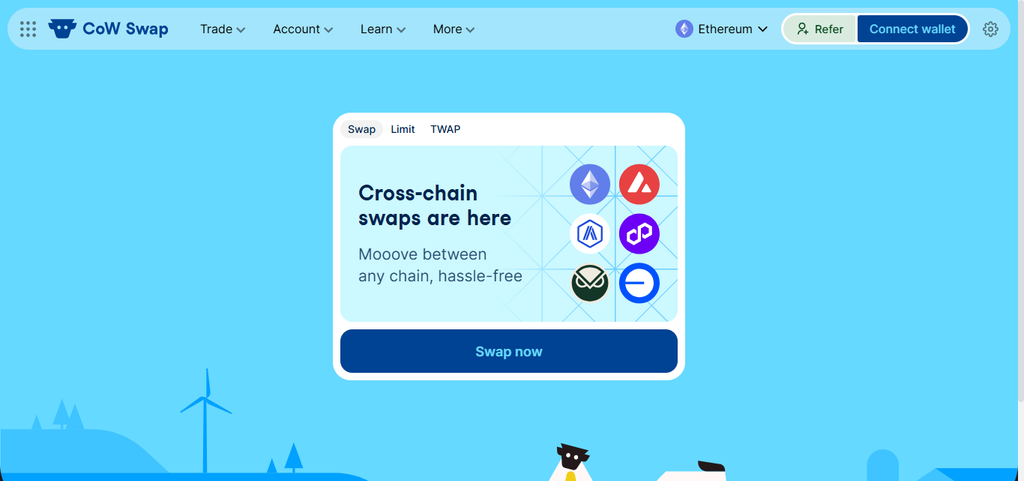
Instead of addressing liquidity, CoW Swap implements a mechanism known as a Coincidence of Wants (CoW), through which users execute matching trades. Orders to fill batches incentivize price competition. CoW Swap improves on existing decentralized trading infrastructure by providing tools to reduce price impact, reduce the risk of being attacked by wallets, and minimize unnecessary transaction costs.
Features CoW Swap
| Feature | Explanation |
|---|---|
| Intent-Based Trading | Users specify desired trading outcomes instead of directly managing execution routes. |
| Batch Auctions | Orders are grouped into batches and settled collectively for efficient execution. |
| Coincidence of Wants | Compatible trades can be matched directly, reducing external liquidity requirements. |
| Solver Competition | Independent solvers compete to provide favorable order execution. |
| MEV Protection | Batch-based settlement can reduce opportunities for sandwiching and other MEV strategies |
2. Hashflow
Hashflow has built a competing RFQ model that exists outside of trading dominated by automated market makers (AMM) and conventional pricing. Similar to CoW Swap, when traders engage the system for pricing, Hashflow market makers are incentivized to quote firm prices. The pricing is designed to remain firm throughout the trade, subject to protocol constraints.
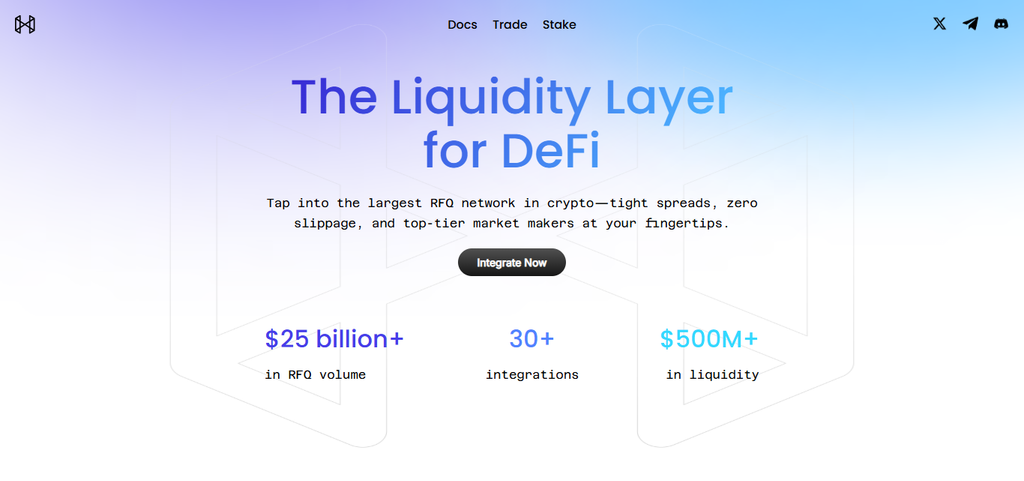
This provides traders with assurances of predictable execution and zero slippage at firm prices. This is achieved at the expense of traditional AMM pricing, which is a dynamic pricing model that results in unpredictable pricing during the trading process.
Feature Hashflow
| Feature | Explanation |
|---|---|
| RFQ Model | Traders request quotes directly from professional market makers. |
| Firm Quotes | Market makers provide predetermined prices for eligible trades. |
| Zero-Slippage Design | Quoted execution does not rely on traditional AMM curve movement. |
| Professional Liquidity | Institutional and professional market makers supply liquidity. |
| Cross-Chain Trading | Hashflow supports trading across multiple blockchain ecosystems. |
3. 1inch Fusion Mode
1inch crypto exchange introduced Fusion Mode to provide intent-based order execution and DEX aggregation. Users create orders to provide specific conditions for their intended execution. Professional algo traders or smart contract executors (re-solvers) are incentivized to fill these orders. An important aspect of Fusion Mode is that users can have gasless execution for Fusion swaps under certain conditions.
In these cases, users do not have to pay gas for the swap. Rather than having to settle for immediate trading execution at an AMM exchange, traders have the opportunity to obtain optimized execution through competing re-solvers. This framework is designed to provide somewhat better execution against the currently supported decentralized markets.
Features 1inch Fusion Mode
| Feature | Explanation |
|---|---|
| Intent-Based Orders | Traders define conditions for how their swaps should be executed. |
| Resolver Network | Professional resolvers compete to fill eligible user orders. |
| Gasless Swaps | Eligible Fusion transactions can eliminate direct gas payments for users. |
| DEX Aggregation | 1inch connects liquidity across numerous decentralized exchanges. |
| Auction-Based Execution | Competitive resolver fulfillment can improve execution quality. |
4. Velora / ParaSwap
Velora, previously ParaSwap, provides intent-based execution models with established DEX aggregation. In aggregation, Velora’s technology helps identify the best possible execution path among multiple decentralized exchanges by analyzing liquidity and routes. Routing also has the flexibility to fragment or optimally repartition a large order among several available liquidity sources.

While Velora’s negotiations go beyond zero-slippage order fulfillment, the primary concern is minimizing unnecessary price impact while maximizing order fulfillment efficiency. Additional intent-based components enable fulfillment of ordered execution conditions.
Feature Velora / ParaSwap
| Feature | Explanation |
|---|---|
| DEX Aggregation | Searches multiple decentralized liquidity sources for execution. |
| Multi-Path Routing | Orders can be distributed across different liquidity venues. |
| Smart Routing | Routing algorithms evaluate potential execution alternatives. |
| Intent-Based Development | Modern execution concepts complement traditional aggregation. |
| Liquidity Optimization | Attempts to identify efficient combinations of available liquidity. |
5. deBridge
The innovative architecture built into deBridge helps to eliminate the unpredictable execution that plagues most traditional cross-chain asset transfer bridges. Instead, infrastructure participants can help facilitate transfers between multiple chains, while the user is only required to provide the intended outcome of the bridge.
deBridge’s differentiated approach offers guaranteed rate execution on supported transfers. Because of its unique approach to cross-chain transfers, the protocol is able to eliminate the risks associated with unknown slippage under various transaction and liquidity conditions.
Feature deBridge
| Feature | Explanation |
|---|---|
| Intent-Based Transfers | Users specify the desired cross-chain transfer outcome. |
| Cross-Chain Infrastructure | Enables asset movement between different blockchain networks. |
| Guaranteed-Rate Model | Supported transfers can provide predictable receiving amounts. |
| Relayer Fulfillment | Relayers facilitate transactions across connected chains. |
| Native Asset Transfers | Designed to support native cross-chain asset movement. |
6. Across Protocol
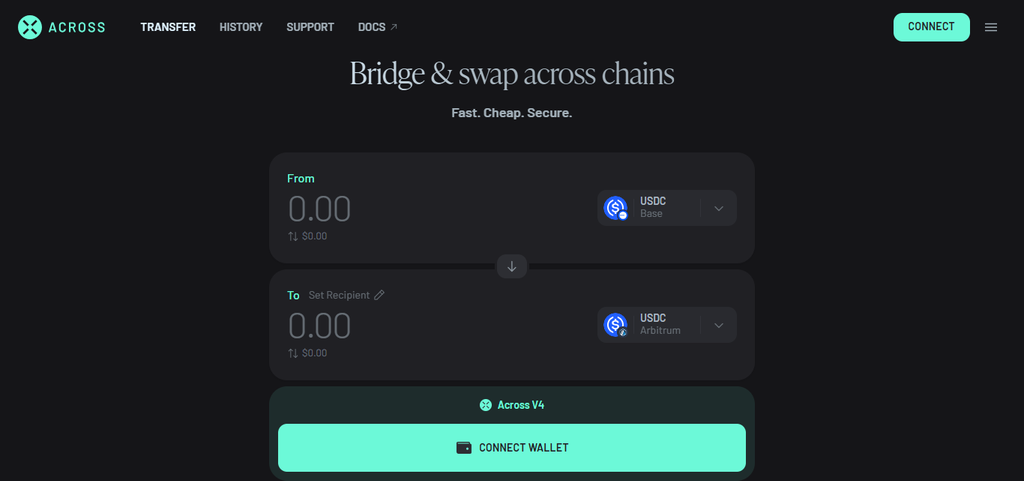
Will Across be able to execute on cross chain transfers, that are fast, secure, and predictable? Across is an intent based competitive bridge that offers upfront pricing, and relays transactions after the fact.
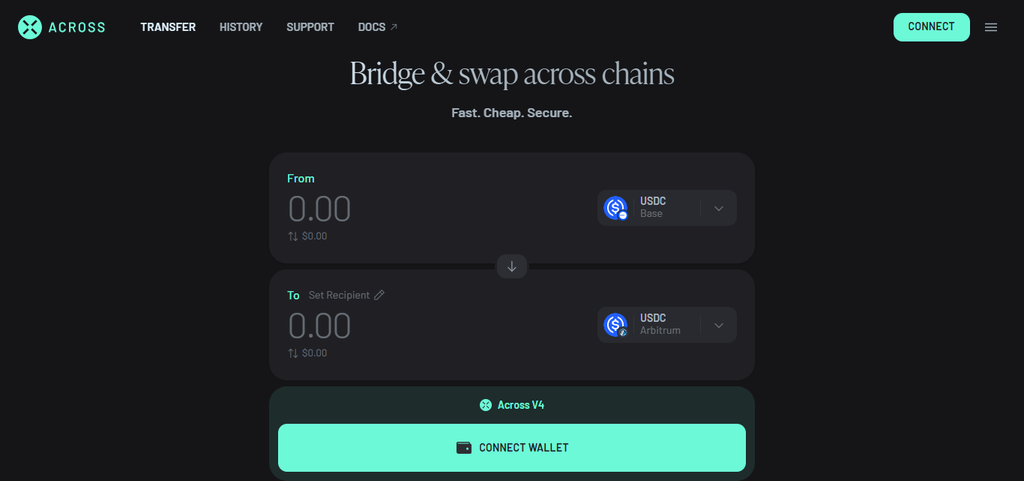
This innovation offers users control over the risks of variable prices associated with cross chain bridge executions. As more relays compete to fulfill intent based requests, transaction processing time and uncertainty of slippage are significantly reduced.
Feature Across Protocol
| Feature | Explanation |
|---|---|
| Intent-Based Bridging | Users request a specific cross-chain transfer outcome. |
| Optimistic Architecture | Transfers use optimistic verification mechanisms. |
| Relayer Network | Relayers provide liquidity and execute requested transfers. |
| Upfront Quotes | Users can receive an expected amount before execution. |
| Fast Transfers | Relayer liquidity enables rapid cross-chain fulfillment. |
7. Odos
Odos does more than just take the cheapest direct swap. It has an advanced routing technology. The routing engine is able to evaluate complex paths that cross multiple assets and multiple liquidity sources. This means a trade can take several paths that may even include intermediate assets which can improve the overall execution. Odos excels in multi-token transactions.

There are often many paths that can be taken, and optimizing these can drastically reduce price impact and improve trade execution. Odos’ protocol aims to minimize price impact and improve execution prices for traders in the decentralized finance ecosystem while improving efficiency of capital.
Feature Odos
| Feature | Explanation |
|---|---|
| Smart Order Routing | Searches for efficient routes across liquidity sources. |
| Non-Linear Routing | Evaluates complex routes rather than only direct paths. |
| Multi-Token Paths | Intermediate assets can be used when beneficial. |
| Liquidity Aggregation | Combines liquidity from multiple decentralized venues. |
| Price Optimization | Attempts to minimize total execution cost and price impact. |
8. Symbiosis
Symbiosis optimizes cross-chain swaps, in particular swaps of stablecoins. Symbiosis aggregates liquidity across over 50 networks and therefore allows asset transfers to be conducted across blockchain networks without the user interacting with multiple bridges and exchanges. Because of the nature of stable assets, they require tighter execution windows.
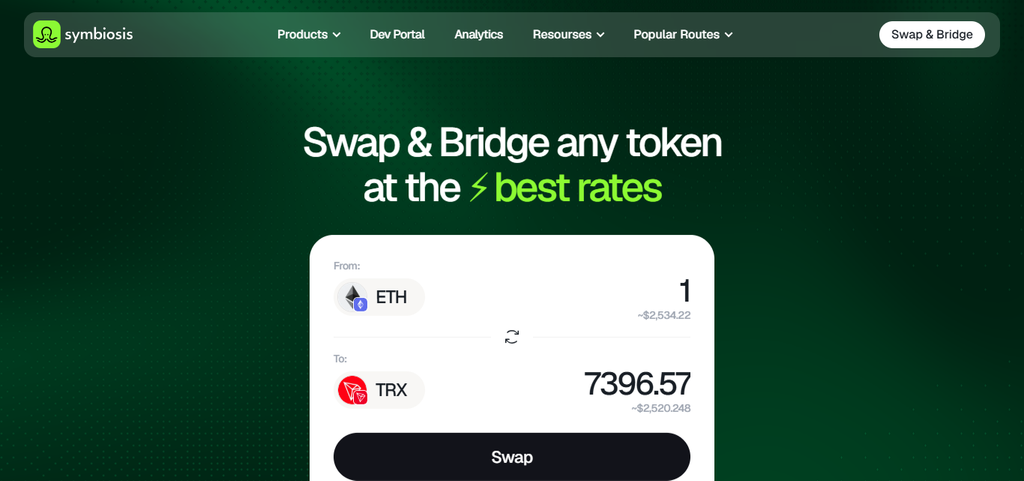
Even slight deviations can cause large stablecoin transactions to become significantly less optimal. It is Symbiosis’ aim to reduce these deviations. It aims to do so by providing cross-chain liquidity in a timely manner. Symbiosis’s competitive advantage lies in combination of a large cross network presence and aggregation of liquidity for relatively predictable cross-chain swaps.
Feature Symbiosis
| Feature | Explanation |
|---|---|
| Cross-Chain Swaps | Enables asset exchanges between different blockchain networks. |
| 50+ Networks | Its architecture targets broad multi-network connectivity. |
| Stablecoin Focus | Stablecoin transfers are an important use case. |
| Liquidity Aggregation | Combines liquidity from different cross-chain sources. |
| Minimal Deviation | Designed to keep stablecoin exchange rates close to expected values. |
9. Matcha
Matcha improves decentralized swaps by using aggregation and professional market maker liquidity. Rather than trusting one automated market maker, Matcha takes prices from multiple liquidity venues and quote providers. Matcha’s clever order splitting technology will automatically split orders across the providers if doing so will give a better execution price.
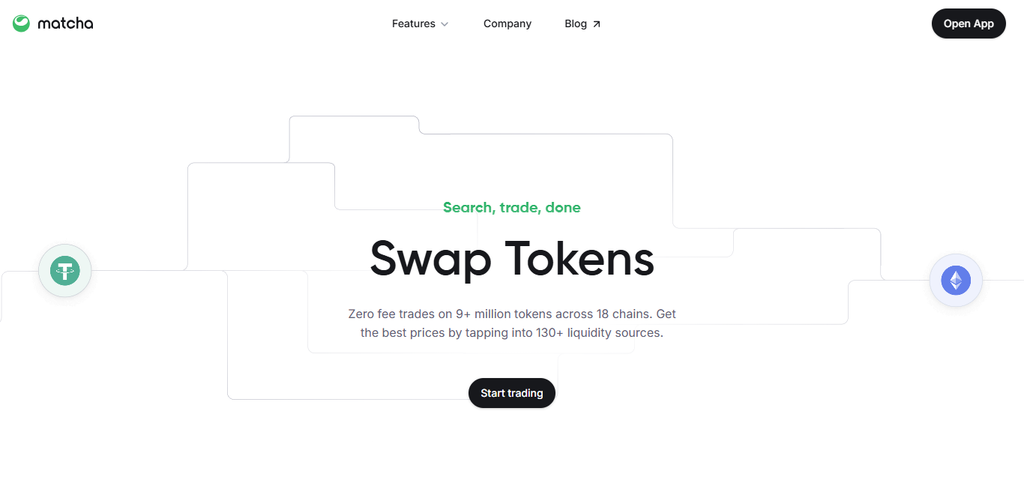
Masking a large order in a single provider leads to significant price impact. Matcha aims to offer better execution and price against the competition and reduce overall trading friction by aggregating liquidity and comparing prices.
Feature Matcha
| Feature | Explanation |
|---|---|
| DEX Aggregation | Searches multiple decentralized liquidity sources. |
| Market-Maker Quotes | Can access professional liquidity alongside AMM sources. |
| Intelligent Splitting | Large orders may be distributed across multiple venues. |
| Price Comparison | Evaluates available execution opportunities. |
| 0x Ecosystem | Matcha is built around the broader 0x trading infrastructure. |
10. GMX v2
GMX v2 relies on an oracle-based pricing architecture instead of a conventional AMM for pricing perpetual swaps. Compared to most AMMs, which lead to increasing price impact for large trades relative to liquidity, GMX v2, through its oracle infrastructure, is able to price trades completely independent from standard AMMs.

For the trading community, this means avoiding the standard AMM price impact. However, traders should still be mindful of the risks and costs that come with oracles, as execution will be impacted by market conditions, funding rate, and these oracle-based price quoted trades.
Feature GMX v2
| Feature | Explanation |
|---|---|
| Oracle Pricing | Uses oracle-based market pricing for perpetual trading. |
| Perpetual Markets | Primarily designed for leveraged perpetual trading. |
| No Traditional AMM Curve | Trading does not depend on conventional constant-product pricing. |
| Reduced Price Impact | Large trades avoid traditional AMM curve-based impact. |
| Liquidity Infrastructure | Uses protocol-specific liquidity mechanisms for trading and risk management. |
How We Choose the Best Intent-Based DEXs for Zero Slippage
- Slippage Protection: Evaluated how effectively each DEX minimizes unexpected price changes.
- Intent Architecture: Checked the use of intents, solvers, RFQs, and auction-based execution.
- MEV Protection: Considered protection against sandwich attacks and other MEV strategies.
- Execution Quality: Compared pricing, routing efficiency, and transaction reliability.
- Liquidity: Assessed the depth and diversity of available liquidity sources.
- Fees: Considered trading, network, and protocol-related costs.
- Speed: Evaluated how quickly orders and cross-chain transfers are fulfilled.
- Supported Networks: Compared blockchain and asset coverage.
- User Experience: Considered interface simplicity and ease of completing trades.
- Transparency & Security: Reviewed protocol design, execution mechanisms, and overall risk factors.
Conclusion
In conclusion, the Best Intent-Based DEXs provide smarter execution through the use of intents, solvers, RFQs, batch auctions, and advanced routing.
CoW Swap, Hashflow, 1inch Fusion, and other platforms have different strategies for minimizing slippage/price impact and MEV. Slippage cannot always be avoided, but through these solutions, users should be able to experience better, more predictable, and more efficient trading in a decentralized environment.
FAQ
Intent-based DEXs let users specify desired outcomes for trades.
CoW Swap offers strong batch-auction based protection against harmful MEV.
Hashflow provides firm RFQ pricing designed for zero-slippage execution.
Yes, eligible Fusion swaps can provide gasless execution for users.
Odos uses sophisticated routing to optimize complex trading paths.

