


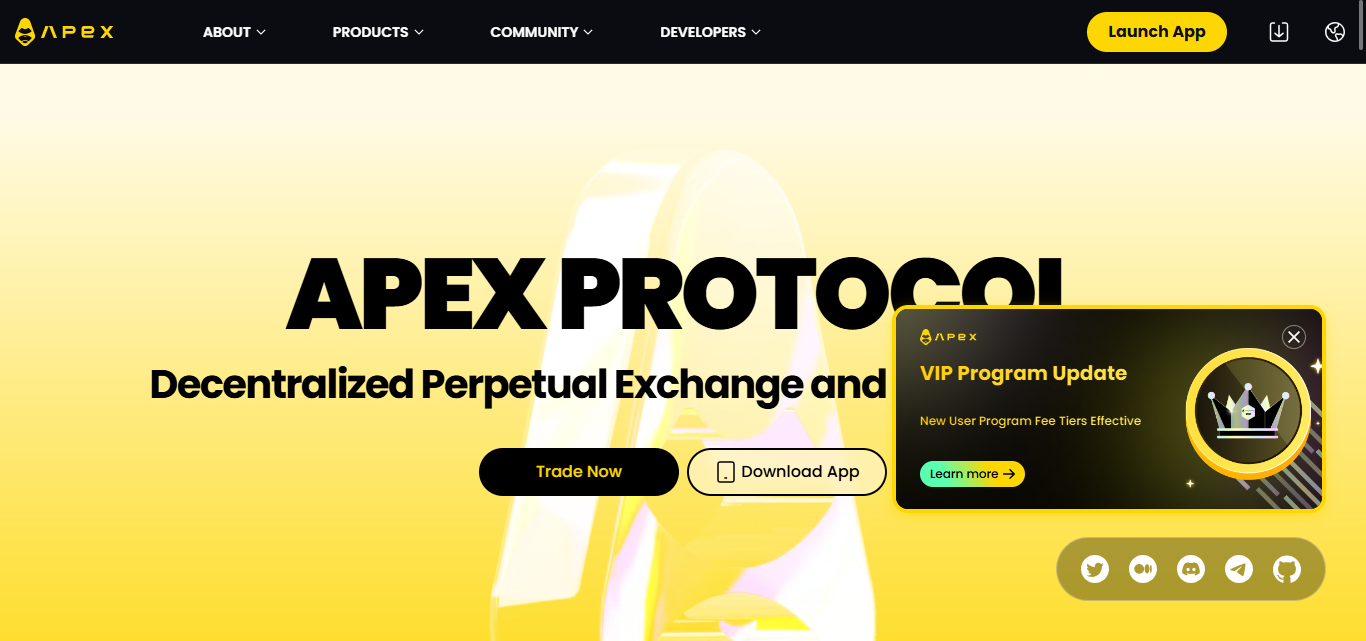
In this article I am going to discuss the Best ApeX Protocol Competitors for DEX Trading and discuss the best decentralized exchanges for crypto traders.
You will learn about their trading features, supported assets, fees, leverage options, security measures, pros and cons. This comparison will provide you with an understanding of how ApeX Protocol compares to Hyperliquid, Aster DEX, GMX, dYdX and other leading platforms.
Key Points & Best ApeX Protocol Competitors for DEX Trading
| Competitor | Explanation |
|---|---|
| Hyperliquid | Offers deep liquidity, fast execution, and onchain order-book trading for perpetual futures. |
| Aster DEX | Provides private perpetual trading, multiple trading modes, and spot markets across supported assets. |
| GMX | Enables leveraged perpetual trading through liquidity pools, oracle pricing, and decentralized market infrastructure. |
| dYdX | Delivers perpetual futures trading through an independent blockchain, order books, and governance mechanisms. |
| Variational | Focuses on onchain derivatives trading with capital efficiency and innovative execution mechanisms for traders. |
| Lighter | Offers verifiable order-book trading, competitive fees, and Ethereum-based scaling through zero-knowledge technology. |
| edgeX | Supports perpetual futures and spot trading through high-performance infrastructure and advanced trading features. |
| GRVT | Combines centralized-style trading performance with blockchain settlement and self-custody for derivatives traders. |
| Jupiter | Connects Solana liquidity sources while providing perpetual trading products and streamlined decentralized trading experiences. |
| Injective | Provides financial infrastructure for decentralized exchanges, derivatives markets, and advanced onchain trading applications. |
10 Best ApeX Protocol Competitors for DEX Trading
1. Hyperliquid
Hyperliquid is a leading decentralized exchange for perpetual futures and spot trading with a onchain order book. It supports major cryptocurrencies such as Bitcoin and Ethereum, as well as a variety of altcoins and listed spot tokens. Security comes with its own Layer 1 blockchain, transparent transaction processing and user-controlled wallets, but bridge and smart-contract risks persist.
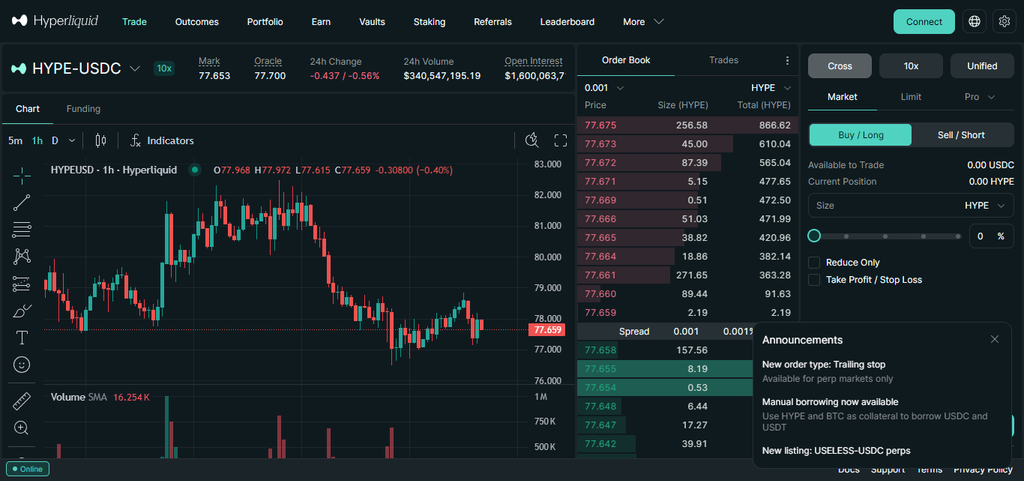
Trading fees are on a maker-taker basis and are based on your trading volume and any discounts you qualify for. The leverage varies across markets, up to 40x on documented perpetual markets. Hyperliquid is a good fit for active traders who want fast execution, deep liquidity and advanced order-book features.
Hyperliquid
| Pros | Cons |
|---|---|
| Deep liquidity across major perpetual markets. | Trading fees may be higher than zero-fee alternatives. |
| Fast onchain order-book execution. | Requires understanding of its own blockchain ecosystem. |
| Supports perpetuals and spot trading. | Bridge and blockchain risks remain. |
| Advanced trading tools and market visibility. | High leverage can cause rapid liquidations. |
2. Aster DEX
The platform provides perpetual futures trading and spot trading, and other trading modes are suitable for different experience levels. Cryptocurrencies are one of the markets they support, and there are some perpetual products that offer exposure to stocks and commodities. Its platform focuses on private order handling, wallet-based access and blockchain-based trading infrastructure.
Users still need to consider smart-contract and oracle and platform-specific risks. Fees are product and order type specific. USDT perpetual rates are shown with 0% maker fees and 0.04% taker fees, but different rates apply to some markets. Leverage differs depending on the trading mode and asset, so traders should check the current limits for each market before they open positions.
Aster DEX
| Pros | Cons |
|---|---|
| Offers multiple trading modes and perpetual markets. | Different products may have different fee structures. |
| Provides privacy-focused trading features. | Privacy features do not eliminate trading or protocol risks. |
| Supports a range of crypto markets and other instruments. | Market liquidity may vary significantly by asset. |
| Offers high leverage on selected products. | Extreme leverage greatly increases liquidation risk. |
3. GMX
GMX is a decentralized exchange for spot swaps and leveraged perpetual futures. It runs on supported networks such as Arbitrum and Avalanche and features markets for major cryptocurrencies, some altcoins and a few conventional financial assets. GMX doesn’t use a traditional orderbook. Instead, it utilizes liquidity pools and oracle-derived prices to facilitate trades.
Security is augmented with audited smart-contract infrastructure and external price feeds, but the risks of oracles, liquidity and contracts remain. In many markets, position fees typically are 0.04% or 0.06% of position size, plus additional borrowing, funding, swap and network costs. Some of the perpetual markets offer leverage up to 100x.
GMX
| Pros | Cons |
|---|---|
| Supports decentralized perpetual trading and spot swaps. | Trading costs can include borrowing and position fees. |
| Uses liquidity pools and oracle-based pricing. | Execution depends on oracle quality and pool conditions. |
| Available across supported blockchain networks. | Network fees and bridge risks may apply. |
| Liquidity providers can participate in protocol markets. | Liquidity providers face market and inventory-related risks. |
4. dYdX
dYdX is a decentralized derivatives platform that mainly focuses on perpetual futures trading using an order-book based trading system. Supported assets are the cryptocurrencies that are listed on its available markets and have their own trading and margin parameters. While smart-contract and protocol risks remain, its blockchain infrastructure, transparent settlement processes and non-custodial design help users control their funds.
Trading Fees are subject to a maker-taker fee model and may be subject to change based on trading volume, governance decisions and the applicable fee schedule. Leverage is determined by the margin requirements and risk settings of the specific market, not by a universal limit. dYdX is suitable for advanced derivatives traders who are looking for sophisticated trading tools.
dYdX
| Pros | Cons |
|---|---|
| Offers an order-book-based perpetual trading experience. | Primarily focused on derivatives rather than broad spot aggregation. |
| Provides advanced tools for active traders. | Beginners may find margin trading complex. |
| Uses dedicated blockchain infrastructure. | Depends on its blockchain, validators, and protocol mechanisms. |
| Publishes trading rules and fee schedules. | Fees and liquidity vary by market and trading tier. |
5. Variational
Variational is a decentralized protocol for derivatives trading. It aims to give crypto traders access to flexible markets and efficient execution. Trading products focus on perpetual-style derivatives and other supported financial contracts. Asset availability is based on the active markets of the platform.
Traders should understand how positions are managed and protected, including its execution model, collateral requirements, oracle arrangements and contract documentation. Fees depend on the product, liquidity condition and account term. Users should refer to the current fee schedule before trading. Leverage limits also vary depending on the market and risk parameters. For traders seeking different structures and execution options in the derivatives market, Variational is worth a look as an alternative to ApeX.
Variational
| Pros | Cons |
|---|---|
| Focuses on innovative derivatives trading infrastructure. | Available markets may be more limited than larger exchanges. |
| Offers an alternative to conventional perpetual order books. | Its trading model may require additional research. |
| Can appeal to traders exploring new derivatives products. | Fees and execution conditions require checking for each product. |
| Provides another option for onchain derivatives access. | Newer platforms may have shorter operating histories. |
6. Lighter
Lighter is a decentralized trading platform for high-performance order-book trading and perpetual futures. The supported assets depend on the active listings in the market and may include major cryptocurrencies and other listed digital currencies. The platform utilizes verifiable trade execution and zero-knowledge technology to underpin its exchange infrastructure, but the user is responsible for assessing the contract, withdrawal, and operational risks. Trading fees vary based on the applicable account tier and fee schedule.
Users should verify whether maker and taker orders are charged prior to trading. Leverage is market specific and depends on margin and risk controls. Active traders may prefer lighter for the speed of execution, transparent trading and competitive transaction costs.
Lighter
| Pros | Cons |
|---|---|
| Emphasizes verifiable trading and zero-knowledge technology. | Its technology may be unfamiliar to some users. |
| Standard accounts may offer zero trading fees. | Fee policies and account tiers can change. |
| Provides an order-book-based trading experience. | Liquidity can vary across trading pairs. |
| Offers competitive leverage on selected markets. | Leverage magnifies losses as well as profits. |
7. edgeX
edgeX is a decentralized perpetual futures and advanced derivatives trading exchange. Additional instruments are subject to the availability of the current product, supported markets include listed cryptocurrency pairs. The platform combines high-performance trading infrastructure with blockchain-related verification and wallet-based access, but users should verify its smart-contract audits, custody arrangements and safeguards around withdrawals before depositing funds.
Trading fees are subject to change based on maker-taker classification, trading volume, account tier and promotional conditions. The market you are trading and its margin requirements will dictate the leverage limits. Traders can also compare order-book execution, trading costs, supported assets and risk-management tools between ApeX Protocol, other perpetual DEX platforms and edgeX.
edgeX
| Pros | Cons |
|---|---|
| Focuses on high-performance derivatives trading. | Smaller markets may have thinner liquidity. |
| Provides advanced trading features and order-book functionality. | Some features may require time to learn. |
| Offers selected crypto and other financial markets. | Asset availability differs by market and jurisdiction. |
| Provides an alternative to established perpetual DEXs. | Users should carefully review audits and withdrawal arrangements. |
8. GRVT
GRVT is a hybrid exchange that combines centralized style trading performance with blockchain based settlement and a focus on self custody. The main products for trading are perpetual derivatives and supported cryptocurrency markets are based on current listings. Its security model is based on cryptographic verification and separation of trading performance from asset settlement, but users should scrutinize custody arrangements, audits and withdrawal procedures.
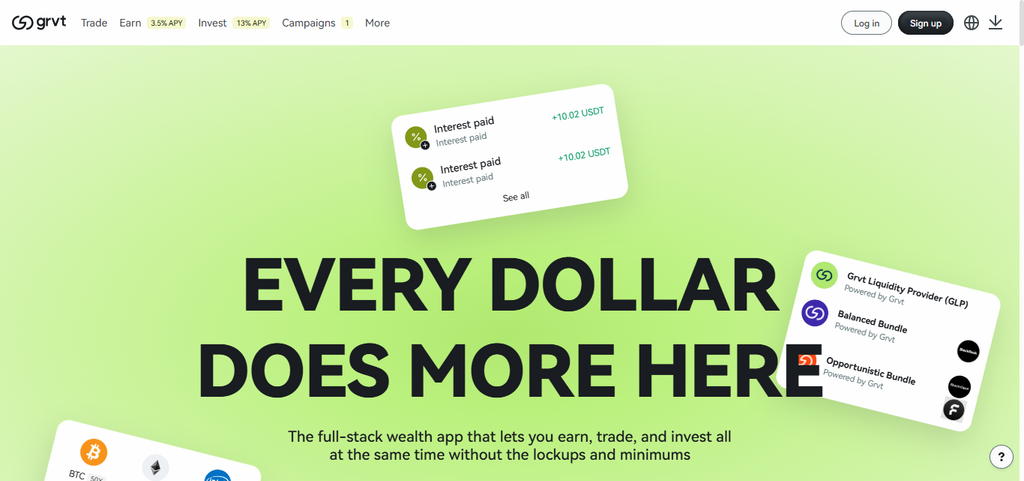
Trading fees are based on the current maker-taker schedule, trading volume, and certain account conditions. Leverage differs for supported instruments and may be subject to margin requirements. GRVT is worth considering for the traders who want the familiar exchange layout with blockchain-oriented settlement and more transparency than a traditional centralized platform.
GRVT
| Pros | Cons |
|---|---|
| Combines exchange-style performance with blockchain-based settlement. | Its hybrid model may be less familiar to beginners. |
| Focuses on self-custody and cryptographic verification. | Self-custody does not remove smart-contract risks. |
| Offers perpetual derivatives trading. | Market selection may be narrower than larger competitors. |
| Provides an alternative for traders valuing transparency. | Users should verify licensing and regional eligibility. |
9. Jupiter
Jupiter is a leading Solana based DeFi platform for token swaps, liquidity aggregation and perpetual trading products. The Spot aggregator scans supported liquidity sources to assist users in finding competitive swap routes for available Solana tokens. Perpetual markets offer leveraged exposure to supported assets, under the terms of the relevant product.
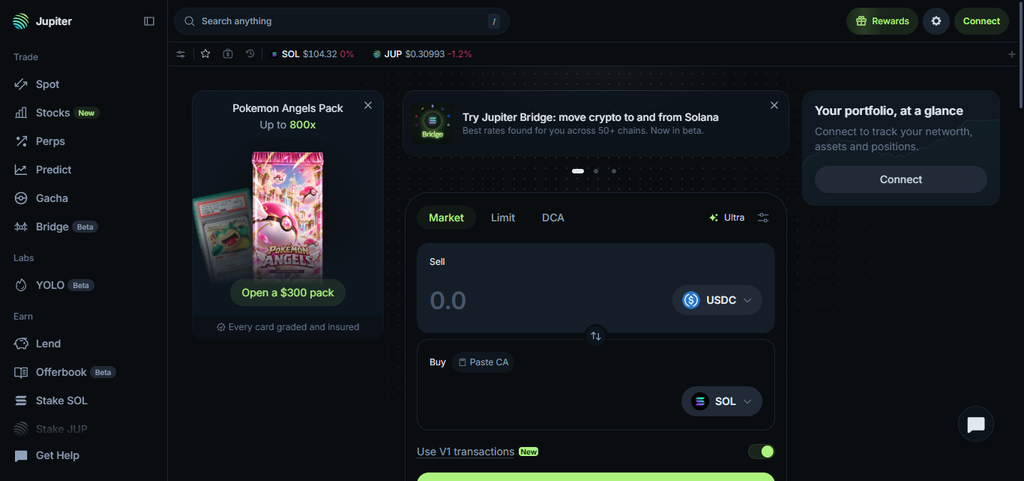
Users are encouraged to do their own research on each product’s risks as each product’s security relies on the smart contract system, connected wallets, liquidity sources and oracle infrastructure. Trading costs include swap costs, costs related to routing, perpetual trading costs, funding payments and network fees. Leverage limits differ across markets and products. Jupiter is the best pick for traders who want to tap into the Solana ecosystem and many trading services on one platform.
Jupiter
| Pros | Cons |
|---|---|
| Aggregates liquidity across supported Solana swap markets. | Swap prices depend on liquidity and routing conditions. |
| Offers swaps and perpetual trading products. | Different products have different fee and risk structures. |
| Provides convenient access to Solana ecosystem tokens. | Solana network and ecosystem risks remain. |
| Supports multiple DeFi activities within one ecosystem. | Token availability and liquidity vary significantly. |
10. Injective
Injective is a Layer 1 blockchain for decentralized finance, including exchange applications, derivatives markets and on-chain financial products. Rather than simply functioning as a single exchange, it provides infrastructure for a variety of applications and trading venues within its ecosystem. As such, supported assets and trading pairs are application and market listings specific.
Security depends on consensus of the blockchain, application level intelligent contracts, and security measures adopted by individual protocols. Different applications have different trading fees, which can include transaction costs, exchange fees, and funding payments for derivatives. Margin rules for each exchange and market define leverage. For traders wanting to explore wider decentralized trading infrastructure and specialized financial applications, Injective is a good ApeX alternative.
Injective
| Pros | Cons |
|---|---|
| Provides blockchain infrastructure for decentralized trading applications. | It is an ecosystem, not one unified exchange. |
| Supports derivatives and other financial applications. | Trading features vary across individual applications. |
| Offers an ecosystem built for financial transactions. | Users must assess each application’s security separately. |
| Supports trading across its growing DeFi ecosystem. | Liquidity and available markets vary between platforms. |
Conclusion
To summarize, The Top ApeX Protocol Competitors for DEX Trading are Hyperliquid, Aster DEX, GMX, dYdX, Variational, Lighter, edgeX, GRVT, Jupiter and Injective. The trading features, fees, supported assets, and leverage options are different on each platform.
Before selecting the best platform for your trading strategy and risk tolerance, carefully compare the security, liquidity, and trading costs of different exchanges.
FAQ
Hyperliquid is a popular option for perpetual trading because it offers an onchain order book, substantial liquidity, and advanced trading features. The best choice depends on the assets, fees, and leverage you need.
Lighter and Aster DEX are known for competitive trading fees on eligible markets. Actual costs depend on account type, maker-taker rates, funding payments, and other applicable charges. Always check the latest fee schedule before trading.
Hyperliquid may suit traders who prioritize liquidity and order-book execution, while ApeX users may prefer its particular trading products and supported markets. Compare fees, available assets, leverage, and security before deciding which platform fits your needs.
Hyperliquid, Aster DEX, GMX, and Jupiter offer spot trading or token swaps through their respective products. Their trading methods differ, so check whether you need direct spot trading, liquidity aggregation, or leveraged derivatives.

