


This article evaluates the top competitors of Drift Protocol’s Perpetual Swaps on Solana. I will be analyzing some of the main elements of various peripheral services including maximum leverage offered, financial markets supported, trading costs and commissions, order execution, liquidity, and funding.
I will also be analyzing other elements of each service that may be of interest to potential clients. This article will seek to answer questions about the services available to help clients choose the best service to suit their individual needs.
Key Points & Best Drift Protocol Rivals for Solana Perps
- Jupiter Perps — Aggregated perpetual trading with deep liquidity, competitive execution, and broad Solana market access.
- Pacifica — Solana-native perpetual exchange offering fast execution, leveraged trading, and streamlined trader-focused features.
- GMTrade — Decentralized perpetual platform designed for leveraged markets, efficient trading, and diverse crypto asset exposure.
- Hyperliquid — High-performance decentralized exchange offering perpetual futures, deep liquidity, and advanced trading infrastructure.
- dYdX — Established decentralized derivatives platform providing perpetual markets, professional trading tools, and robust liquidity.
- Avantis — Onchain perpetuals protocol supporting leveraged trading with diversified markets and transparent decentralized infrastructure.
- Vertex Protocol — Decentralized trading platform combining perpetuals, spot markets, leverage, and integrated liquidity management features.
- Aevo — Decentralized derivatives exchange offering perpetual futures, options, leverage, and sophisticated trading functionality.
- StandX — Decentralized perpetual trading platform emphasizing efficient execution, leveraged markets, and user-friendly trading experiences.
- GMX — Decentralized perpetual and spot exchange known for leverage, liquidity pools, and permissionless crypto trading.
10 Best Drift Protocol Rivals for Solana Perps
1. Jupiter Perps
Jupiter Perps is one of the first Solana Perpetual Protocols. It utilizes a pooled liquidity model to facilitate trading. Perps currently provides liquidity to the SOL, ETH, and BTC markets with up to 100x leverage on select pairs. Jupiter displays trading fees and funding costs on an asset by asset basis. Similar to Drift, Jupiter provides trading infrastructure to Perps via its liquidity pools.
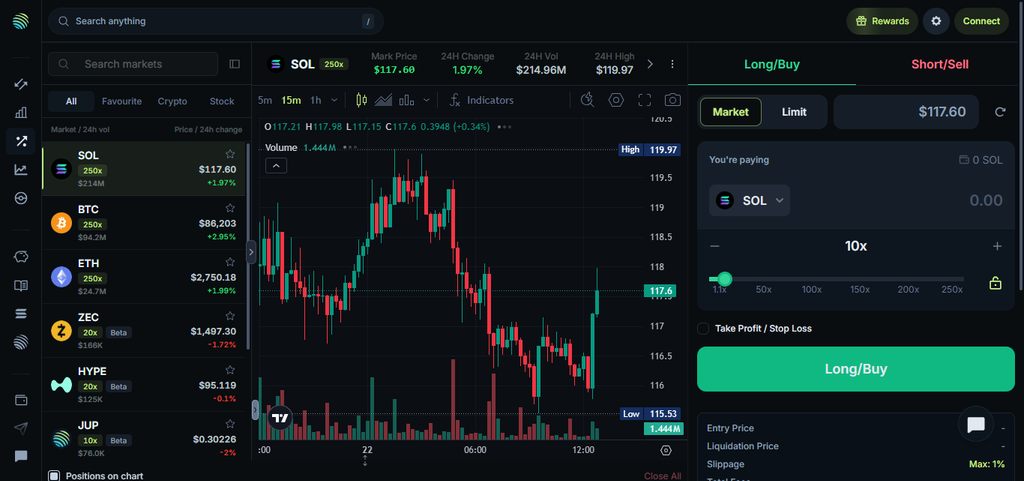
Jupiter uses oracles to price assets; thereby, eliminating the need for AMMs to facilitate trading. When evaluating Drift’s offering, investors/traders should consider pooled liquidity models, markets supported, leverage, funding costs, execution, and general activity on the protocol.
Jupiter Perp Features
- Perpetual markets, aggregated Jupiter Perps provides perpetual trading opportunities across Solana markets through its wider trading infrastructure.
- Deep-Level Liquidity Its liquidity infrastructure allows it to take bigger positions and execute more smoothly in active perpetual markets.
- Running the Competition Jupiter Perps is focused on efficient execution to help traders manage their entries and exits on supported leveraged markets.
- Integrated Trading Environment Jupiter Perps extends perpetual trading into the wider decentralized trading and liquidity ecosystem of Jupiter.
| Pros | Cons |
|---|---|
| Deep Solana ecosystem liquidity | Primarily focused on Solana markets |
| Wide range of major perpetual assets | Leverage varies by market |
| Oracle-based pricing | Funding costs can change |
| Simple Jupiter trading interface | Liquidity conditions affect execution |
| Strong Solana integration | Advanced traders may want more specialized tools |
2. Pacifica
Like Jupiter, Pacifica is a Solana based Perpetual Protocol that offers cross and isolated margin trading. Pacifica provides leveraged trading on several markets; however, the protocol limits the exposure to each individual market. Similar to Drift, Pacifica requires funding on leveraged positions. Pacifica provides funding costs, as well as previous and expected future funding rates.
Pacifica’s margin system sets an initial margin requirement based on the position size and the desired leverage. When considering Drift’s offering, investors should evaluate Pacifica’s leveraged markets, funding costs, and general liquidity.
Pacifica Features
- Native Solana Infrastructure Pacifika runs on Solana-native infrastructure built for fast, efficient decentralized perpetual trading and transaction processing.
- Continuous Trading This platform is based on perpetual contracts. Traders can hold their leveraged positions without any usual expiration.
- Speed of execution Pacifica focuses on fast transaction processing to help traders with fast-moving cryptocurrency markets
| Pros | Cons |
|---|---|
| Built specifically for Solana trading | Smaller ecosystem than established DEXs |
| Supports leveraged perpetual trading | Market selection can be narrower |
| Cross and isolated margin options | Funding rates fluctuate |
| Fast on-chain execution | Liquidity varies across markets |
| Trader-focused interface | Some advanced features may be developing |
3. GMTrade
This Solana swap protocol provides access to cryptocurrency and traditional markets through a design inspired by GMX. Like GMX, GMTrade supports leverage; however, the final amount provided is determined by risk limits and is market-dependent, up to 500x. Tradable markets include cryptocurrency, foreign exchange, commodities, and equities.
Similar to GMX, GMTrade employs a design in which liquidity pools are not consolidated and relieves set order-book pressure by inter-liquidity pool communications. GMTrade publishes outstanding capital and trading volume. Other fees are imposed for borrowing. When assessing GMTrade in relation to Drift, consider perpetual contracts, market depth, order book, and liquidity, as well as price and executions speeds.
GMTrade Features
- GMTrade ecentralized Perpetual Markets GMTrade provides decentralized perpetual markets for traders seeking leveraged cryptocurrency exposure through blockchain-based infrastructure.
- Leveraged Trading The platform enables leveraged positions, allowing traders to control larger market exposure using deposited collateral. Diverse Crypto Exposure GMTrade supports exposure across multiple cryptocurrency assets, providing traders with broader market participation opportunities.
- Efficient Trading Its infrastructure is designed to facilitate efficient trading and position management across supported perpetual markets.
| Pros | Cons |
|---|---|
| Supports crypto and RWA markets | Less established than major competitors |
| High leverage availability | Very high leverage increases liquidation risk |
| Broad asset exposure | Market liquidity can vary |
| Pool-based liquidity model | Borrowing costs can change |
| On-chain perpetual trading | Traders should verify current market parameters |
4. Hyperliquid
This Ethereum-based protocol supports more than 100 perpetual swaps and provides order book-based trading of perpetuals. The highest provided leverage is 40x, with lesser amounts offered for other assets. The base fee for taking or providing liquidity is 0.045% and 0.015%, respectively. By staking or trading a specified volume, the fees are reduced.
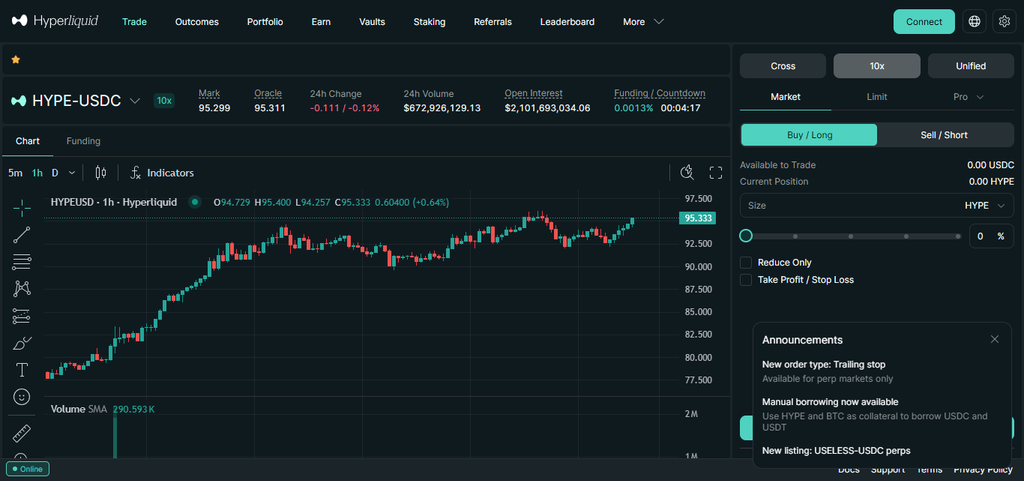
All contracts are settled using USDC; margin and funding payments are used to center the contract price to the underlying asset. Hyperliquid uses on-chain infrastructure to facilitate trading. Compare Hyperliquid to Drift regarding infrastructure, order books, liquidity, and executions.
Hyperliquid Features
- Perpetual Futures Hyperliquid provides perpetual futures markets across numerous crypto assets for leveraged decentralized derivatives trading.
- High-Performance Infrastructure Its infrastructure emphasizes high-speed processing and responsive trading functionality for active cryptocurrency market participants.
- Deep Market Liquidity Active markets and liquidity infrastructure help accommodate trading activity across various perpetual futures markets.
- Advanced Trading Tools Hyperliquid provides sophisticated trading functionality designed for users requiring greater control over orders and positions.
- Decentralized Exchange The platform combines decentralized blockchain infrastructure with an exchange-style trading environment for cryptocurrency derivatives.
| Pros | Cons |
|---|---|
| Large perpetual market selection | Not Solana-native |
| High trading activity | Leverage differs between assets |
| Order-book trading experience | Funding payments fluctuate |
| Competitive maker-taker fees | Platform-specific ecosystem exposure |
| Advanced order functionality | Complexity may increase for beginners |
5. dYdX
dYdX is a decentralized finance (DeFi) platform that provides users with the ability to trade perpetual contracts and other financial products. dYdX uses a maker-taker fee model, and the fees charged are dependent on the trading conditions (e.g. the amount of order book liquidity). dYdX employs price alignment mechanisms, known as funding payments, for perpetual contracts.
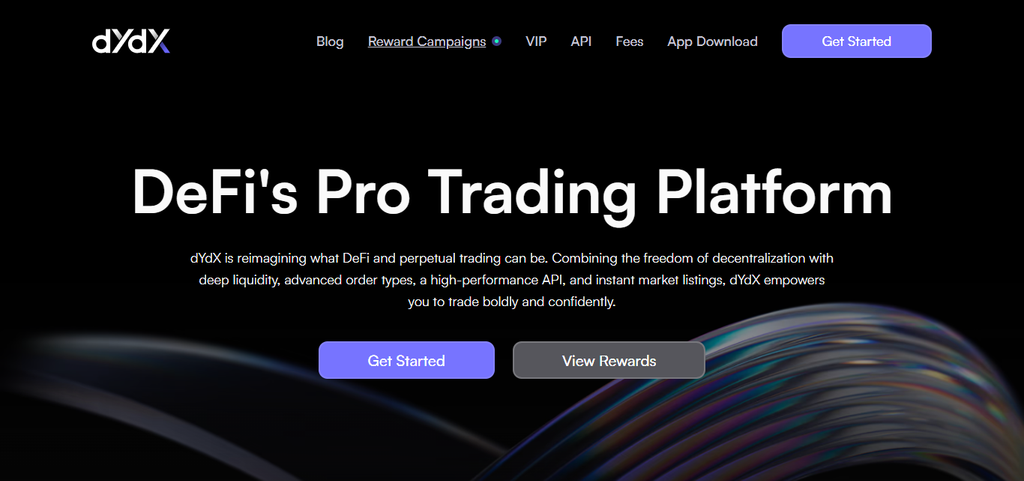
Funding payments are transferred between the long and short positions. dYdX provides different order types, including stop orders, to its users. When evaluating Drift and dYdX, consider funding payment mechanics, order types and liquidity, pricing, and margin/open interest controls.
dYdX Features
- Professional Trading Tools Its trading environment includes advanced functionality designed for experienced traders managing derivatives positions.
- Leverage Support Traders can use leverage to increase exposure to supported cryptocurrency markets while managing collateral.
- Decentralized Infrastructure dYdX uses blockchain-based infrastructure to provide access to decentralized cryptocurrency derivatives markets.
- Perpetual Markets dYdX provides decentralized perpetual markets across multiple cryptocurrency assets and supported trading pairs.
| Pros | Cons |
|---|---|
| Established decentralized derivatives platform | Not focused specifically on Solana |
| Multiple professional order types | Fee tiers can be complex |
| Broad perpetual trading infrastructure | Leverage varies by market |
| Advanced margin functionality | Funding costs change over time |
| Suitable for experienced derivatives traders | Interface may feel complex for newcomers |
6. Avantis
Avantis is a protocol which enables the decentralized exchange (DEX) of numerous assets, including crypto and financial assets. Avantis charges a fixed fee for each trade of the DEX, and the fees vary by the underlying asset. For crypto, the DEX currently offers perpetual contracts for BTC and ETH. Standard crypto perpetual contracts may include opening and closing fees, as well as dynamic spreads.
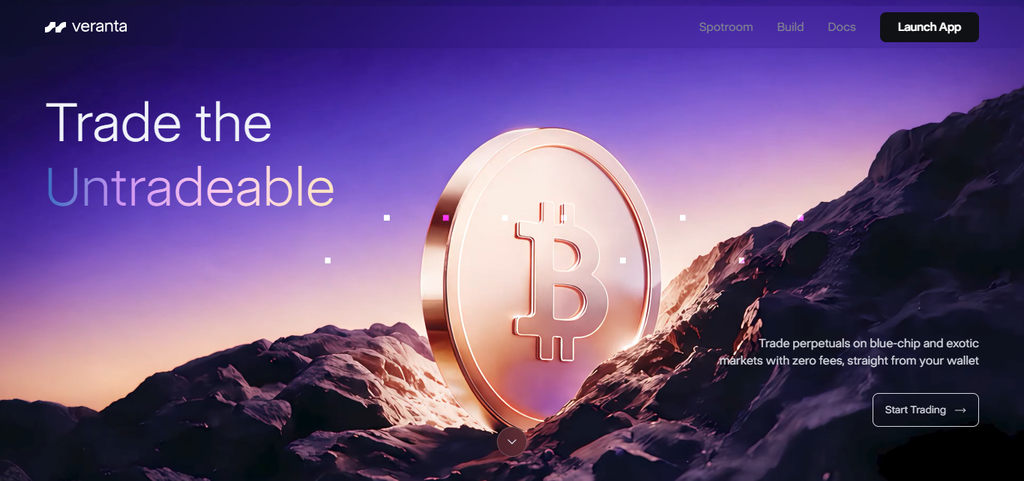
Avantis offers a zero-fee product for perpetual contracts of selected assets. For the zero-fee product, traders may be exposed to negative price risk. Compare Drift and Avantis based on fee structures, product offerings, and liquidity.
Avantis Features
- Perpetual trading on-chain Avantis offers perpetual trading on onchain infrastructure, linking derivatives activity to blockchain-based transaction systems.
- Leveraged Trades The protocol is designed for leveraged trading, allowing users to control larger market positions by depositing collateral.
- Different Markets With access to multiple markets, Avantis allows traders to diversify the available trading opportunities.
- Open Infrastructure Its on-chain architecture increases the visibility on how the protocol operates and trading activities on the blockchain.
Avantis Pros & Cons
| Pros | Cons |
|---|---|
| Supports crypto and real-world markets | Different products have different fee models |
| High leverage on selected markets | High leverage increases liquidation exposure |
| Multiple perpetual asset categories | Liquidity differs by market |
| On-chain execution | Funding or trading costs can fluctuate |
| Offers fixed-fee and alternative products | Product rules require careful checking |
7. Vertex Protocol
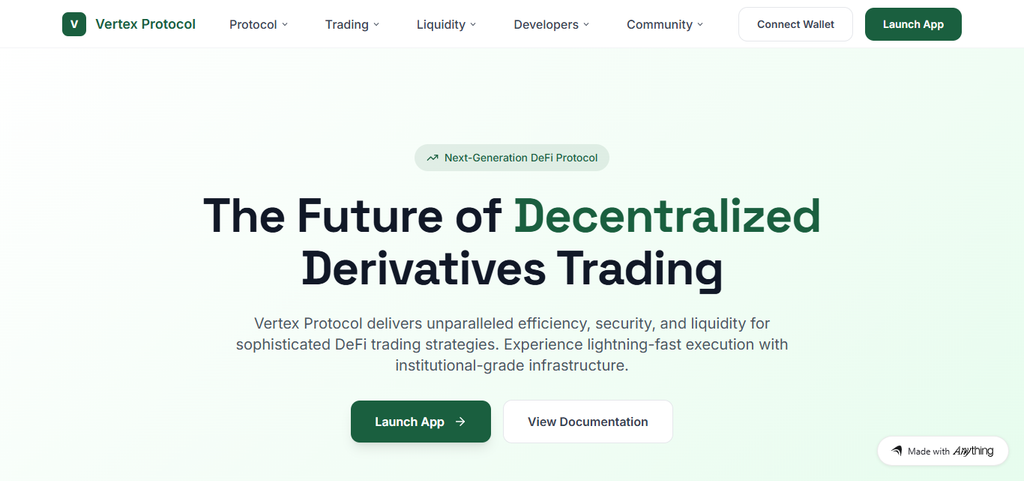
Vertex provides decentralized leverage trading of perpetual contracts and spot Financial Products. The comparison of Drift and Vertex should touch on the following aspects of each protocol, such as available perpetual markets, maximum leverage, maker/taker fees, depth/volume of liquidity, funding rates and margin requirements.
Additionally, the comparison should include each protocol’s trading architecture, as execution designs impact how market participants interact with liquidity. Vertex is not very large, and Drift is obviously much larger.
Instead of comparing size, which is irrelevant, describe how market designs impact the bottom line. Describe funding and margin designs and how they impact the cost of carrying a position. Compare Vertex with other Solana perps if that is what you’re wanting your readers to learn.
- Perpetual Markets Vertex also offers perpetual contracts for traders looking for leveraged exposure in supported cryptocurrency markets.
- Trading on the spot The platform allows users to conduct a variety of trading activities, combining spot trading and derivatives.
- Integrated Liquidity Its ecosystem merges liquidity management and trading features to enable activity across markets.
- Unified Trading Platform Vertex combines spot, perpetual, and related trading features within a single decentralized trading environment.
Vertex Protocol Features
| Pros | Cons |
|---|---|
| Combines spot and perpetual trading | Multi-product structure can add complexity |
| Integrated trading infrastructure | Market availability varies |
| Leverage supports advanced strategies | Funding rates change with conditions |
| Designed for active traders | Liquidity differs between markets |
| Multiple trading functions in one platform | Not specifically focused on Solana |
8. Aevo
Aevo is a decentralized exchange (DEX) that offers various types of derivatives, including perpetual and options contracts. Like other DEXs, Aevo’s users retain custody of their assets, and the platform uses an automated market maker (AMM) model to facilitate trading. Aevo employs a margin call system to manage traders’ risks and offers portfolio margin.
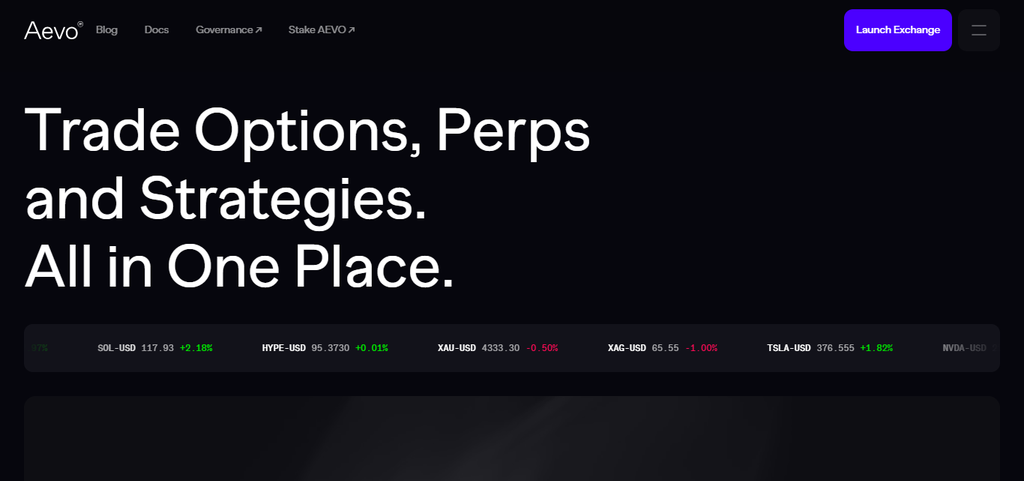
Aside from trading perpetuals, users need to evaluate AMM’s liquidity, remaining order book depth, and order types offered. Trading at high leverage increases market risks. For fundamental analysis, consider Aevo’s market-making activities, liquidity, and fees. Aevo’s portfolio margin allows traders to better manage trade risks in a correlated or hedged position. Traders need to consider Aevo’s margin design as well as Drift’s derivatives offerings.
Aevo Features
- Aevo Perpetual Futures Aevo offers perpetual futures markets where traders can get leveraged exposure to supported cryptocurrency assets.
- Trading in Options In addition to perpetual futures, the platform provides more derivative instruments for sophisticated trading strategies.
- Advanced Trading Features It’s platform offers sophisticated trading features for users who need to handle their orders and positions in great detail.
- Decentralized Derivatives Aevo is a decentralized infrastructure combined with derivatives markets for perpetual futures and options trading.
| Pros | Cons |
|---|---|
| Supports perpetuals and options | Broader derivatives focus adds complexity |
| Advanced trading functionality | Not Solana-native |
| Portfolio-margin capabilities | Margin requirements vary |
| Multiple order types | Funding rates fluctuate |
| Useful for derivatives strategies | Liquidity can differ between contracts |
9. StandX
StandX is the first project to tokenize a portion of Rakuten’s 250 million monthly users. Unlike Aergo, which allows restaurants to offer NFTs in their loyalty programs, StandX leverages Rakuten’s user base to bring NFTs to a broader audience. Given StandX’s use of Rakuten’s 250 million users, I expect StandX to have a stronger initial exchange offering (IEO) than Aergo.
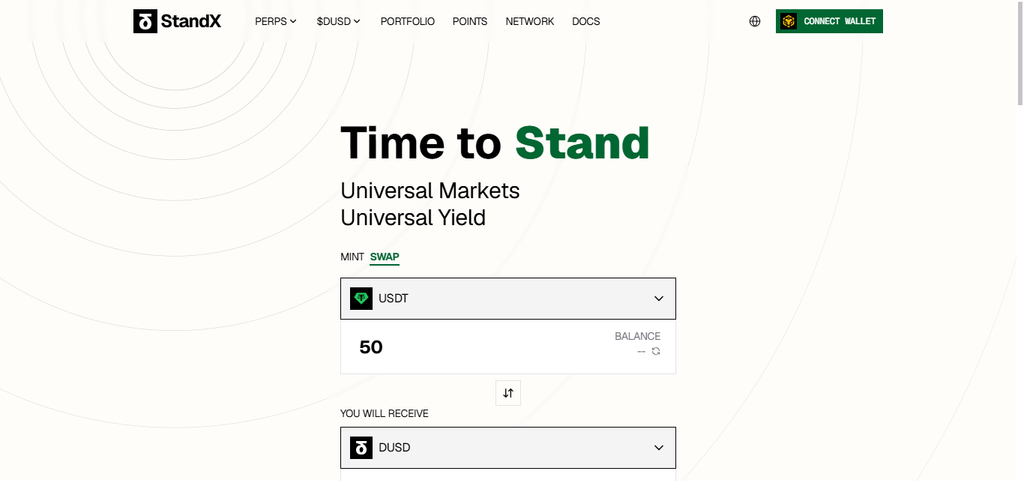
The Rakuten NFTs are expected to sell for $133 each. Based on Rakuten’s economy of scale, estimate a breakeven price of $40 per NFT. Thus, StandX will likely be oversubscribed. Since NFTs sold on StandX are expected to appreciate in value due to Rakuten’s large user base, expect StandX to attract investors who are looking for medium to long-term investment opportunities. Investors should be aware that the price of NFTs may increase in the short-term due to speculation.
StandX Features
- Perpetual Markets StandX focuses on decentralized perpetual markets, providing leveraged trading opportunities across supported cryptocurrency assets.
- Efficient Execution The platform emphasizes efficient execution to help traders manage entries, exits, and position adjustments.
- Leveraged Trading StandX supports leveraged positions, allowing traders to gain increased market exposure using available collateral.
- User-Friendly Interface Its interface emphasizes accessibility, helping users monitor markets and manage positions through streamlined trading tools.
| Pros | Cons |
|---|---|
| Supports high-leverage perpetual trading | High leverage creates significant liquidation risk |
| Cross and isolated margin | Leverage decreases for larger positions |
| Yield-bearing DUSD collateral | DUSD introduces collateral-specific considerations |
| Multi-chain availability | Smaller ecosystem than leading venues |
| Structured risk-management system | Market liquidity varies by asset |
10. GMX
GMX is a decentralized spot and perpetual exchange operating across networks including Arbitrum, Avalanche, and MegaETH, rather than being Solana-native. It supports perpetual trading with leverage up to 100x and uses GM and GLV liquidity pools instead of a conventional order book. Most markets charge a 0.04% or 0.06% position fee depending on whether a trade reduces or increases long-short imbalance.
Funding adjusts according to open-interest imbalance, while borrowing fees depend on liquidity utilization and market conditions. GMX uses oracle-based pricing and routes trades against liquidity pools. For Drift comparisons, emphasize cross-chain availability, leverage, pool liquidity, trading fees, funding, borrowing costs, oracle pricing, and execution architecture.
GMX Features
- Trading all the time GMX offers decentralized perpetual contracts with leveraged long and short trades on supported markets.
- Spot Trading The platform also supports spot asset swapping, which allows users to swap cryptocurrencies within the ecosystem.
- Liquidity Pools GMX operates liquidity pools to enable participants to contribute capital that supports the platform’s trading markets.
- Exploit; Traders can open leveraged positions on eligible markets, and manage their risk by depositing collateral.
| Pros | Cons |
|---|---|
| Established decentralized perpetual platform | Not available natively on Solana |
| Supports spot and perpetual trading | Pool-based model differs from order books |
| Leverage available up to 100x | High leverage increases liquidation risk |
| Oracle-based market pricing | Fees vary with market conditions |
| Multiple blockchain deployments | Borrowing costs can fluctuate |
Conclusion
To sum up, when it comes to choosing the best Drift Protocol rival on Solana Perps, traders should take into account issues like the available markets, trading fees, liquidity, funding, margin, and the trade execution mechanism.
Jupiter Perps and Pacifica are rivals focused on the Solana ecosystem. Trade execution mechanisms, risk parameters, and other features offered by these protocols should be analyzed by traders to see if they align to the strategies used by the traders.
FAQ
Decentralized platforms offering perpetual futures and leveraged crypto trading.
Jupiter Perps and Pacifica are prominent Solana-focused alternatives.
A Solana-based perpetual platform with pooled liquidity and oracle pricing.
Yes, Pacifica provides Solana-native perpetual markets and leveraged positions.

